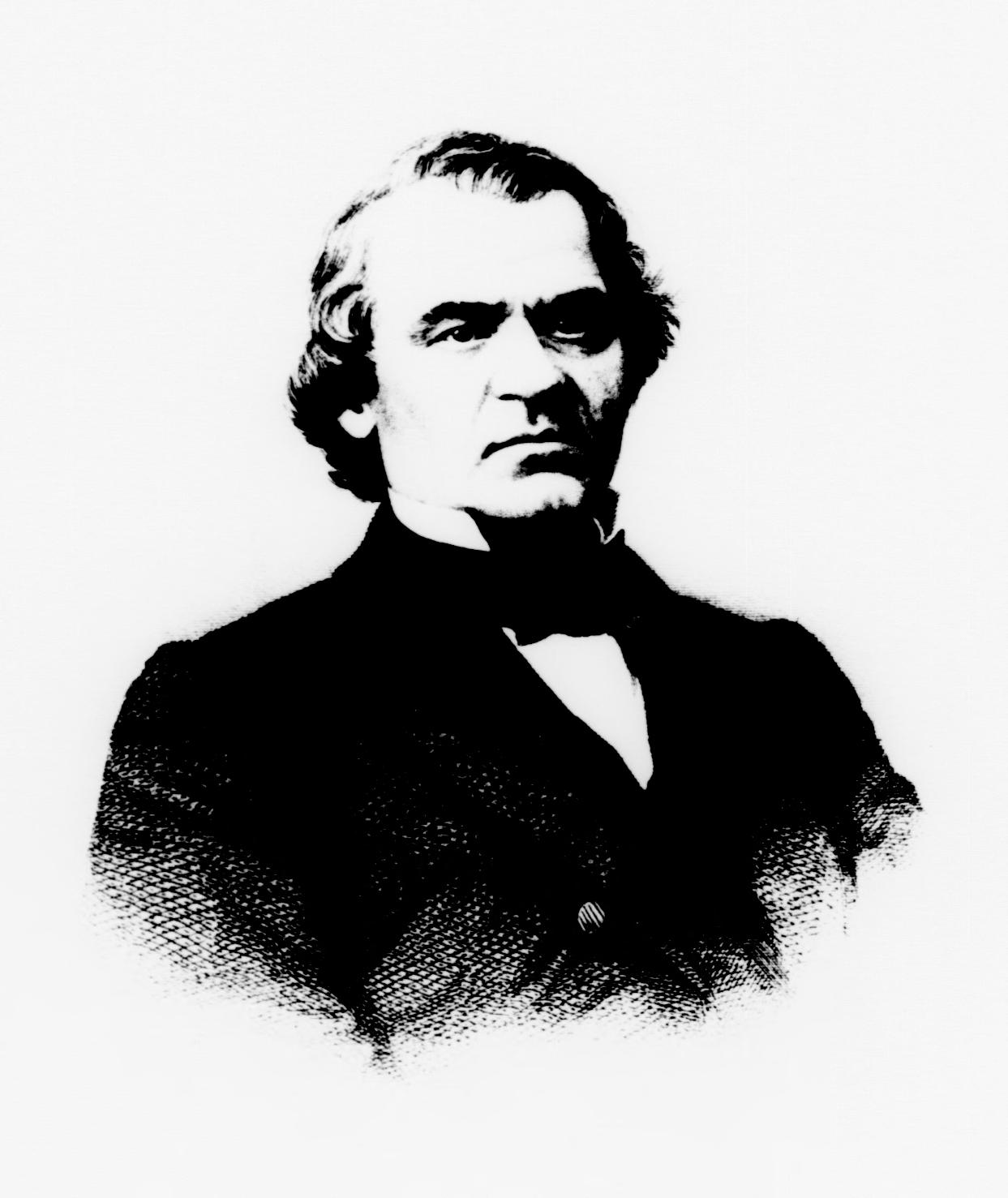
The Senate galleries were packed. Tickets had been printed and distributed daily to control the crowds. As the vote approached, the chamber fell into breathless silence.
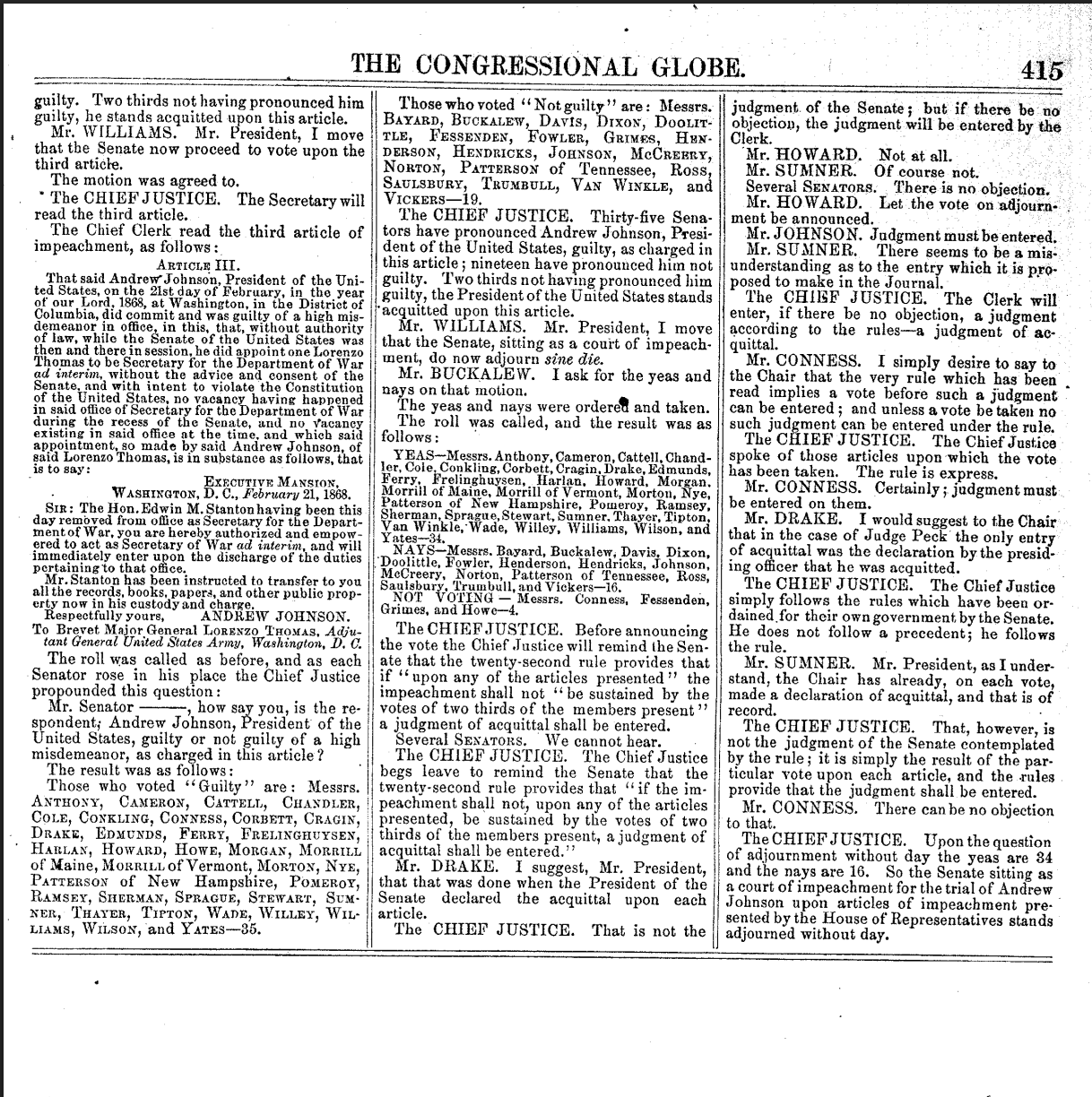
Thirty-five senators voted against Andrew Johnson. Nineteen did not. The most powerful legislative body in the world had fallen exactly one vote short of removing a sitting American president — and in doing so, quietly set the rules for every impeachment that would follow.
The Charge
The core charge against Johnson was almost technical in nature: he had fired his Secretary of War, Edwin Stanton, without Senate approval, in violation of the Tenure of Office Act. But beneath that procedural dispute lay something much larger — a furious battle over who would control the reconstruction of a nation still raw from civil war.
Congress wanted Reconstruction on its terms. Johnson, a Southern Democrat who had inherited Lincoln's presidency after his assassination in 1865, had other ideas. He had vetoed legislation designed to protect the rights of freed slaves. He had clashed repeatedly with a Republican-controlled Congress that viewed him as a traitor to Lincoln's legacy. The firing of Stanton was the final straw.
The House impeached Johnson on February 24, 1868, by a straight party-line vote of 126 to 47. Eleven articles of impeachment were drawn up. The Senate trial began on March 5, with Chief Justice Salmon Chase presiding. Johnson did not attend a single day of proceedings.
The Seven Who Crossed the Line
What made May 16, 1868 remarkable was not the vote itself. It was the seven Republican senators who crossed their own party to acquit. They were immediately branded traitors. Several never won reelection. Newspapers attacked them by name.
But their reasoning echoed down through history. Senator James Grimes of Iowa put it plainly: he could not agree to destroy the harmonious working of the Constitution simply to remove an unacceptable president. Senator Edmund Ross of Kansas, whose vote became the most famous of the seven, later wrote that he felt he was looking down into his own political grave as he cast it.
They were right about the grave. Ross lost his Senate seat. He was shunned in Kansas for years. But decades later, John F. Kennedy would feature him in Profiles in Courage as one of the most principled acts in Senate history.
The Standard That Stuck
The acquittal established something that no law had explicitly written: removing a president through impeachment requires more than policy disagreement. It requires genuine, provable wrongdoing. That standard — set not by statute but by precedent, by seven senators willing to end their careers for a principle — has shaped every impeachment debate since.
When Bill Clinton was impeached in 1998, when Donald Trump faced the Senate twice, the ghost of May 16, 1868 was present in every argument about what "high crimes and misdemeanors" actually means.
Then and Now
The questions at the heart of the Johnson trial have never gone away. When does Congress overstep in its pursuit of a president? When does a senator's duty to their party end and their duty to the Constitution begin? What separates a removable offense from a policy dispute dressed up in legal language?
One hundred and fifty-eight years later, on the same date those questions were first tested at the highest level, they remain the most contested in American political life.
The Document
The original Senate roll call from May 16, 1868 is held in the National Archives in Washington. The eleven articles of impeachment, the trial transcripts, and contemporary newspaper coverage are all available through the Library of Congress digital collections — free, public domain, and worth reading in full.
History rarely repeats exactly. But on the question of presidential accountability, it has never really stopped echoing.