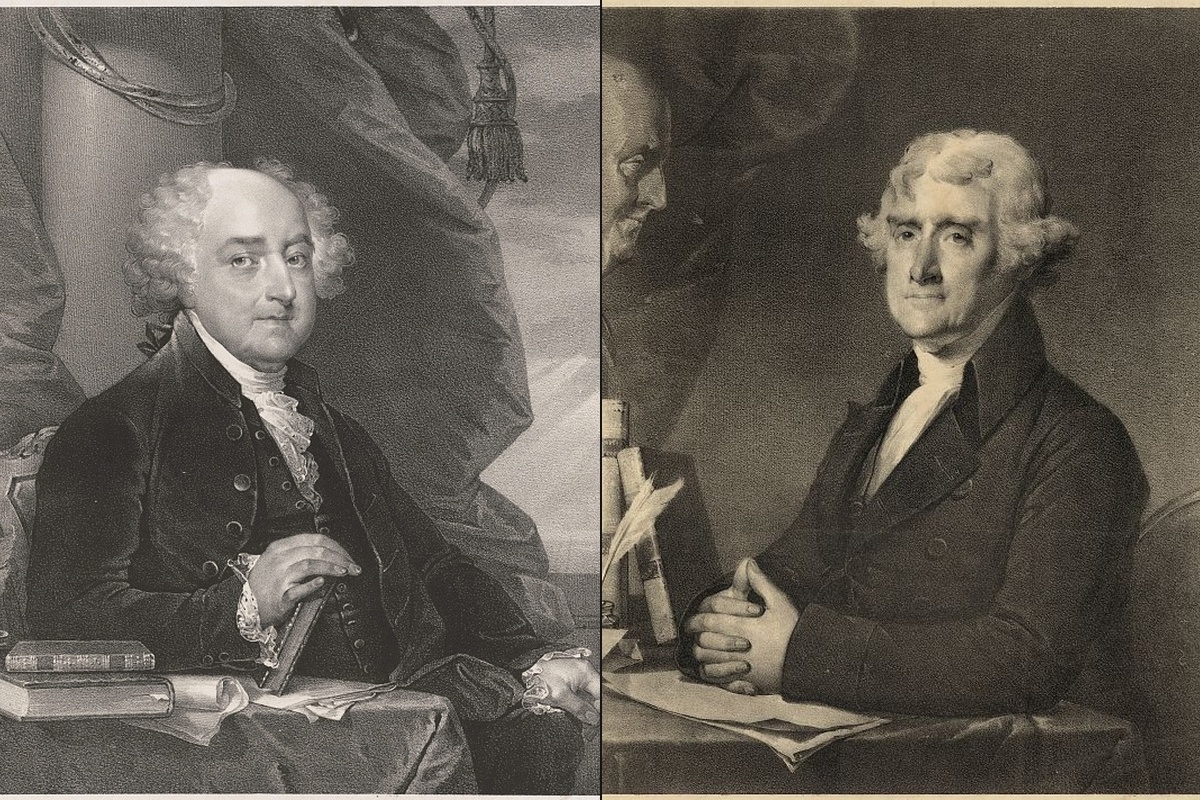
On the afternoon of July 4, 1826, John Quincy Adams sat down and wrote in his diary. His father was dying in Quincy, Massachusetts. Word had not yet reached him that Thomas Jefferson was already dead in Virginia, five hours earlier that same day. When the full picture came together, the sitting president of the United States wrote that it could not have been a mere coincidence. It was, he said, a "visible and palpable" mark of Divine favor.
It was the fiftieth anniversary of the Declaration of Independence. The two men most responsible for that document, once friends, then bitter rivals, then friends again, had died within hours of each other on the exact day the nation turned fifty.
That much gets taught. What doesn't get taught is that the coincidence struck even the people living through it as extraordinary. Family members, physicians, clergy, historians, and, more recently, bioethicists have all tried to make sense of it. Not all of their explanations are comfortable.
Enemies First
Adams and Jefferson met in 1775 at the Continental Congress in Philadelphia. A year later they worked side by side on the committee that drafted the Declaration of Independence. For the next two decades their partnership held, through diplomatic postings in Europe, through the founding of a government neither had a blueprint for.
Then it broke. Adams became the second president in 1797, and Jefferson, serving as his vice president, watched Adams sign the Alien and Sedition Acts with something close to horror. Jefferson retreated to Monticello and spent the next several years helping organize what became the Democratic-Republican opposition, the coalition that would beat Adams in the ugly, slander-filled election of 1800. For over a decade afterward, the two men who had built a country together did not speak.
Adams broke the silence first. On January 1, 1812, he sent Jefferson a letter wishing him a happy new year. Jefferson wrote back warmly, and the two spent the next fourteen years rebuilding a friendship through one of the richest correspondences in American history, touching on politics, religion, aging, and everything in between.
That correspondence kept going almost to the end. Jefferson's last letter to Adams was dated March 23, 1826. Adams wrote back on April 17. Neither man knew how little time was left.
The Letter Jefferson Never Delivered
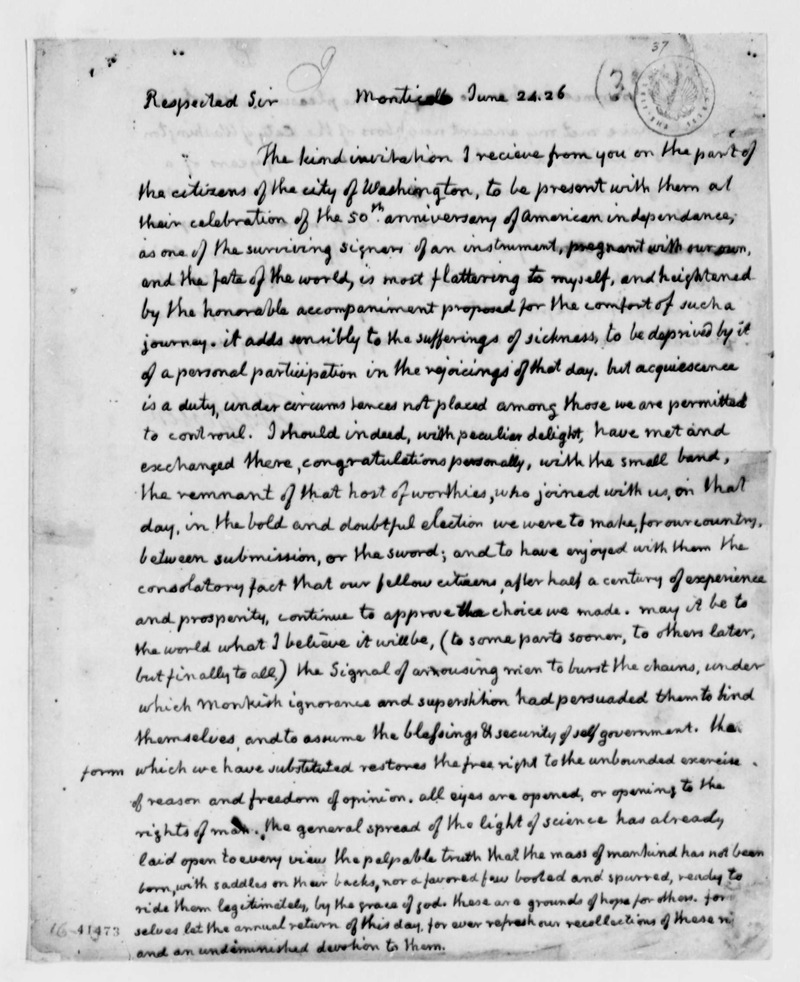
By June of 1826, Jefferson was too sick to travel. Washington's mayor, Roger Weightman, had invited him to the capital for the Jubilee celebration as one of the last surviving signers of the Declaration. On June 24, ten days before he died, Jefferson wrote back to decline.
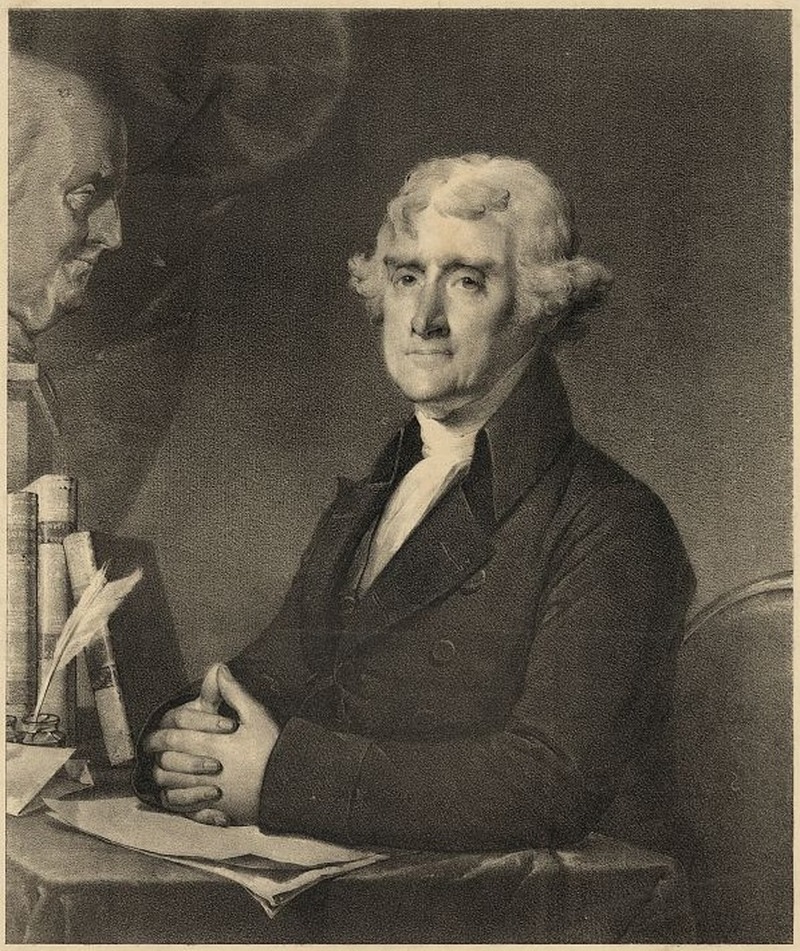 Thomas Jefferson, from a Pendleton lithograph after Gilbert Stuart, circa 1825 to 1828, part of the same Boston print series as the Adams portrait below.
Historians generally describe it as the last major public statement Jefferson ever wrote. In it, he called the Declaration "an instrument, pregnant with our own, and the fate of the world," and closed with a line that has outlived nearly everything else he wrote: he hoped the annual return of the day would keep alive, forever, the devotion to the rights it represented.
He never saw Washington again. On the evening of July 3, and again after midnight, Jefferson asked those in the room with him, "Is it the Fourth?" He died a little after noon the next day, at eighty-three.
Six Hours and Six Hundred Miles Away
Adams was ninety, and had been in relatively good health until just a few months before. On the morning of July 4, he was sitting in his favorite chair in his upstairs study in Quincy. By evening, he was gone.
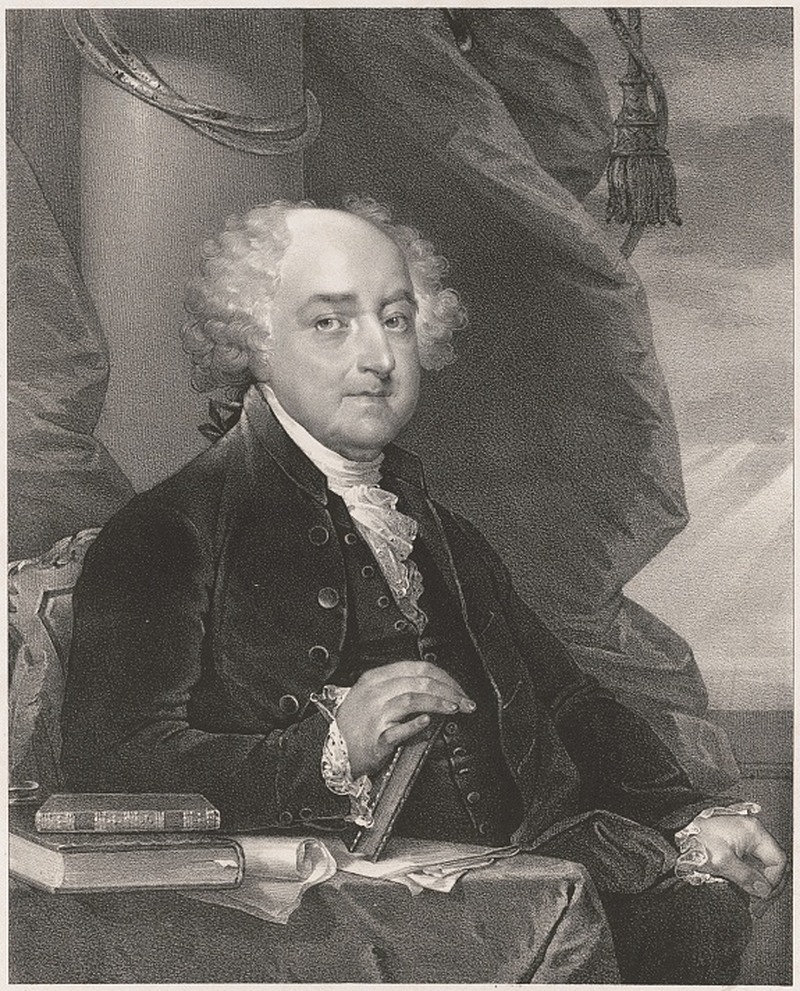 John Adams, from a Pendleton lithograph after Gilbert Stuart, 1828, part of the same Boston print series as the Jefferson portrait above.
According to family accounts, his next to last words were "Thomas Jefferson survives." He had no way of knowing his old friend had died five hours before him. The historical record agrees that witnesses heard Adams utter a version of that phrase, though accounts differ slightly on the exact wording, and his family later said the very last word may have been too indistinct to make out clearly. What isn't in dispute is the substance: with his last coherent thought, Adams was thinking of Jefferson.
The News Took Days to Catch Up
In an era before telegraphs, the coincidence itself traveled slower than the men who caused it. The Constitutional Whig in Richmond reported Jefferson's death on July 7. The Columbian Centinel in Boston did not confirm Adams's death until July 8, and ran the paper with heavy black mourning bars down its columns, a printing tradition going back to the 1600s. Only when word of Jefferson's death reached Boston days later did the paper's next edition carry the line that another great man was gone.
One July 13 newspaper in Wilmington, Delaware, was among those able to report both deaths together, though other papers elsewhere may have connected the two slightly earlier. For most of the country, there was no single moment of shock. There was a slow, staggered realization that the coincidence was even more improbable than it first appeared.
Was It Really Just Coincidence?
The odds alone are worth sitting with.
It is not simply that two elderly men died in the same year, which happens regularly. It is that they died on the same day, that the day was Independence Day, and that the year was the fiftieth anniversary, not the forty-ninth or the fifty-first. Bioethicist Margaret Battin, who has written on the deaths extensively, argues that the convergence of the anniversary, the date, and the two deaths has prompted discussion about the role of intention, timing, and coincidence at the end of life.
Contemporaries leaned toward providence. Statesman Daniel Webster, delivering a eulogy in Boston's Faneuil Hall, called the timing proof that the nation and its founders were watched over from above. Others weren't so sure, and their alternative theories get considerably stranger than divine intervention.
One line of thinking, sometimes called "hanging on," holds that both men were simply willing themselves to survive until the anniversary, then let go once they reached it. It's not as far-fetched as it sounds. Jefferson had written his own last public words specifically for the Jubilee. Adams's son was presiding over the anniversary as president. A eulogist speaking in New York two weeks after the deaths said of Jefferson that his mind had kept "the vital spark alive" until the sun hit its peak on the fiftieth anniversary, and only then let him go.
Some historians and bioethicists have examined the medical decisions made during both men's final illnesses, asking whether their own wishes may have influenced the timing and manner of their deaths. According to later accounts, Adams's doctor gave him medicine the night before he died, and reportedly said it might either kill him within a day or extend his life another week or two. Jefferson, for his part, refused the laudanum, a tincture of opium, that he had been offered the night before his death, a decision historians generally interpret as consistent with his wishes for a natural death rather than proof of intentional self-hastening. While no direct evidence suggests either man intentionally hastened his own death, those discussions have continued because both men left unusually revealing writings about aging, suffering, and dying.
What is verifiable, and genuinely strange, is what both men had written years earlier about death itself. In 1813, Adams wrote a letter in the voice of his own horse, Hobby, imagining the animal wondering aloud whether it would be a kindness to "stumble" and end its aging master's suffering. In 1822, Jefferson wrote to Adams describing his own view that a life stripped of sight, memory, and companionship was barely worth living. And in a letter to Dr. Samuel Brown on July 14, 1813, Jefferson described, almost admiringly, a preparation of Jamestown weed, known today as datura, that he said French Revolutionaries had carried in their pockets to use rather than face the guillotine. He wrote that it brought on "the sleep of death as quietly as fatigue does the ordinary sleep."
None of this proves either man hastened his own death. There is no direct evidence either did. The circumstances have prompted discussion among historians, physicians, and bioethicists precisely because both men had spent years thinking hard about exactly the kind of death they wanted, long before they got one that looked, to nearly everyone watching, like it had been arranged from above.
A Pattern That Kept Going
Adams and Jefferson were not the last piece of this particular puzzle. Five years later, on July 4, 1831, James Monroe, the fifth president, also died, on the anniversary itself, though not on one of the landmark round-number years like Adams and Jefferson's fiftieth. That still makes three of the first five American presidents who died on the nation's birthday. Nobody has ever offered a convincing account of why.
Two hundred years on, the explanation still isn't settled. What's certain is simpler: two men who helped write the country into existence, who spent a decade as enemies before finding their way back to friendship, ran out of time on the same afternoon, on the one day of the year that would make it impossible to ever forget.