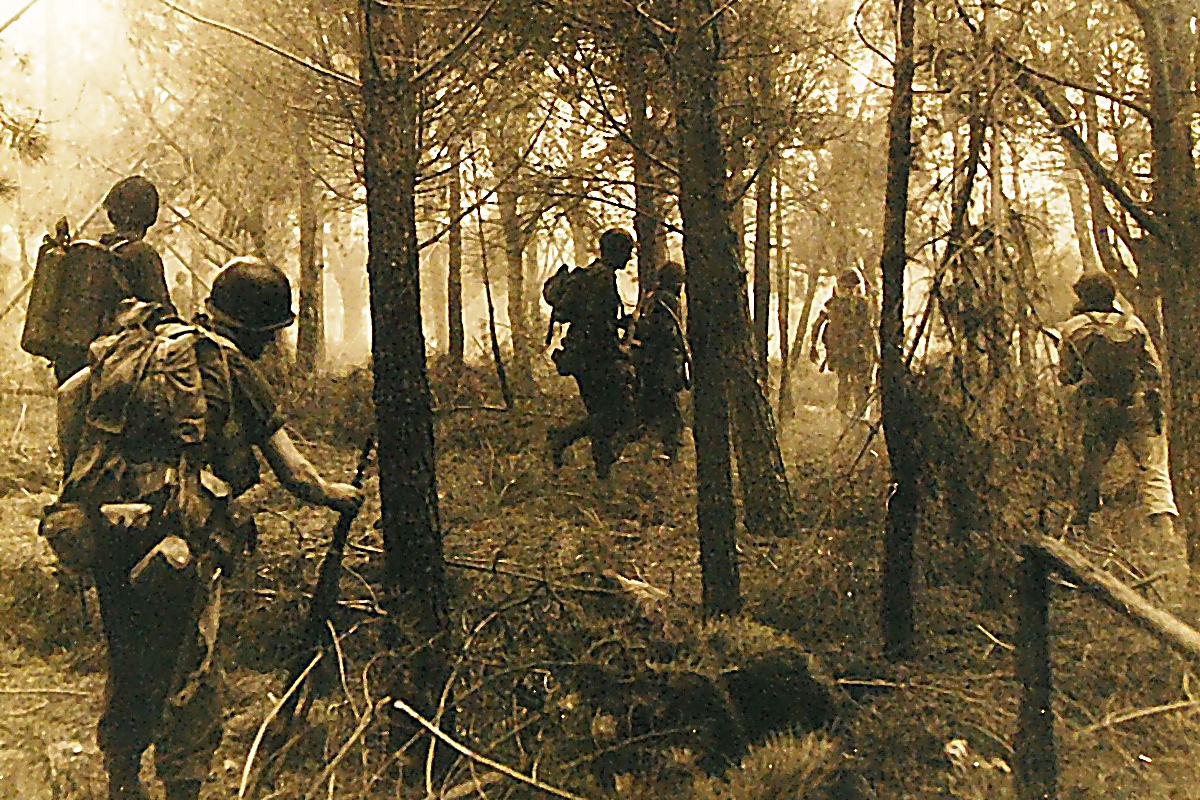
Ask most people what happened on August 15, 1944, and you will get a blank stare. Ask about June 6, and everyone knows the answer. But ten weeks after Normandy, roughly 100,000 Allied troops came ashore in southern France, and the operation would prove enormously important to keeping the Allied armies supplied as the campaign moved into the fall and winter.
The operation was called Dragoon. It rarely gets more than a footnote in popular histories. It deserves better than that.
A Landing Nobody Wanted, Until Everybody Needed It
Dragoon was not a last-minute idea. Planners had sketched it out as early as 1942, and it was meant to happen alongside Normandy, a second hammer blow to split German attention between two fronts. Landing craft shortages killed that plan. The Allies simply did not have enough vessels to run two full-scale invasions on the same day, so the southern landing, then called Anvil, got shelved while Overlord went forward alone.
By July 1944, circumstances had changed the calculation. The port situation in Normandy was worse than expected. A storm in mid-June had wrecked one of the two artificial Mulberry harbors, and the port of Cherbourg, though captured, had been so thoroughly demolished by German engineers that it took weeks to return to service. Free French leadership, meanwhile, was pushing hard for an operation that would put French troops back on French soil in meaningful numbers. On July 2, nearly four weeks after the Normandy landings and after extensive back and forth between the U.S. and British Chiefs of Staff, the Combined Chiefs of Staff approved the southern landing and set August 15 as the target date. It was renamed Dragoon on July 27, according to a widely repeated (though never definitively confirmed) account that Winston Churchill coined the name himself, complaining that he had been "dragooned" into supporting an operation he never wanted.
Churchill's opposition was not a footnote. He fought the plan into the second week of August, arguing instead for continuing the Mediterranean campaign, a push through Italy and the Balkans toward the Adriatic that he believed carried more strategic and political weight than another landing in France. He lost that argument. Eisenhower and Roosevelt held the line, and the invasion went forward on schedule.
The Landing Itself
The target was a roughly 45-mile stretch of the French Riviera between Cavalaire-sur-Mer and Agay, bounded by the Maures and Esterel massifs. Planners selected it for its usable beaches and, just as important, the roads and river valleys leading inland toward Toulon, Marseille and the Rhône Valley.
In the hours before dawn, commandos went first. The joint American-Canadian First Special Service Force landed on the islands of Port-Cros and Levant to knock out German gun positions covering the invasion fleet. On Levant, they discovered that the "coastal battery" naval planners had worried about most was actually a set of well-camouflaged dummy guns. French commandos hit a real battery at Cap Nègre. Paratroopers of the 1st Airborne Task Force, American and British together, dropped inland near Le Muy to block German reinforcements from reaching the beaches, though fog scattered many of them miles from their intended drop zones.
The main assault came at roughly 8:00 a.m. on August 15, after ninety minutes of naval and aerial bombardment. Three American divisions of Maj. Gen. Lucian Truscott's VI Corps went ashore on three beaches: the 3rd Infantry Division at Alpha, near Cavalaire; the 45th at Delta, near Sainte-Maxime; and the 36th at Camel, near Saint-Raphaël. Resistance on the western beaches was light. At Camel, German coastal guns put up a real fight, enough that commanders scrapped the landing at one sector entirely and shifted those troops to easier ground nearby, a decision that at least invites comparison to the costlier lesson of Omaha two months before. U.S. losses during the assault phase were remarkably light given the scale of the operation: 95 killed and 385 wounded.
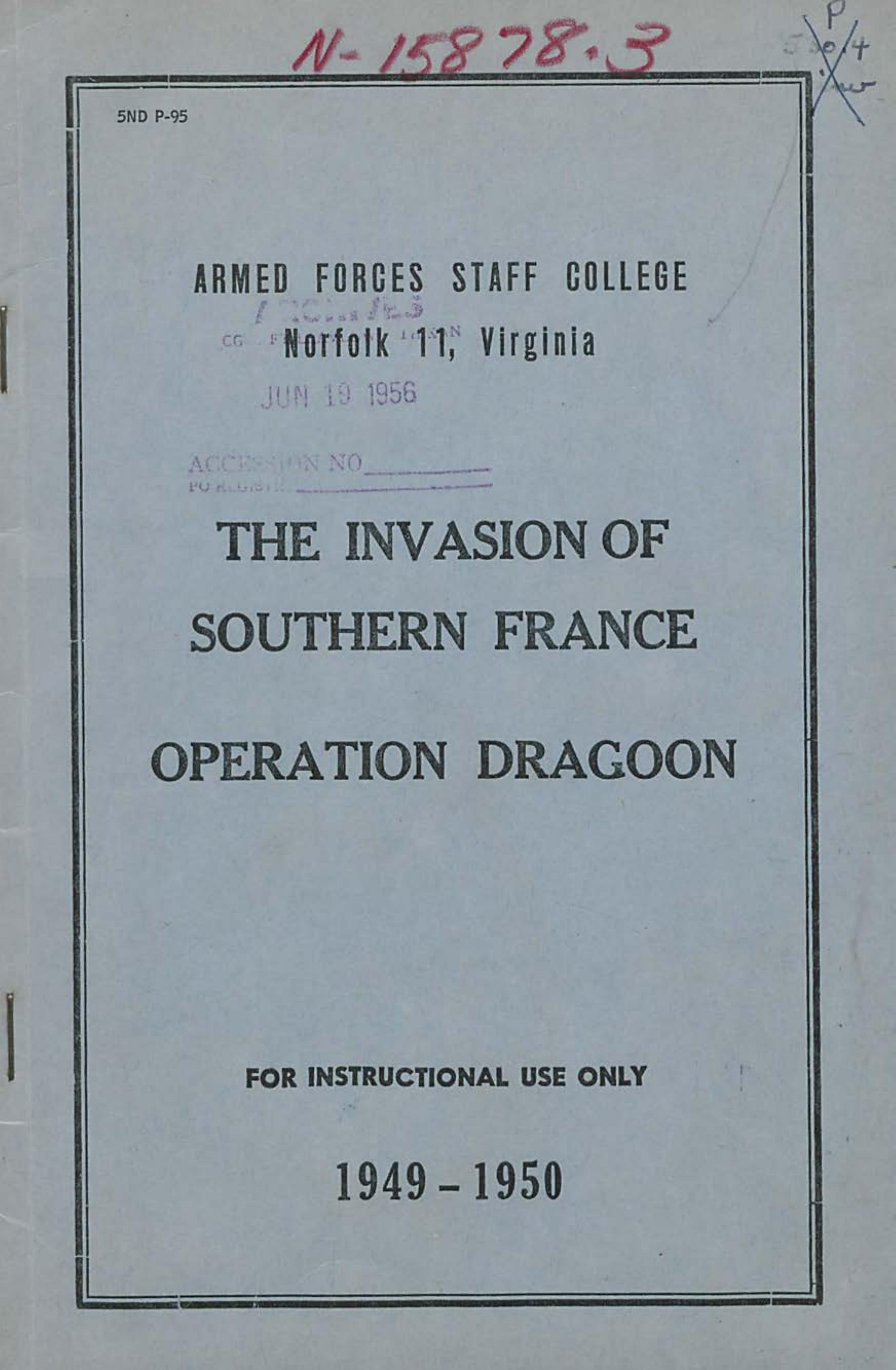
By the end of D-Day, according to the Armed Forces Staff College's own account of the operation, VI Corps had pushed roughly six miles inland, and elements of two German divisions had already been engaged, with more than 2,000 prisoners taken.
Who Was on the Other Side
The German defense fell to the 19th Army under Gen. Friedrich Wiese, part of Army Group G under Gen. Johannes Blaskowitz. On paper, Army Group G had eleven divisions. In practice, most were badly understrength, several were "static" units stripped of any ability to move, and a significant share of the rank and file were Ostlegionen, troops recruited from occupied Eastern Europe who generally had limited training, poor equipment and uncertain reliability. The principal mobile threat was the 11th Panzer Division under Wend von Wietersheim, and even that division had already given up one of its two tank battalions to the fighting in Normandy.
Blaskowitz and his staff had been quietly working out contingency plans for a withdrawal for weeks, well aware that the coast could not realistically be held against a serious landing. Berlin was not cooperative. Only after the invasion succeeded, and only after the Falaise Pocket disaster in Normandy made the strategic picture undeniable, did Hitler sign the order authorizing a full withdrawal, on August 16. It took two more days for that order to actually reach Blaskowitz.
The Race Nobody Remembers
What followed was not really a battle so much as a pursuit. French forces under Gen. Jean de Lattre de Tassigny peeled off toward Toulon and Marseille, the two ports that were central to the operation's strategic purpose, while the Americans turned north and raced up the Rhône Valley chasing the retreating German 19th Army.
Toulon fell to French forces on August 26 after a hard week of house-to-house fighting against a garrison that had been ordered to hold the port as long as possible. Marseille's defenders surrendered two days later, on August 28, after French troops and an uprising by the Resistance overwhelmed the German defenses. Both ports had been heavily demolished by German engineers before they fell, but Allied port battalions and French dockworkers had them handling meaningful tonnage within weeks, a recovery that mattered enormously once autumn arrived and the northern supply lines started to strain.
North of the ports, the sharpest fighting of the whole campaign happened at Montélimar, a chokepoint on the German escape route up the Rhône. A hastily assembled American force called Task Force Butler, later reinforced by the full 36th Infantry Division, tried to seal the valley and trap the retreating 19th Army. They never fully closed the door. A large part of the German force fought its way through, at the cost of enormous losses in vehicles and equipment, and continued its long retreat north.
By September 10-11, forward elements of the American Seventh Army made contact with Patton's Third Army near Dijon, closing the gap between the two invasion forces and creating one continuous Allied front stretching from the English Channel to Switzerland. According to the American Battle Monuments Commission, which maintains the Rhône American Cemetery in Draguignan for the men who died in this campaign, the drive up the Rhône Valley inflicted more than 143,000 German casualties, a figure covering killed, wounded and captured, in three weeks while liberating 10,000 square miles of French territory.
Why It Mattered More Than the History Books Suggest
None of this happened in a vacuum. By mid-October, Marseille was handling more than 19,000 tons of supplies and equipment a day, and by the end of December the southern French ports had received more than 1.5 million tons for the Sixth Army Group. They became a major Allied supply artery at exactly the moment the northern armies were running into increasingly severe logistical problems, with Cherbourg still limping back to capacity and the port of Antwerp blocked by German forces holding the Scheldt estuary. The Seventh Army and the French First Army, anchoring the southern end of the Allied line that winter, gave Eisenhower a supply route and a front he did not have to build from nothing as the fighting in the Ardennes approached.
Operation Dragoon never got its due, in part because it happened in the shadow of Normandy and in part because the U.S. Army did not finish its own official history of the campaign, Riviera to the Rhine, until 1993, nearly fifty years after the fact. The campaign was sometimes nicknamed the Champagne Campaign, a reference to the surprisingly light resistance and rapid advance that carried Allied troops north through France. It was also a genuine strategic gamble that paid off, planned and executed by an army that had, by August 1944, gotten very good at storming beaches.
It is worth remembering both halves of that story.