On the morning of June 14, 1775, delegates to the Second Continental Congress gathered in Philadelphia and did something that had never been done before. They voted to create a national army.
Not a state militia. Not a temporary provincial force. A continental army, answerable to the Continental Congress, raised to fight a war on behalf of all thirteen colonies.
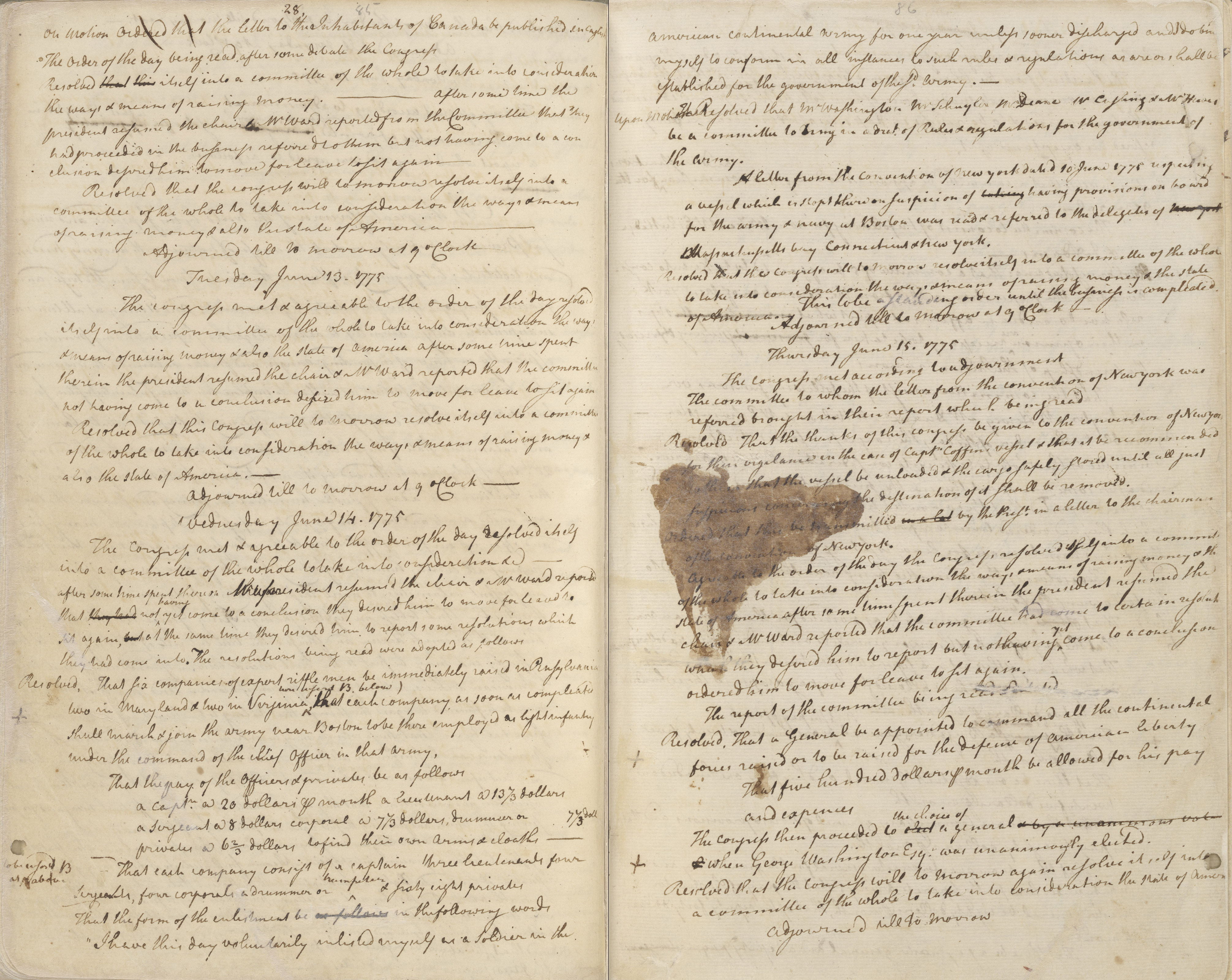
The resolution was brief. Congress authorized ten companies of expert riflemen, six from Pennsylvania and two each from Maryland and Virginia, to march immediately to Boston and serve as light infantry under a commander yet to be named. Pay was set: a captain at twenty dollars per month, a private at six and two-thirds dollars.
The soldiers would serve for one year. And they would swear an oath, the first ever sworn to a continental American authority, to a body that did not yet represent a nation.
The Nation Came Later
The date was June 14, 1775. The Declaration of Independence would not be signed until July 4, 1776. That is a gap of 385 days.
George Washington would be appointed Commander-in-Chief the following day, June 15, and receive his formal commission on June 19. He left Philadelphia immediately for Boston, where his new army was already in the field, surrounding British forces following the battles at Lexington and Concord. The Battle of Bunker Hill was still two days away. Washington would not learn of it until June 24, when news reached him on the road in New York.
Washington commanded that army as a general of the United Colonies, not of the United States. For more than a year, he led men who were fighting and dying for a country that had not yet declared itself into being. The Continental Army was America's first national institution, predating the Declaration of Independence, the Constitution, and every other structure of American government.
What the Resolution Actually Said
The official journal entry for June 14, 1775, is notably sparse. That was deliberate. The real debate happened inside the Committee of the Whole, a procedural mechanism that allowed Congress to discuss sensitive matters off the official record. The secrecy was intentional. Raising a continental army was an act of war against the Crown, and the delegates understood exactly what they were doing.
What survived in the written record is the resolution itself. Congress resolved that six companies of expert riflemen be immediately raised in Pennsylvania, two in Maryland, and two in Virginia. Each company would consist of a captain, three lieutenants, four sergeants, four corporals, a drummer or trumpeter, and sixty-eight privates. As soon as each company was complete, it was to march and join the army near Boston.
The enlistment oath Congress adopted that same day read:
"I have, this day, voluntarily enlisted myself, as a soldier, in the American continental army, for one year, unless sooner discharged: And I do bind myself to conform, in all instances, to such rules and regulations, as are, or shall be, established for the government of the said Army."
One of the earliest surviving official uses of the phrase "American continental army" appears in that oath, binding soldiers not to a colony, but to a continental authority.
Bigger Than It Looked
The resolution authorized ten companies. But Congress was already thinking larger.
Simultaneously with the rifle company authorization, Congress quietly adopted responsibility for the existing New England forces already besieging Boston, estimated at roughly ten thousand men, and for five thousand additional troops already positioned in New York. Within days, delegates were discussing a force approaching fifteen thousand at Boston alone. By late July, maximum authorized strength had been set at twenty-two thousand in Massachusetts and five thousand in New York, nearly double what had been envisioned on June 14.
The rifle companies were symbolic as much as tactical. By drawing men from Pennsylvania, Maryland, and Virginia, Congress was deliberately signaling that this was not a New England army fighting a New England war. It was an American army.
The Man They Chose
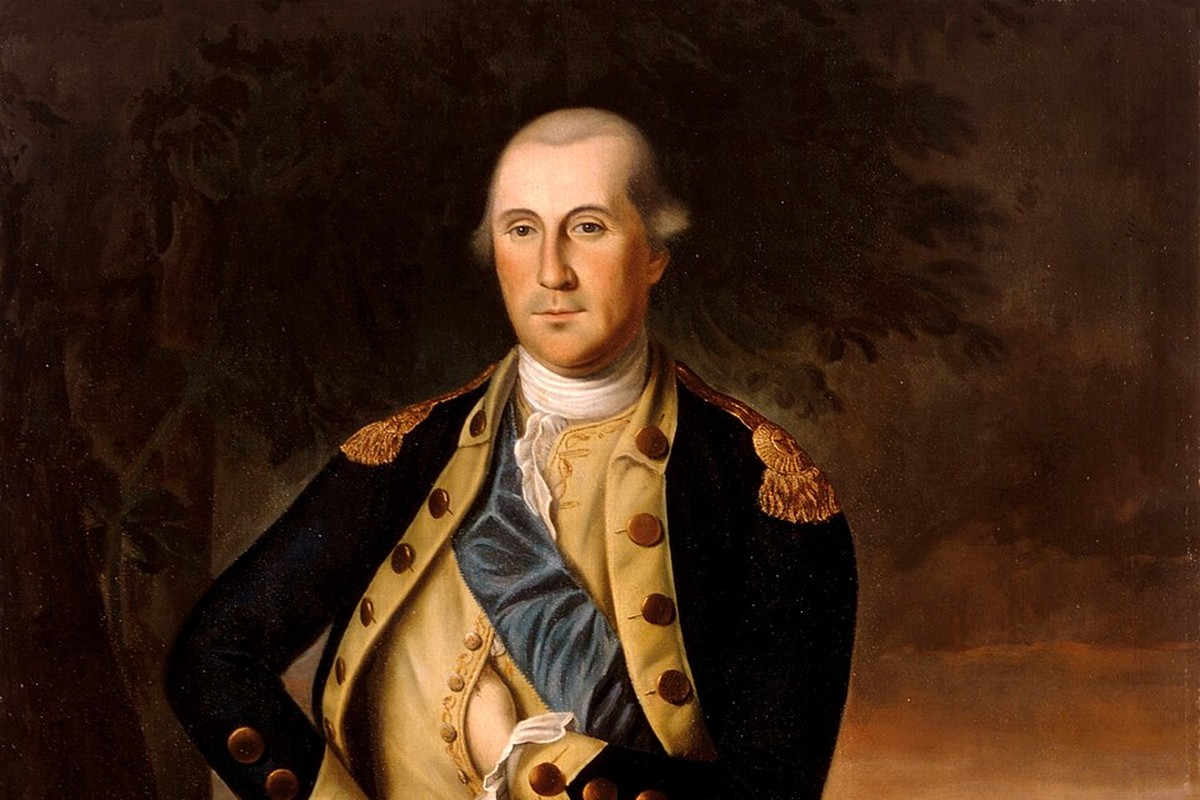
Congress spent June 15 selecting a commander. The vote was unanimous: George Washington of Virginia.
Washington had been attending Congress in his old Virginia militia uniform from the French and Indian War, a visible signal of his readiness to serve in some military capacity. He later wrote to Martha that he had used every endeavor in his power to avoid the appointment, though his qualifications were beyond dispute. He was the only American who had commanded a multi-colony force in the field. He understood logistics, discipline, and the grinding administrative work that kept an army functional.
His commission charged him to take command of "the army of the United Colonies, and of all the forces now raised, or to be raised, by them" and to repel "every hostile invasion thereof." He was granted extensive authority, combining the powers of a British field commander with those of a colonial governor.
Washington accepted and left for Boston immediately. He would not return to his home at Mount Vernon for more than six years.
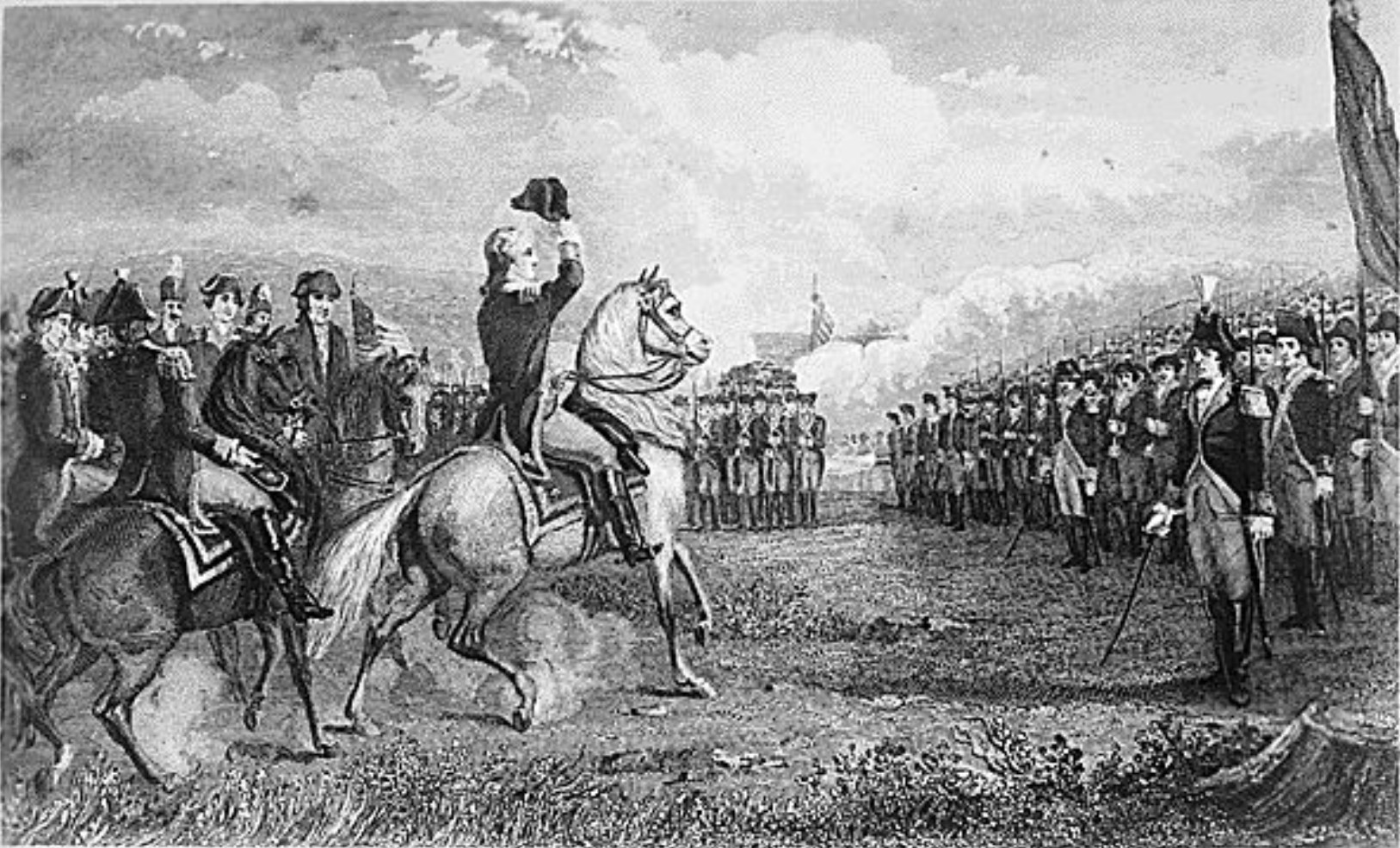 Washington takes command of the Continental Army at Cambridge, Massachusetts, July 3, 1775. He had left Philadelphia within hours of receiving his commission.
An Army Without a Country
What followed was one of the most remarkable military undertakings in history. Washington commanded a force that was perpetually underfunded, undersupplied, and undermanned. Enlistments expired at critical moments. Mutinies flared. Congress could not compel the states to provide adequate food, money, or clothing.
And yet the army held together. It retreated when it had to and struck when it could. It endured Valley Forge. It crossed the Delaware in the dead of winter. It absorbed French training under Baron von Steuben and eventually French arms, troops, and naval support that proved decisive at Yorktown in 1781.
Through it all, it remained what the Continental Congress had created on June 14, 1775: a national institution fighting for an idea of a country before that country fully existed.
The United States Army celebrates June 14 as its official birthday every year. This year marks 251 years.
The original handwritten journal entry recording the June 14, 1775 resolution is held by the National Archives. A printed transcription, edited from those original records by Worthington Chauncey Ford, Chief of the Division of Manuscripts, was published by the Library of Congress in 1905 as Volume II of the Journals of the Continental Congress, 1774-1789.