
He drove a Jaguar. He owned a half million dollar home in northern Virginia, paid for in cash. He and his wife took expensive vacations and ran up credit card bills that would have bankrupted most CIA salaries three times over.
Nobody asked where the money came from.
Aldrich Ames had worked for the CIA for thirty one years. By 1985 he was chief of the Soviet counterintelligence branch, one of the most sensitive positions in American intelligence. He knew the names of every Soviet citizen secretly working for the United States. He knew their cover identities, their methods of communication, their handlers.
In April of 1985 he walked into the Soviet embassy in Washington and handed over the names of several CIA assets in exchange for fifty thousand dollars. It was supposed to be a one time thing.
It was not a one time thing.
Over the next nine years Ames passed the Soviets the identities of virtually every CIA asset operating inside the Soviet Union. The damage assessment completed after his arrest concluded that he had compromised more CIA operations than any other officer in the agency's history. At least ten of the assets he named were executed. Others were imprisoned or disappeared.
The CIA noticed that assets were being rolled up at an alarming rate. Officers were quietly reassigned. Theories circulated. Internal investigations were opened and closed. The possibility that a traitor sat inside the agency's own counterintelligence division was considered and then set aside.
Ames passed his polygraph examinations. He was known as a difficult employee, a heavy drinker, someone who struggled with paperwork and deadlines. But a traitor? The agency could not bring itself to believe it.
The FBI opened a formal investigation in 1991. Investigators noticed the money first. The Jaguar. The house. The credit card statements. They began connecting the deposits to Ames's meetings with Soviet contacts. In February of 1994 they arrested him in the driveway of his Virginia home on his way to work.
He pleaded guilty. He cooperated. He told investigators everything.
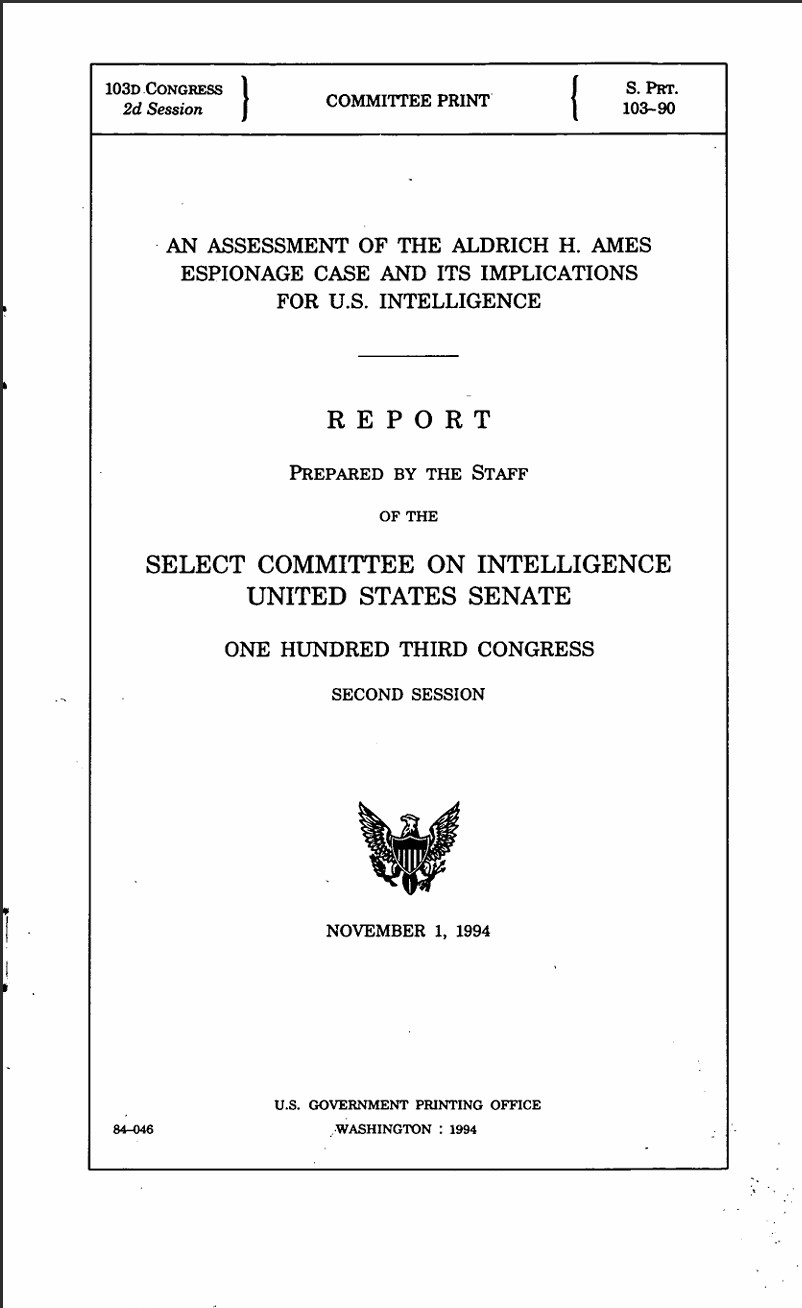
The Senate Intelligence Committee investigated how it had taken nine years to catch a man who had been driving a Jaguar on a government salary. Their report, released in November of 1994, found systemic failures across the CIA and FBI, including inadequate financial monitoring of employees with access to sensitive information, poor coordination between agencies, and a culture that resisted the idea that the threat could come from within.
The reforms that followed reshaped how American intelligence agencies monitor their own people. Financial disclosure requirements were strengthened. Polygraph standards were revised. Interagency communication protocols were overhauled.
Aldrich Ames served his sentence at a federal penitentiary in Tucson, Arizona. He died on January 5, 2026, at the age of 84, having spent the last thirty two years of his life in prison. In interviews conducted over the years he described his motivation plainly: he needed the money, he believed the Cold War was a cynical enterprise on both sides, and he never expected to get caught.
He was right about two of those three things.