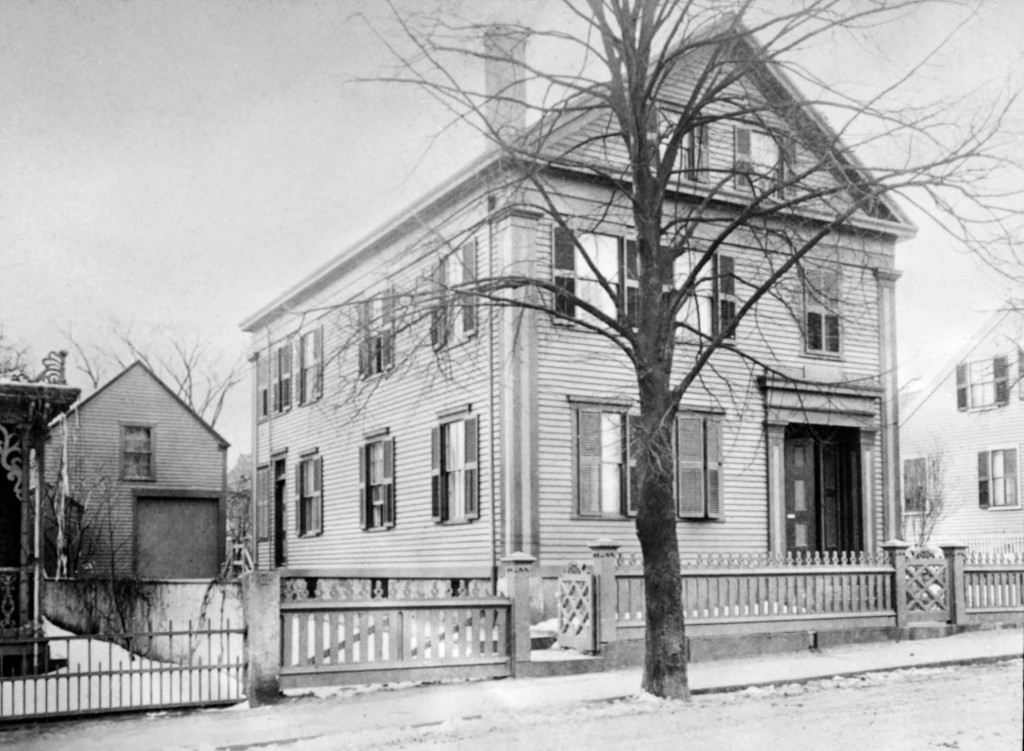
On the morning of August 3, 1892, a woman walked into D.R. Smith's drugstore in Fall River, Massachusetts, and asked the clerk for ten cents worth of prussic acid. She said she needed it for a sealskin cape. The clerk, a young man named Eli Bence, refused to sell it to her. Prussic acid was a controlled substance, fast acting and frequently lethal, and she had no prescription. She left without it, according to Bence, in a haughty manner.
The next morning, Andrew Borden and his wife Abby, Lizzie's stepmother, were found dead in their home, struck down with a hatchet. The woman at the counter, Bence later swore under oath, was Andrew's daughter, Lizzie.
Most people who know the Borden case know the rhyme, the forty whacks, the brief jury deliberation that ended in acquittal. Almost nobody knows that a witness later swore, twice, under oath, that Lizzie Borden had tried to purchase a deadly poison the day before the murders, or that the jury who acquitted her never heard a word of it.
A Sick House
In the days before the murders, the Borden household had been unwell. Andrew, Abby, and the family's maid, Bridget Sullivan, all suffered bouts of nausea and vomiting, the symptoms worst the night of August 3rd. Abby was frightened enough by it that she went to see Dr. Seabury Bowen, the family physician, and told him she believed someone had deliberately poisoned them.
The explanation that circulated afterward was a mundane one: spoiled mutton, left out too long in the August heat. Food poisoning was common, unglamorous, and far less alarming than the alternative.
Within a day, Bowen was back at that house, this time to examine two bodies.
 Lizzie Borden, circa 1890. Public domain, via Wikimedia Commons.
A Request at the Counter
Bence found the explanation strange. Prussic acid, also known as hydrocyanic acid, was not something you put on fur. It was one of the most lethal substances a Fall River druggist could keep behind the counter, capable of killing within minutes. Two other customers in the store that morning later confirmed that a conversation like this had taken place, according to records of the case.
Bence came forward almost immediately after the murders became public, within days giving a formal statement to police. When the inquest into the Borden murders opened on August 9, he repeated the story under oath. He repeated it again at Lizzie's preliminary hearing later that month. Twice, in two separate legal proceedings, on the record, Eli Bence swore that Lizzie Borden had tried to buy a deadly poison the morning before her parents died.
What the Jury Never Heard
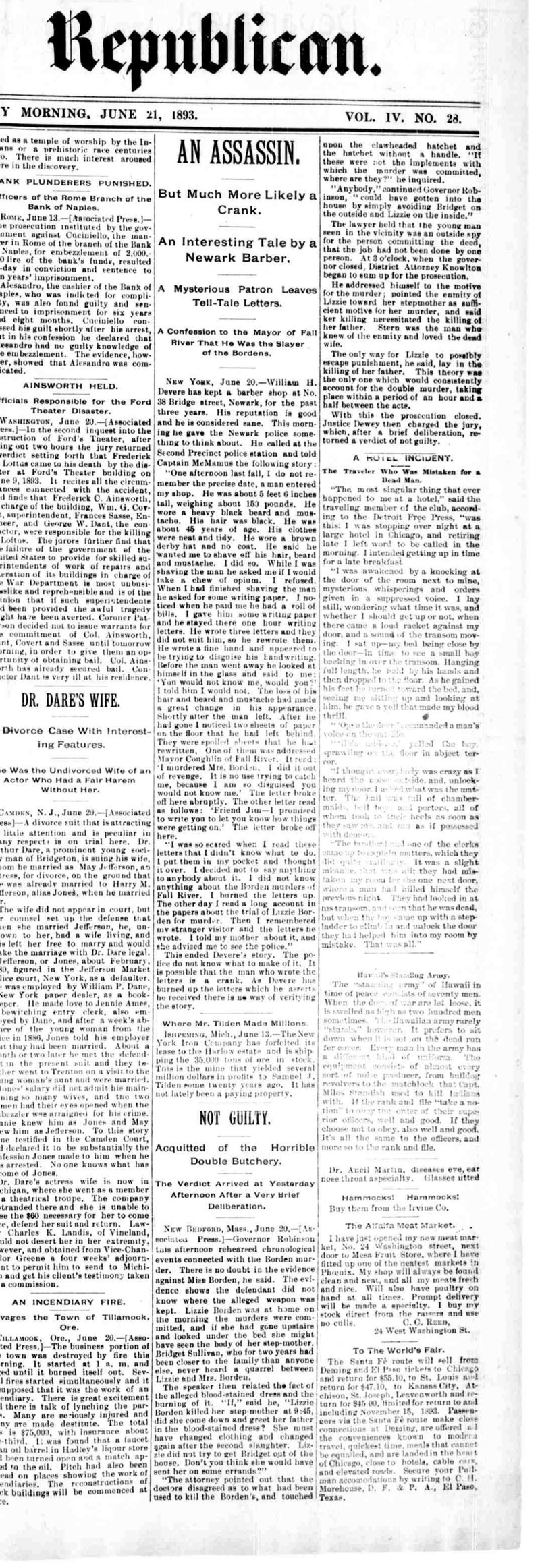
By the time Lizzie Borden's murder trial opened in New Bedford in June 1893, the prosecution wanted to put Bence in front of the jury a third time. With the jury excused from the courtroom, the state spent time trying to lay the legal groundwork for his testimony, calling chemists, druggists, and furriers to establish exactly what prussic acid was and how it was used. The three-judge panel listened to all of it and then ruled the testimony inadmissible. The connection to the killings, they decided, was too remote to put in front of a jury, a ruling about how directly the purchase attempt tied to the murders rather than simply how many hours had passed between the two.
Bence was excluded from the trial entirely. The jury, deliberating afterward for what contemporary newspapers reported as roughly forty minutes (other accounts put it closer to an hour and a half), reached a verdict of not guilty without ever hearing that a Fall River druggist had twice sworn, under oath, that Lizzie Borden had tried to buy poison the day before her parents were killed.
It remains one of the most debated pieces of excluded evidence in the case, and one of the least known.
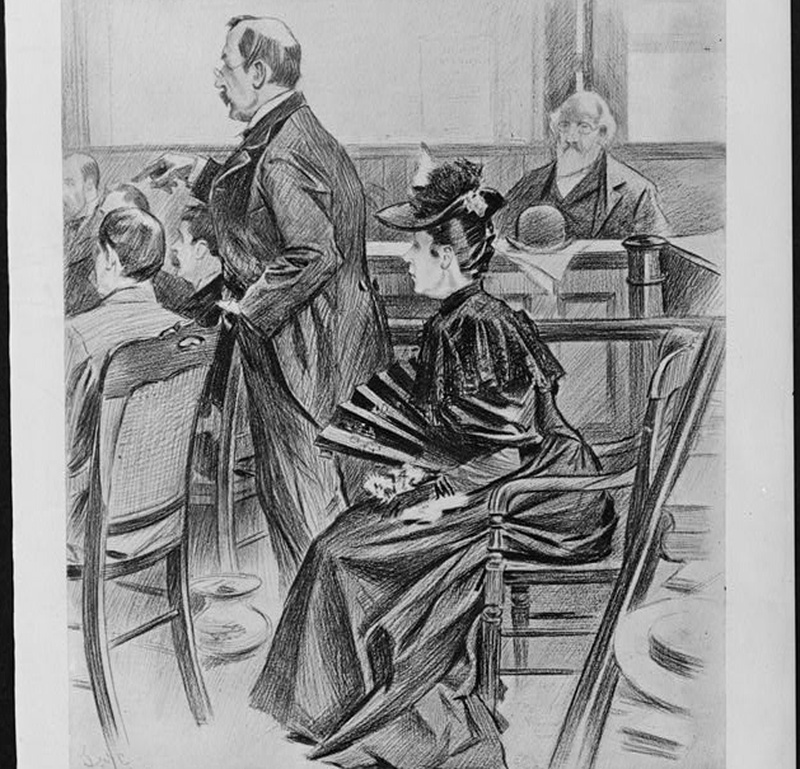 Lizzie Borden and her counsel, former Massachusetts Governor George Robinson, sketched in court before the acquittal. Drawn by B. West Clinedinst, 1893. Library of Congress, no known restrictions on publication.
A Different Shape of Doubt
If Bence was telling the truth, and there is no clear motive for him to lie, the Borden case looks less like an entirely spontaneous act and more like a scenario in which premeditation becomes a real possibility. It doesn't prove Lizzie intended to poison her parents, only that she may have tried to obtain a means to. But that single fact changes the shape of the question.
That is the version of the story the jury was never permitted to weigh.
What We Still Don't Know
None of this proves anything outright. The illness that moved through the household in the days before the murders could genuinely have come from spoiled food in August heat, exactly as the period's mundane explanation held. No prussic acid was ever found in the Borden home, and no autopsy evidence tied poison to the deaths. The identification of Lizzie as the customer rests primarily on Bence's own testimony, repeated consistently across two sworn proceedings, even though other witnesses in the store could confirm the conversation itself took place. Lizzie Borden herself denied ever entering the store.
What is certain is that the jury who found her not guilty did so without the chance to consider it. Whether that changes how the case reads more than a century later is something each reader has to decide for themselves.
Eli Bence told his story twice under oath before Lizzie Borden ever stood trial. Whether it would have changed the verdict is impossible to know. What's certain is that the jury never had the chance to weigh it.