On the morning of July 21, 1861, a line of carriages rolled out of Washington, D.C. toward a small Virginia creek called Bull Run. Inside them were United States senators, congressmen, newspaper reporters, and ordinary Washingtonians, many of them carrying picnic baskets and opera glasses. They expected to watch the Union army crush the rebellion in an afternoon and be home for supper.
By evening, several of them were running for their lives.
The war had only been going for three months. Fort Sumter had fallen in April, and the northern press wanted blood, or at least a quick victory. Horace Greeley's New York Tribune had been hammering the same headline for weeks: "Forward to Richmond!" The idea was that a single decisive battle would scatter the rebel army, and the whole business would be settled before anyone had to think too hard about it. President Lincoln, under enormous political pressure, ordered Brigadier General Irvin McDowell to march on the Confederate forces gathered at Manassas Junction, a rail hub about 25 miles from the capital.
McDowell did not want to go. His army of 35,000 men had barely finished forming, let alone training. When he raised the obvious objection to Lincoln, that his troops were green, the president reportedly told him not to worry about it: the other side's men were just as green. It was true. Neither army had ever fought a real battle before. Neither commander had ever led one this large.
A war you could picnic at
Word had gotten around Washington that something big was about to happen at Bull Run, and for a certain kind of Washingtonian, that sounded less like a warning and more like an invitation. Centreville, Virginia was a long carriage ride from the city, so those who wanted to spend a Sunday watching the war end had to bring their own food. Some accounts describe families laying out lunches on the hills above the battlefield. Others mention a few enterprising vendors selling pies to the crowd. Among the spectators were sitting senators, including Michigan's Zachariah Chandler, Ohio's Ben Wade, and Massachusetts's Henry Wilson, along with New York congressman Alfred Ely.
They weren't being reckless so much as confident. Almost nobody in that carriage line imagined they were about to witness the opening act of a war that would run four more years and kill roughly three quarters of a million Americans. As far as most of them knew, this was the whole war, and it was going to be over by dinner.
The fighting begins
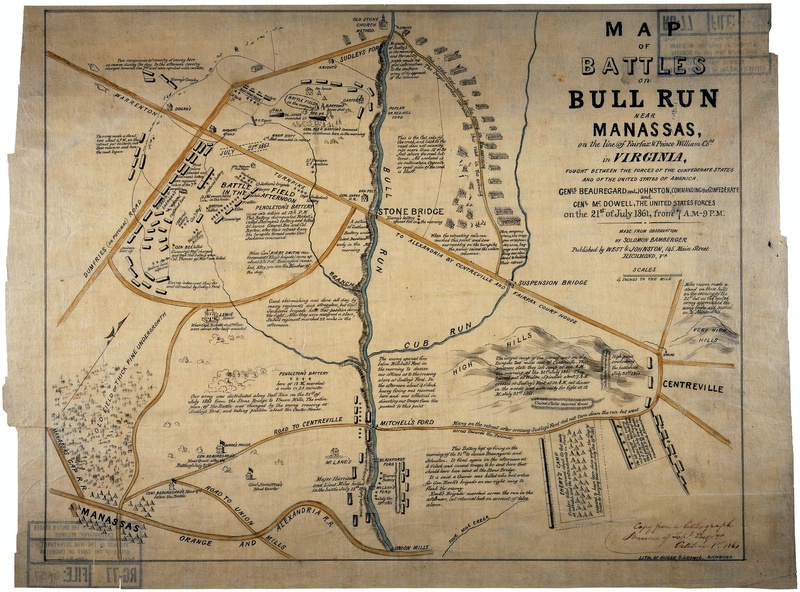
McDowell's plan was sound enough on paper. He would send part of his army in a diversionary attack at the Stone Bridge over Bull Run, while the bulk of his force swung wide to the north, crossed at Sudley Springs Ford, and came down on the Confederate left flank before Beauregard's men knew what hit them.
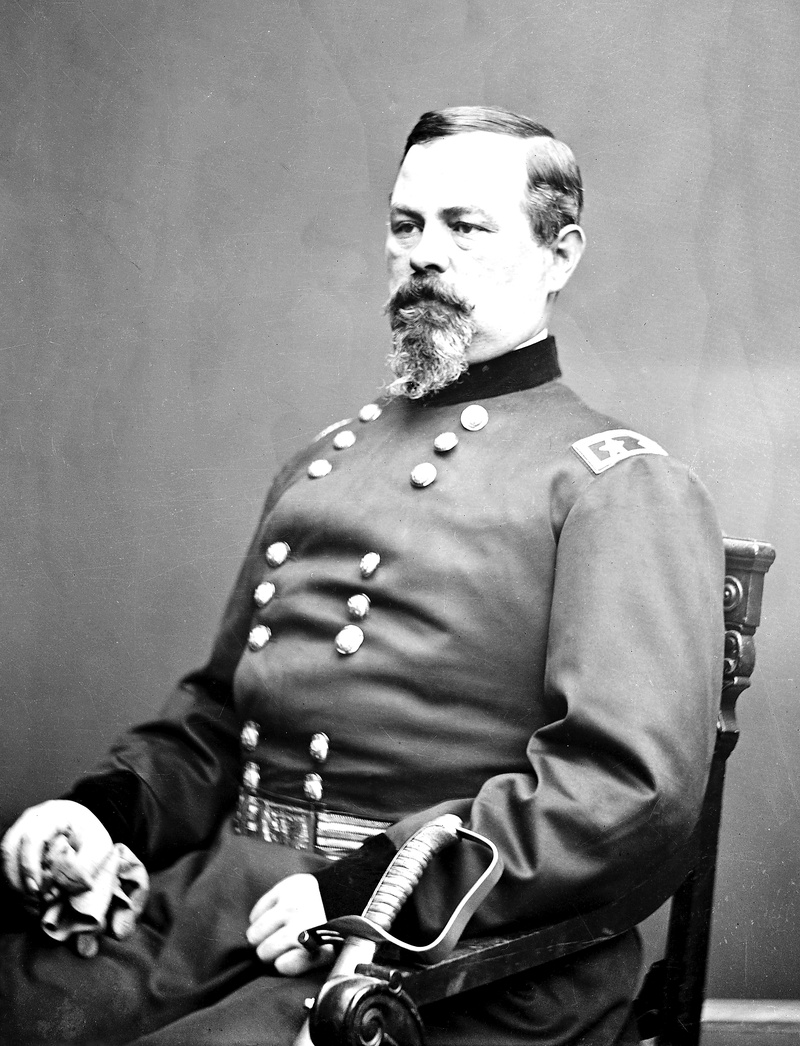 Brig. Gen. Irvin McDowell commanded the Union army at Bull Run. He and his Confederate counterpart, P.G.T. Beauregard, had been classmates at West Point.
It worked, for a while. As part of the flanking column crossing at Sudley Springs, Colonel William Tecumseh Sherman's brigade helped drive the Confederate defenders from Matthews Hill, hitting them from an angle they weren't prepared for. By late morning, the outnumbered Confederate brigade holding the hill was falling back in disorder. The spectators watching from Centreville Heights, five miles off, could see smoke and hear artillery, and the early reports filtering back through Union officers sounded like exactly the victory everyone had come to see.
Then Joseph E. Johnston's reinforcements started arriving. And that, more than anything else that happened at Bull Run, is the detail that gets left out of the picnic story.
The battle nobody saw coming, because of a train
Johnston commanded a separate Confederate army in the Shenandoah Valley, roughly 60 miles from Manassas. Union General Robert Patterson had been tasked with keeping that army occupied so it couldn't reinforce Beauregard, though the orders he was working from were vague enough that historians still argue over how much of the blame belongs to him and how much belongs to Washington. Whatever the cause, Patterson failed to prevent Johnston from slipping away. Johnston marched his men to Piedmont Station and loaded them onto the cars of the Manassas Gap Railroad.
It was one of history's first strategically significant uses of railroads to reinforce troops during an active campaign. European armies had experimented with moving men by rail before, but nobody had used it quite like this: reinforcements arriving by train and then marching into a battle already underway. Limited rolling stock meant Johnston's men couldn't all move at once. Beginning on July 20, they reached the battlefield in stages, with additional troops still detraining and marching into the fight during the afternoon of July 21. Confederate commanders would spend the rest of the war exploiting the same trick. Union commanders would spend years catching up to it.
Stonewall, and what may have actually been said
As the retreating Confederates fell back toward Henry House Hill, a brigade of Virginians under a little-known brigadier general named Thomas J. Jackson formed a defensive line and held it. General Barnard Bee, trying to rally his own collapsing troops nearby, is said to have pointed at Jackson and shouted something like, "There is Jackson standing like a stone wall. Rally behind the Virginians!"
That's the version that stuck, and it's the reason a Virginia Military Institute professor is remembered today as Stonewall Jackson. But Bee was shot through the stomach shortly after supposedly saying it and died the next day, which means there's no first-hand account of what he actually meant. At least one of Johnston's staff officers later claimed Bee was furious that Jackson hadn't moved to support him sooner, and that the line was meant as an insult: look at Jackson, standing there like a stone wall, not moving to help anyone. Nobody can prove it either way anymore. The nickname won regardless of what Bee intended by it.
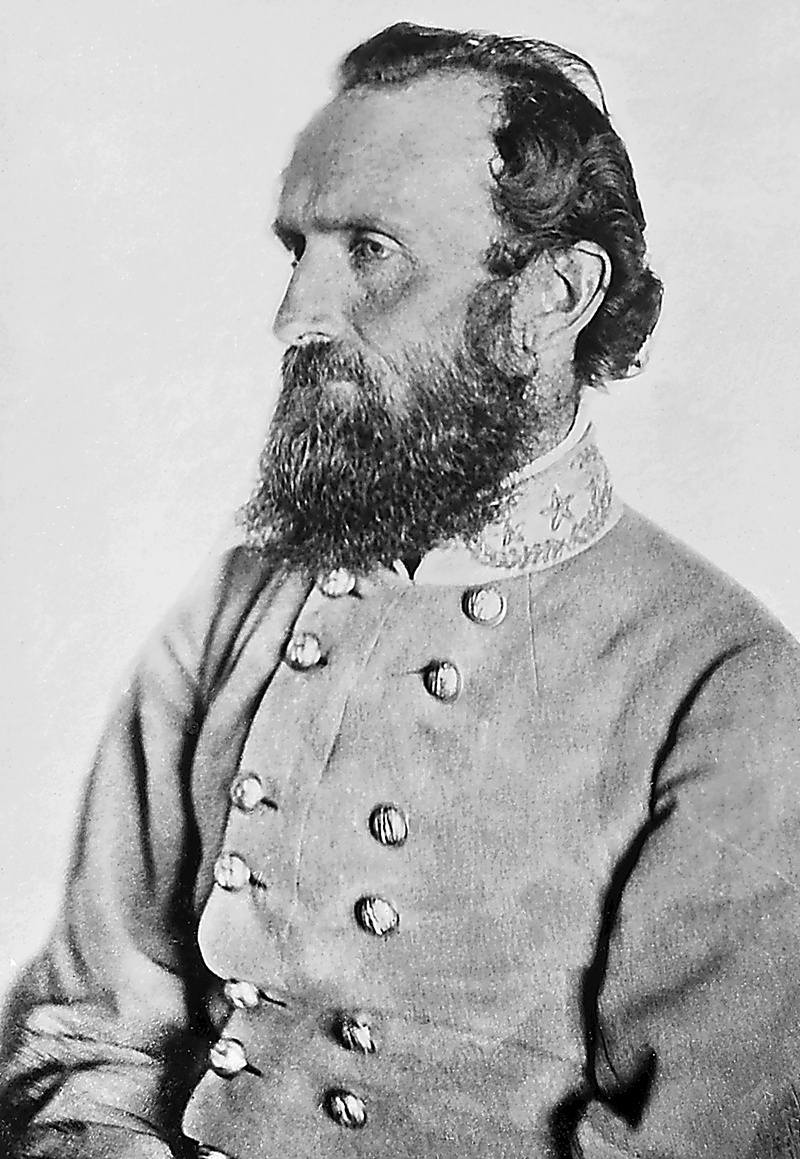 Thomas J. Jackson earned his famous nickname on Henry House Hill, though historians still argue about whether it was meant as praise.
Blue against blue, and a widow in her bed
Uniforms hadn't been standardized yet, and it cost lives. At one point in the afternoon, Union artillery commander Charles Griffin spotted a regiment approaching his flank and prepared to open fire, only to be overruled by his own superior officer, who mistook the oncoming troops for fellow Federals because they were wearing blue. They were the 33rd Virginia. The mistake let Confederate infantry close the distance and overrun Griffin's guns, a turning point in the fight for Henry House Hill. The similarity between the Confederacy's national flag, the Stars and Bars, and the American flag caused the same kind of confusion all afternoon, and it's one reason Confederate armies later adopted the distinctive square battle flag most people recognize today. The Stars and Bars stayed on as the Confederacy's official national flag. It was the flag carried into combat that changed.
The hill took its name from the Henry family, who had lived there for years and had nowhere else to go when two armies decided to fight over their front yard. Judith Carter Henry was 85 years old, bedridden, and unable to be moved when the shelling started. When Union artillery began taking rifle fire from the direction of her house, they assumed Confederate sharpshooters were inside and turned their guns on it. A shell tore through the bedroom wall, took off one of her feet, and inflicted wounds she died from the next day. She is generally remembered as the first civilian killed in the Civil War.
Four o'clock, and the picnic ends
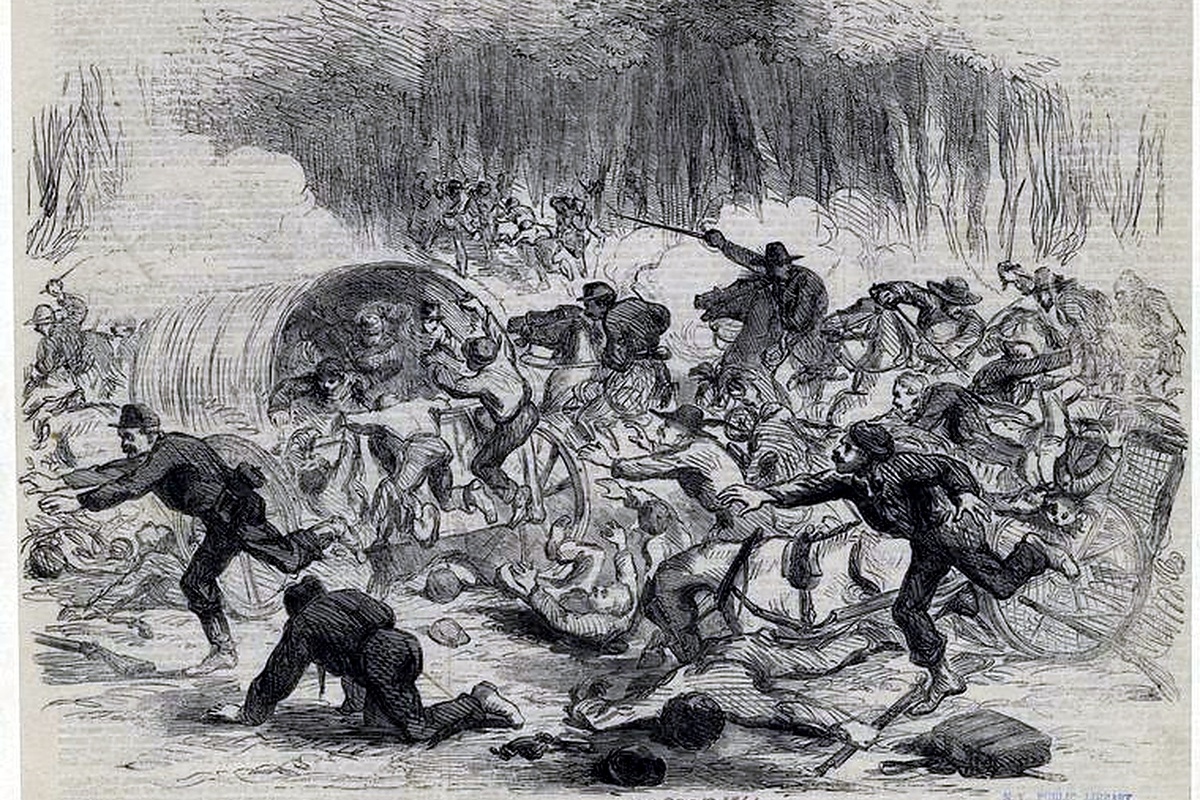
By mid-afternoon both sides had roughly equal numbers on the field, and Beauregard ordered his entire line forward. The Confederates went in screaming, in one of the earliest battles where Union soldiers described what would become known as the rebel yell, and McDowell's exhausted, disorganized army began to come apart. What started as an orderly withdrawal turned into a rout once a Confederate artillery shell overturned a wagon on the bridge over Cub Run, blocking the road and setting off a panic.
Soldiers threw down their weapons and ran. So did a great many of the spectators who had followed the army out to watch. The senators eating lunch near the battlefield heard the noise before they understood what it meant. Soldiers streaming past them were shouting "Turn back, turn back, we're whipped." Zachariah Chandler tried to physically block the road to stop the retreat. Ben Wade picked up an abandoned rifle and threatened to shoot the next man who ran past him. Henry Wilson, who had reportedly been handing out sandwiches minutes earlier, had his buggy destroyed by a Confederate shell and escaped the field on a stray mule. Congressman Alfred Ely wasn't so lucky. He was captured and spent months in a Confederate prison, the only member of Congress to make it to Richmond that year, just not the way anyone intended.
Confederate forces were themselves too disorganized to chase the fleeing Union army very far, which is likely the only reason the defeat wasn't even worse. McDowell's men straggled back into Washington over the following day, and the senators who'd gone out that morning expecting a show returned, in the words of one reporter, with gloomy faces.
What it actually changed
Union diarist George Templeton Strong wrote in his journal that night that the day would be remembered as Black Monday, and that the army had been utterly and disgracefully routed. He wasn't exaggerating by much. Roughly 460 Union soldiers were killed, another 1,124 wounded, and over 1,300 more missing or captured. Confederate losses ran to about 387 killed and 1,582 wounded. Add the wounded to the dead and it's clear how brutal the fighting actually was, even if it looks almost small next to what was coming. It was, at the time, the bloodiest single day in American history.
What Bull Run actually did was end the assumption, on both sides, that this would be a short war. Two days later, Lincoln signed a bill authorizing another 500,000 volunteers for up to three years of service, a far cry from the original 90-day enlistments that had carried McDowell's army into the fight. Within days, Lincoln turned to George B. McClellan to reorganize the army defending Washington, and McDowell was soon eased out as its commander. McClellan spent the following months turning the shaken volunteers of Bull Run into the disciplined force that would become the Army of the Potomac.
The Confederacy, for its part, didn't celebrate as hard as you might expect. Beauregard was promoted to full general and treated as the hero of the day, but plenty of Southern leaders understood that a bigger, bloodier war was still coming, and that they'd just gotten a preview of what it would cost.
Nobody who packed a picnic basket that morning got the show they came for. What they got instead was the first unmistakable sign that this war would not be won in a single afternoon or a single campaign.