On the afternoon of June 5, 1944, General Dwight D. Eisenhower picked up a pencil, tore a sheet from a small notebook, and wrote 76 words he never intended anyone to see.
The invasion of Normandy hadn't started yet. More than 150,000 Allied troops were already in motion across the English Channel. The paratroopers of the 82nd and 101st Airborne had blacked their faces, strapped on their weapons, and boarded their planes. The largest seaborne invasion in the history of warfare was underway, and the man who ordered it was preparing for it to fail.
He folded the note and tucked it into his wallet.
The Weight of the Decision
Eisenhower had been appointed Supreme Commander of the Allied Expeditionary Force in December 1943. He had never commanded troops in actual combat. What he had was an extraordinary ability to manage competing personalities, navigate politics across three Allied nations, and make decisions of enormous consequence under crushing pressure.
By the spring of 1944, the pressure was unlike anything in modern military history. Franklin Roosevelt, Winston Churchill, and Joseph Stalin were all watching. The Soviet Union had been absorbing catastrophic losses on the Eastern Front for three years, and Stalin had been demanding a second front in Western Europe since 1942. This was it.
And the stakes extended beyond the war itself. A failed invasion wouldn't just cost thousands of lives. It would hand Germany a secure western front, potentially for years, and fundamentally alter the trajectory of the entire conflict.
Eisenhower knew all of this when he gave the final order to proceed on the morning of June 5, after meteorologist Group Captain James Stagg predicted a narrow break in a violent storm that had already forced a 24-hour delay. The next available window with acceptable tidal and lunar conditions was two weeks away. Waiting meant greater risk of the plans being discovered. Eisenhower said go.
Then he sat down and wrote the letter.
The Deception That Made the Landing Possible
Before a single soldier touched the beach at Normandy, the Allies had already been fighting the battle for months, and winning it, through one of the most elaborate deception operations in military history.
Operation Fortitude created a fictional army. A massive, fake First United States Army Group was constructed on paper and made to appear real through false radio traffic, dummy equipment, and deliberate intelligence leaks. It was placed under General George S. Patton, the commander the Germans feared most, stationed in Kent and Sussex directly across from Calais, the most logical invasion point.
The Germans believed it. Adolf Hitler and his commanders were convinced the real attack was coming at Calais. They had fortified it heavily. The actual landing beaches at Normandy, 150 miles to the southwest, were comparatively exposed.
On June 6, when the landings began, German Panzer reserves sat waiting near Calais for a second strike that never came. Patton remained in England until July 6, maintaining the fiction. Without Fortitude, the armored reserves that stayed at Calais might have reached Normandy's beaches in the critical early hours. The landing might have failed before the first day was over.
What the Commanders Knew Going In
The deception worked. The surprise was real. And the planners still expected catastrophic losses.
At Omaha Beach, the Americans faced conditions that were worse than anticipated from the start. The 352nd Infantry Division, a full-strength, battle-hardened German unit, was waiting there instead of the single regiment Allied intelligence had predicted. Strong currents pushed landing craft east of their intended positions. Low cloud cover caused U.S. bombers, afraid of hitting their own troops, to delay their payloads, leaving most of the beach obstacles undamaged when the first wave came ashore.
Of the 32 amphibious DD tanks assigned to support the infantry at Omaha, 27 flooded and sank before reaching shore. The men in the first wave waded through 50 to 100 meters of neck-deep water under direct machine gun fire from fortified positions on the cliffs above. By mid-morning, the situation at Omaha looked, to the men on the beach and the commanders watching, like it might be the failure Eisenhower had already written his note about.
Casualties at Omaha alone reached approximately 2,000.
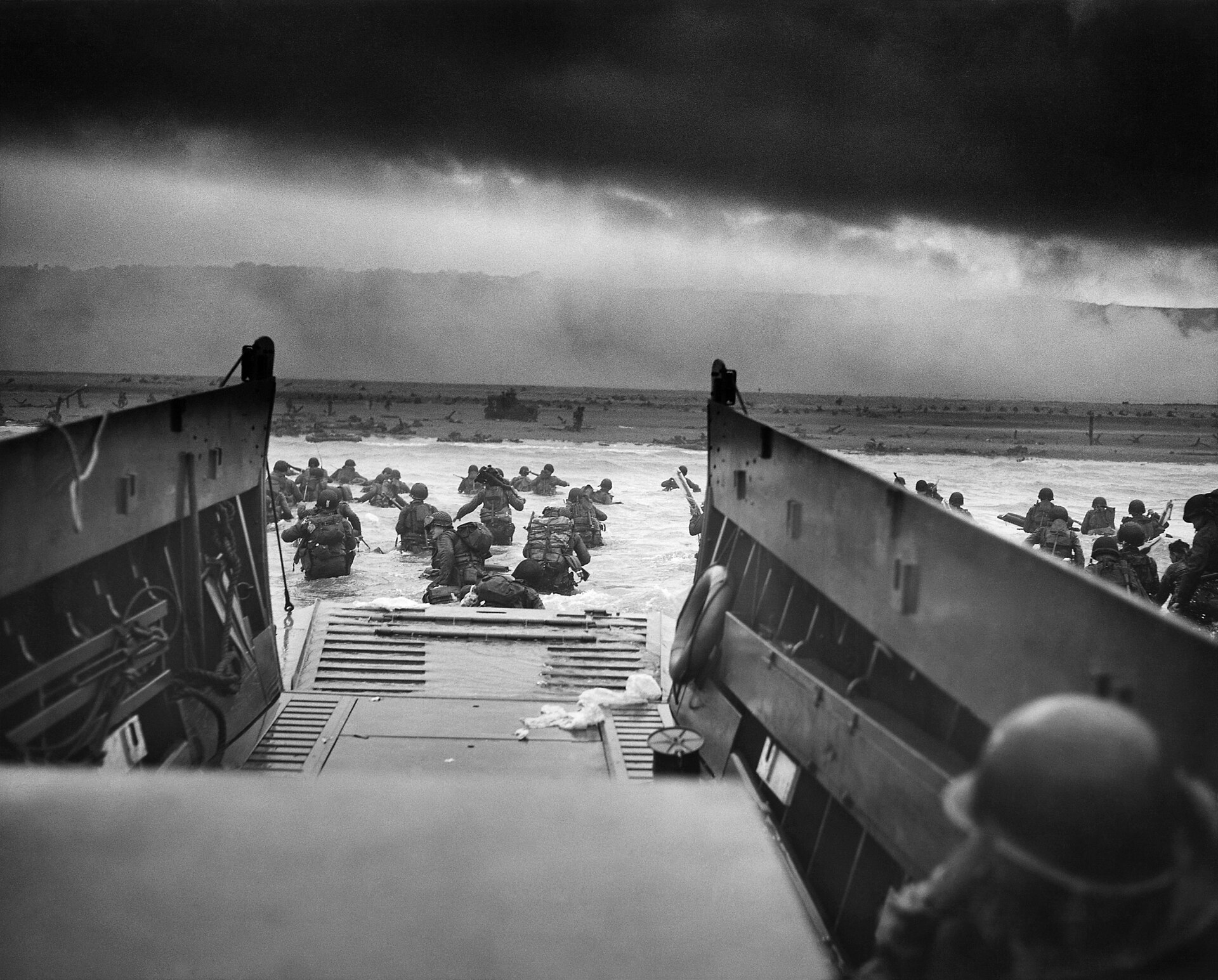 U.S. troops approach Omaha Beach in the early hours of June 6, 1944. The cliffs in the distance held German fortifications that had survived the morning's bombardment almost entirely intact.
The Paratroopers Dropped Into Chaos
Omaha wasn't the only place where the plan came apart.
The 82nd and 101st Airborne Divisions were assigned to drop west of Utah Beach and seize the narrow causeways through terrain the Germans had deliberately flooded. They dropped into thick cloud cover and scattered badly. Navigation was almost impossible. Only one of the five paratrooper drop zones was accurately marked. Some men were killed on impact when their parachutes didn't have time to open. Others drowned in flooded fields.
After 24 hours, only about a third of the airborne troops were under the control of their divisions.
What saved them was the chaos itself. Small groups of men from completely different units, with no communication and no command structure, consolidated wherever they landed and went after whatever objectives were nearby. The confusion that nearly broke the operation also confused German commanders, who couldn't get a coherent picture of where the attack was concentrated or how to respond. The scattered paratroopers fragmented the German defense at exactly the moment it needed to be unified.
It was a disaster that accidentally worked.
The Letter
While his men were boarding planes and ships, Eisenhower wrote this:
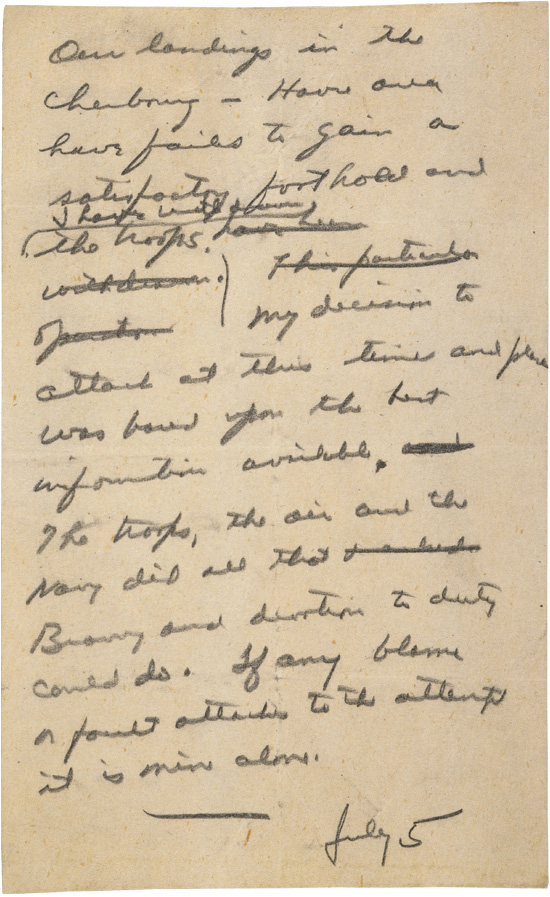
"Our landings in the Cherbourg-Havre area have failed to gain a satisfactory foothold and I have withdrawn the troops. My decision to attack at this time and place was based upon the best information available. The troops, the air and the Navy did all that Bravery and devotion to duty could do. If any blame or fault attaches to the attempt it is mine alone."
In his exhaustion, he misdated it July 5. It should have read June 5.
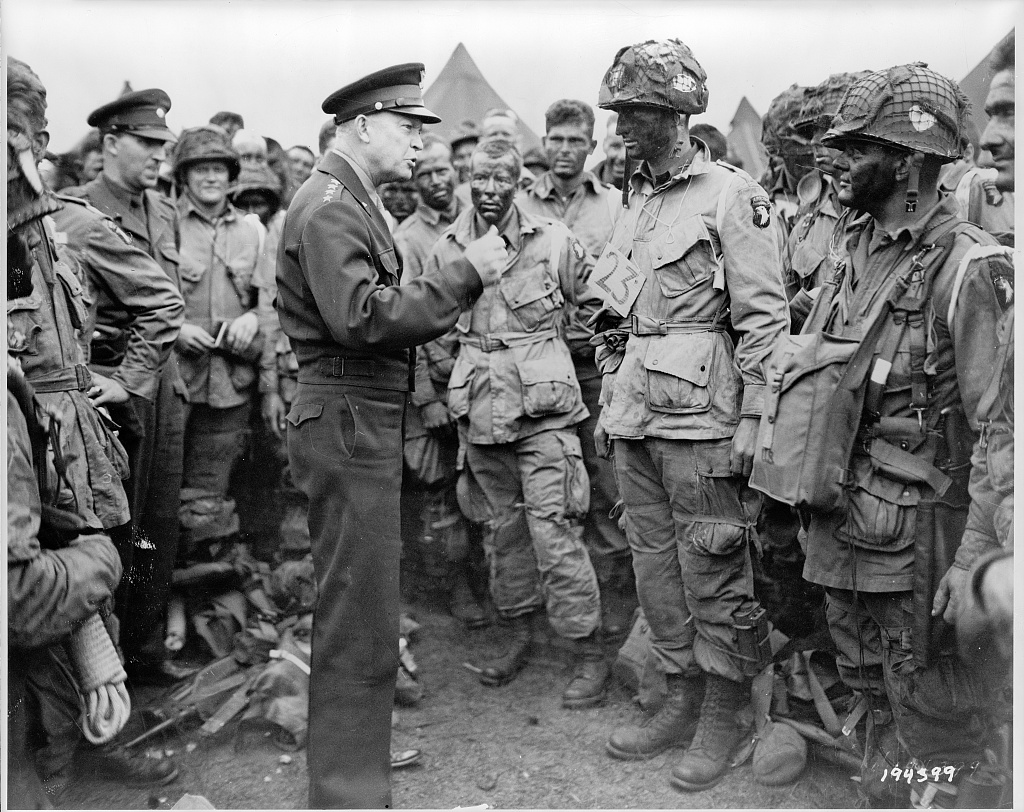
He folded the note, put it in his wallet, and went to see his men. That evening he drove to Greenham Common Airfield and walked among the paratroopers of the 101st Airborne as they prepared to board. He asked their names. He asked where they were from. He knew, based on the casualty projections he had been given, that many of them would not come back.
He watched their planes take off into the dark.
What Happened Next
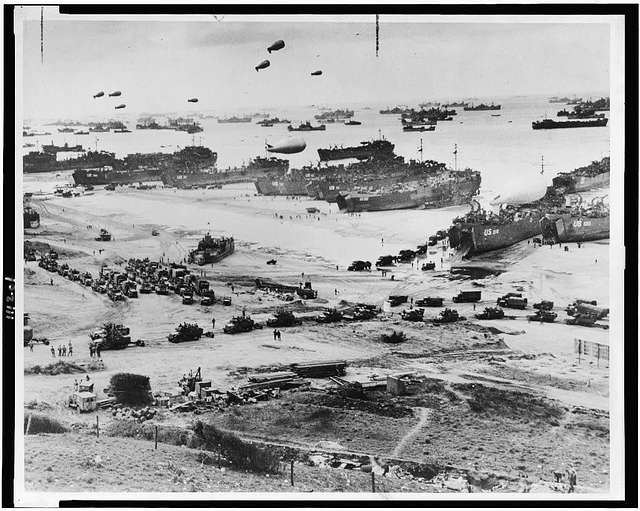
The landings succeeded. By nightfall on June 6, the Allies had established beachheads at all five landing sites. Omaha, which had looked like a catastrophe in the morning, held by afternoon as German ammunition ran low and American soldiers found ways off the beach through the fortified gullies above. The five beachheads were linked together by June 12. German forces retreated across the Seine on August 30, marking the close of Operation Overlord.
On July 11, five weeks after D-Day, Eisenhower reached into his wallet and found the note he had written and forgotten. He showed it to his naval aide, Captain Harry Butcher. Butcher read it and told him to keep it. Eisenhower had been planning to throw it away.
He never did. The note is now in the collection of the Dwight D. Eisenhower Presidential Library in Abilene, Kansas, where it has been on display for decades, still bearing the wrong date in his own handwriting.
 Eisenhower's "In Case of Failure" note, written in pencil on June 5, 1944, and misdated July 5. It was discovered in his wallet more than a month after D-Day.
Why It Matters
Eisenhower could have written nothing. If the invasion failed, the failure would speak for itself. He could have pointed to the weather, the intelligence failures, the German defenses, the impossible odds. There was no shortage of things to blame.
Instead he wrote a note that began with "I have withdrawn the troops" and ended with "it is mine alone."
No hedging. No conditional language. No mention of what went wrong or who else bore responsibility. Just a general, alone, accepting everything.
It is known that Eisenhower wrote similar notes before other major operations during the war. This is the only one that survived.
Eisenhower's "In Case of Failure" message is held in the collection of the Dwight D. Eisenhower Presidential Library and Museum in Abilene, Kansas, where it has been on permanent display. It was written in pencil on a torn notebook page on June 5, 1944, and misdated July 5, 1944. Eisenhower's naval aide, Captain Harry C. Butcher, recovered it on July 11 and persuaded Eisenhower to preserve it rather than discard it.