Just before midnight on June 21, 1942, a Japanese submarine surfaced six miles off the Oregon coast and opened fire on a United States Army fort. Soldiers manned their guns within minutes. They had a clean shot. They were ordered not to take it.
It is one of the strangest nights of the Second World War, and almost nobody has heard of it.
A Fort Built for a War That Was Already Over
Fort Stevens had guarded the mouth of the Columbia River since the Civil War. By 1942 its artillery was a museum of American coastal defense: twelve-inch mortars and ten-inch disappearing guns, weapons designed for an enemy that fought from sailing distance, not for a war fought with submarines and aircraft carriers. The fort's job in 1942 was the same job it had held in 1864, to stop an enemy ship from entering the river. Nobody who built it had imagined the enemy would simply sit offshore and shoot at the beach instead.
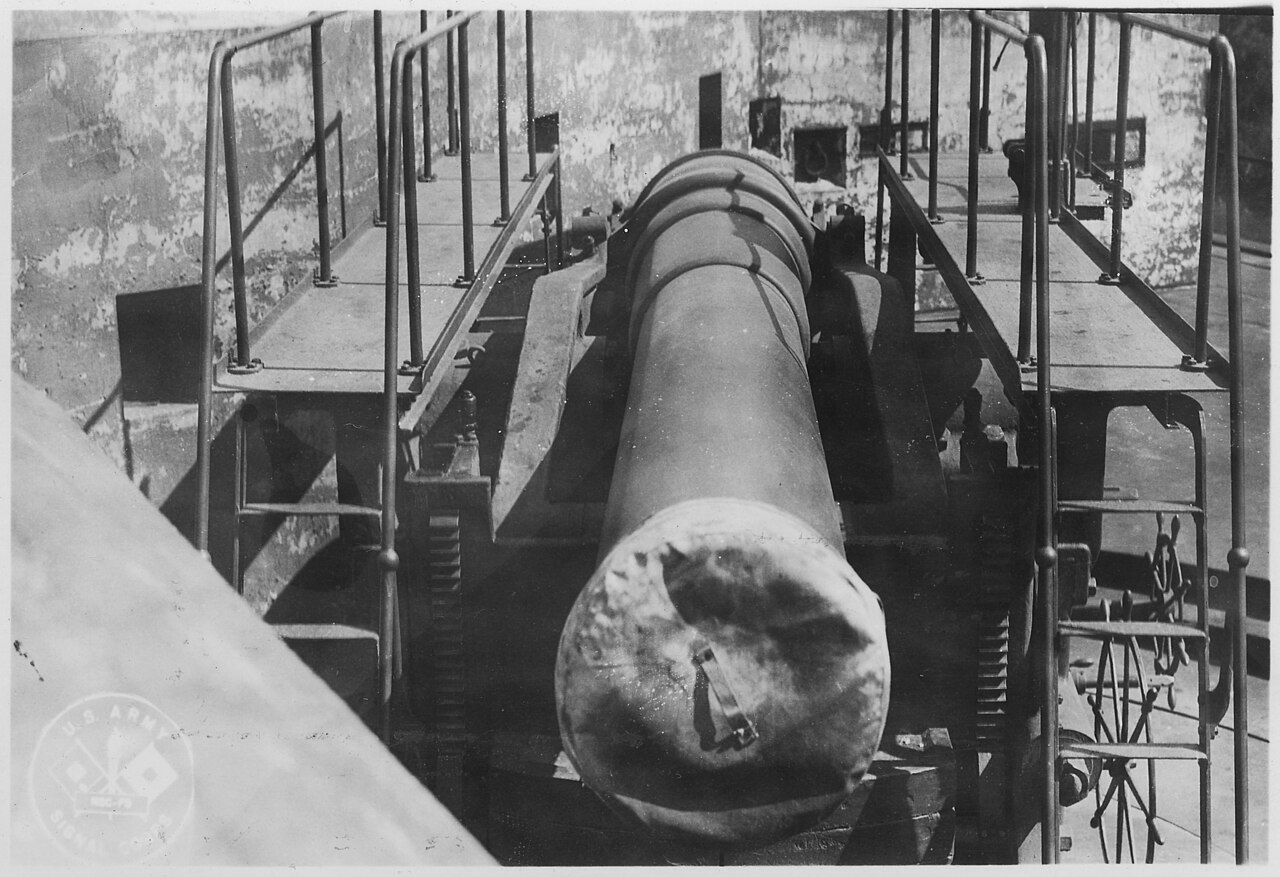 A 10-inch gun at Battery Russell, one of the fort's Endicott-era coastal defenses still in place in 1942.
That is more or less what happened.
The Submarine Offshore
The Imperial Japanese Navy submarine I-25, commanded by Akiji Tagami, had spent the spring of 1942 patrolling the Pacific Northwest, watching for Allied shipping headed to Alaska. On the night of June 20, it shelled a Canadian radio station at Estevan Point on Vancouver Island. Twenty-four hours later, it turned south toward the Columbia River.
Tagami's crew reportedly followed local fishing boats through the approaches to the Columbia, slipping past the minefields guarding the river's mouth, then surfaced and opened fire with the sub's deck gun on Fort Stevens' Battery Russell. Soldiers at the fort could see the muzzle flashes out at sea. They ran to their stations. A position finder tracking the flashes reported the submarine was out of range of the fort's guns, and Colonel Carl S. Doney, the fort's commander, ordered an immediate blackout and refused to let his men fire back, unwilling to give away the exact location of his defenses to an enemy ship he believed his own artillery couldn't reach anyway.
For the next fifteen to twenty minutes, the fort sat dark and silent while shells fell around it.
A Bad Aim and a Baseball Field
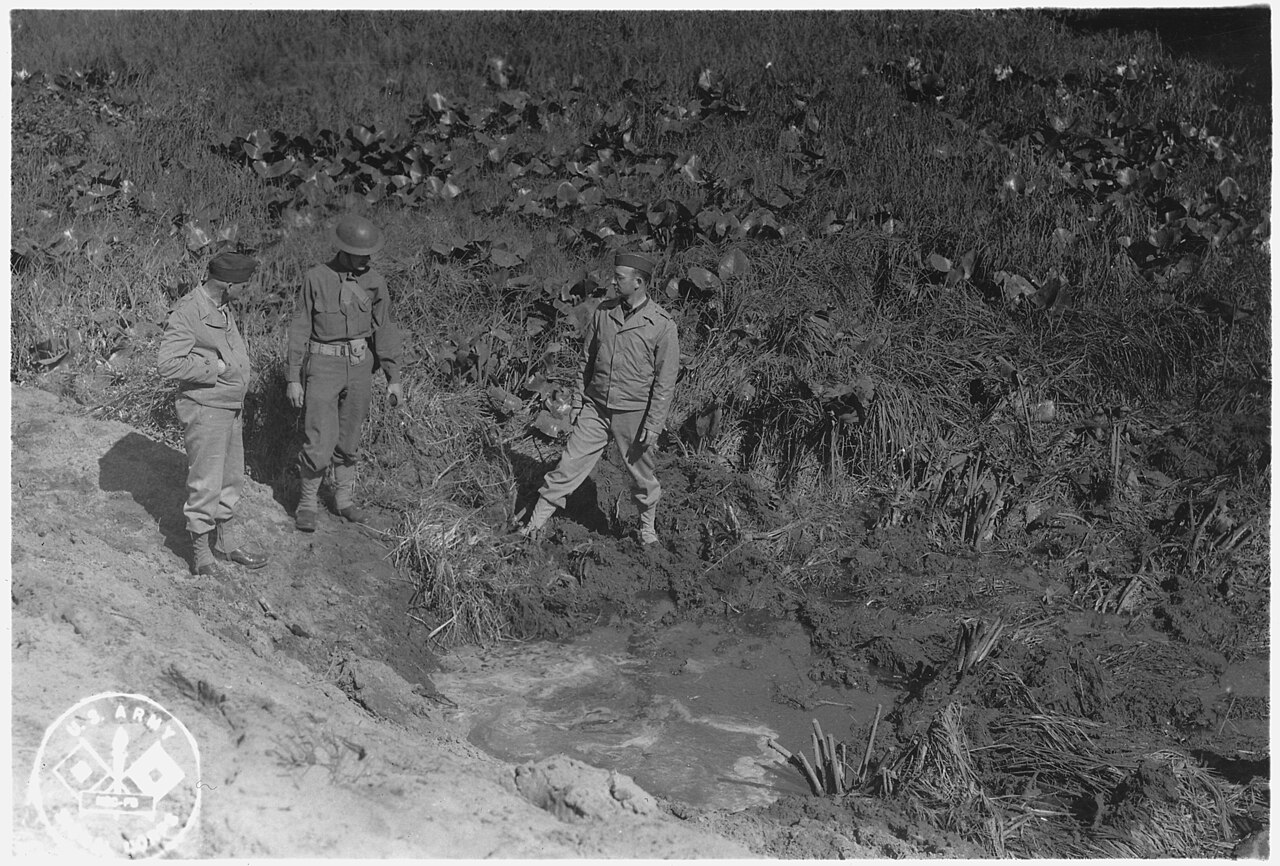
Whatever Tagami was shooting at, he largely missed it. Most of the shells landed in a swamp or in a sandy field behind the fort. One came down near a concrete pillbox. Another caught a stretch of telephone cable, cutting communications, the only damage of any real consequence that night. The single fixture the attack is best remembered for destroying was the backstop of the fort's baseball diamond.
One soldier cut his head rushing to his post. No one was killed. No one was seriously hurt.
By the time the shelling stopped and the I-25 turned back out to sea, U.S. Army Air Forces planes on a training flight overhead had spotted the submarine and called in a bomber to attack it. The bomber found the I-25 on the surface and dropped its bombs. The submarine dove and slipped away undamaged.
Nobody Can Agree on How Many Shells Were Fired
Here is where the story gets genuinely strange, and where the historical record starts to argue with itself.
The official communiqué issued by the Western Defense Command that night, and reported on the front page of the New York Times two days later, put the number at six to nine shells. Colonel Doney told reporters the figure was nine. Residents in Astoria who were jolted awake by the noise counted as many as fifteen. The U.S. Army's own official history of the war, published in 1964, lands on the same six to nine figure the Army gave the press in 1942.
Most popular accounts of the attack today put the number at seventeen. That figure isn't simply a later invention. Researchers who have cross-referenced eyewitness accounts against Japanese-side records argue the true count was seventeen, with several shells either landing as duds or missing the beach entirely, which would explain why people on shore counted fewer hits than were actually fired. The Army's official wartime position and the higher count drawn from Japanese sources have never been fully reconciled, and the after-action report that might have settled the question, Colonel Doney's own final report on the incident, has never been located.
It's a small discrepancy in the scheme of things. Nobody died, the damage either way was a baseball backstop and a phone line. But it's a useful reminder of how a number gets repeated until it hardens into fact, even when the institutions actually present that night, the Army that commanded the fort and the newsmen who wrote it up the next morning, told a more modest version of the same story.
Was the Fort Even the Target?
Colonel Doney raised a question of his own to reporters the day after the attack, one that rarely makes it into modern retellings. He noted that if the Japanese submarine had genuinely been trying to hit the fort, its aim was remarkably poor. He floated another possibility: that the shelling wasn't really aimed at Fort Stevens at all, but was closer to harassment fire, a strike meant to rattle American nerves and to give Japan's wartime press something to put in front of its own public after the catastrophic loss at Midway two weeks earlier.
There's no way to know for certain which it was. But it's worth sitting with the possibility that the only military installation in the contiguous United States to come under direct Axis naval fire during the entire war may not have been a serious attempt to destroy that installation at all.
Why It Mattered Anyway
The attack caused no real damage and killed no one, but it did something else. Coming the same month as the Japanese occupation of two islands in the Aleutians, it helped convince West Coast civilians and military planners that a real invasion was not out of the question. Barbed wire went up along beaches from Point Adams south. The wreck of the British ship Peter Iredale, already sitting offshore for decades, got tangled in coils of it and stayed that way for the rest of the war.
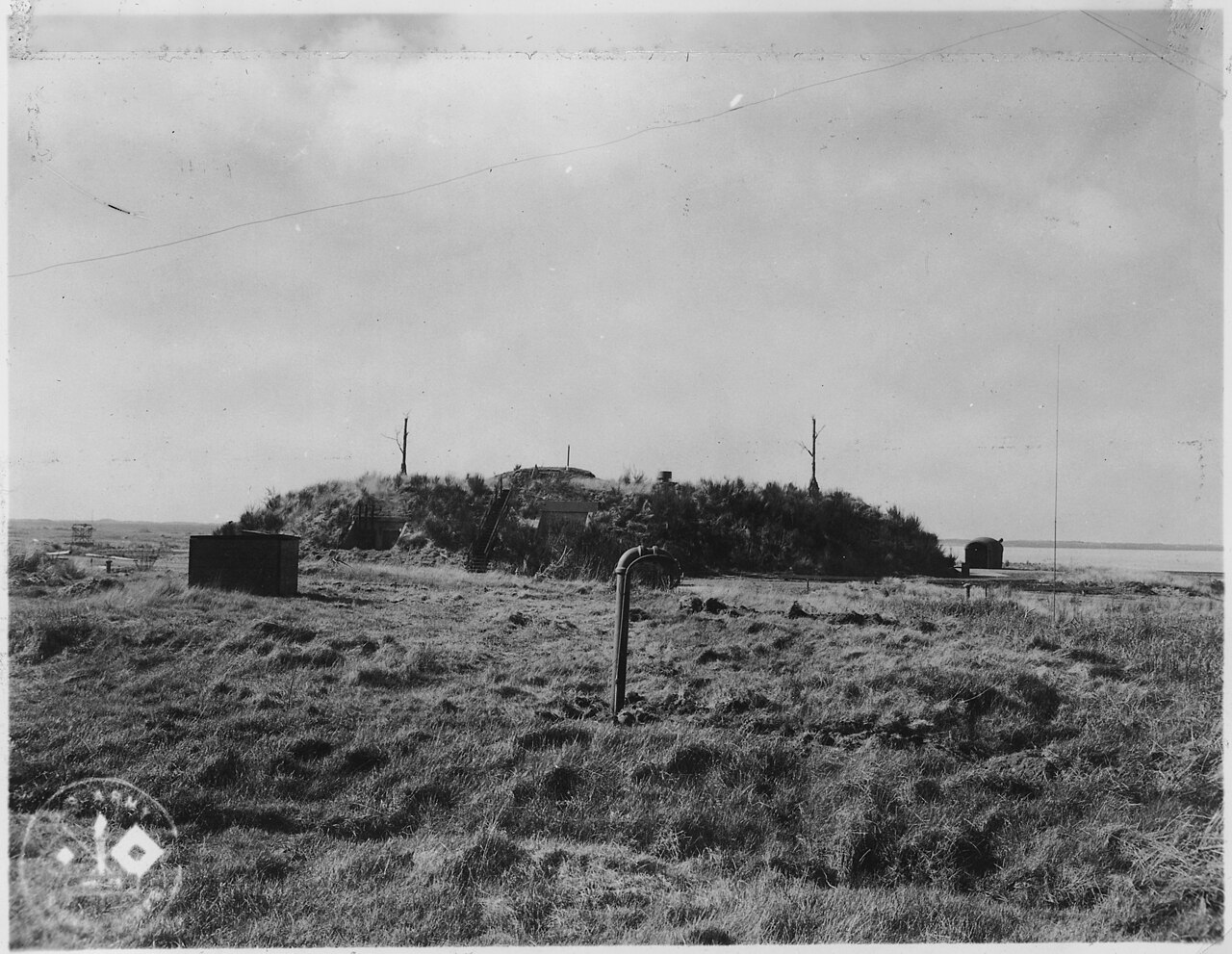 Battery 245, one of Fort Stevens' coastal defense positions during the war.
Fort Stevens remains, to this day, the only military installation in the contiguous United States to come under fire from an Axis power during World War II, and the first foreign attack on a continental American military installation since the War of 1812. The men who manned the guns that night, who watched an enemy warship fire on American soil and were ordered to stand down, certainly never forgot it.