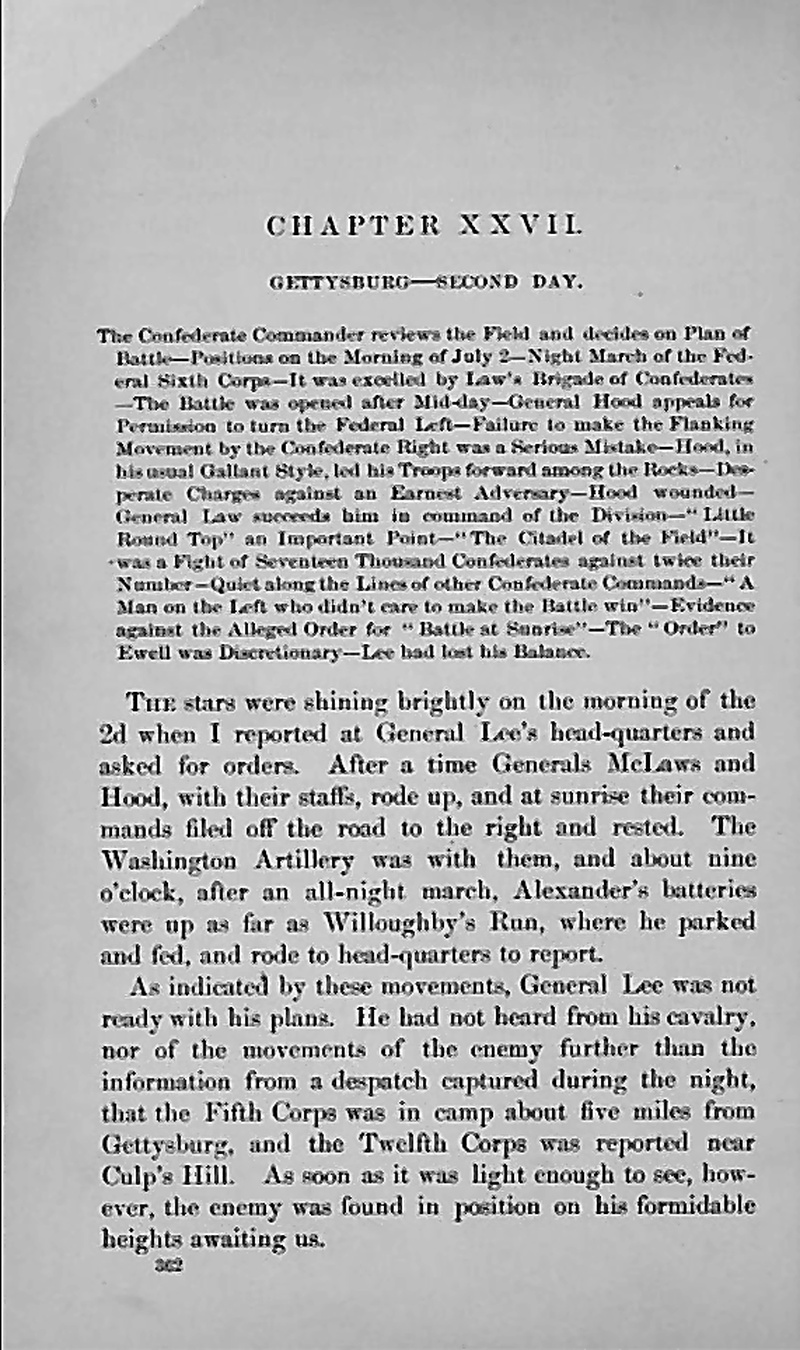
The morning of July 2, 1863 was already hot when James Longstreet rode to Robert E. Lee's headquarters before sunrise and asked for his orders.
He did not get them. Not right away.
Lee still lacked reliable cavalry intelligence because Stuart's horsemen were absent from the field. He was also waiting on one of Longstreet's brigades, under Evander Law, that was still on the road. And he was still working out exactly what he intended to do with the second day of the bloodiest battle his army had ever fought. According to Longstreet's later memoir, the Confederate commander "was not ready with his plans."
What followed was not just a battle. It was a collision between two men who had won together at Fredericksburg, at Chancellorsville, across Virginia and Maryland, who now, on the ground outside a small Pennsylvania town, could not agree on something fundamental: whether to fight at all.
Lee wanted to attack. Longstreet believed that attacking was exactly the wrong thing to do.
Historians have never settled which man had the better judgment that morning. The argument between them would echo through American military history for the next 160 years.
"We Could Whip Them Easily if We Could Choose Our Ground"
Longstreet had made his case the night before, and he made it again on the morning of July 2. His argument was not complicated. The Army of Northern Virginia had crossed into Pennsylvania to force a decisive confrontation on Northern soil, and it had found one. But the Army of the Potomac now held Cemetery Ridge, Cemetery Hill, and Culp's Hill in a compact, powerful defensive arc that Union soldiers and officers were describing as one of the strongest positions they had ever occupied. Longstreet believed that attacking that position head-on was a mistake.
His alternative was what he called the "offensive-defensive." Swing the Confederate army around the Union left flank. Get between Meade and Washington. Force the Union army to come off those ridges and attack the Confederates on ground of Lee's choosing. Let the Yankees make the costly charge for once.
Lee rejected it. He had beaten the Army of the Potomac too many times to fear it now. His men had driven two Union corps through the streets of Gettysburg the day before, and he believed the momentum was his to keep. He also could not stand the idea of giving up the ground his soldiers had paid for with their blood on July 1. He was going to attack.
Longstreet made his reluctance plain to those around him. "I never like to go into battle with one boot off," he reportedly said, a reference to Pickett's missing division.
Pickett's division was still on the road from Chambersburg. It would not arrive in time.
The Plan and Its Problems
Lee's plan for July 2 called for Longstreet's First Corps to strike the Union left flank in a massive oblique assault driving up the Emmitsburg Road. Hood's division would lead, with McLaws behind him. The attack would roll up the Union line from south to north, collapsing one corps onto another, and ultimately seize Cemetery Hill. Simultaneously, Richard Ewell's Second Corps would strike the Union right at Culp's Hill and Cemetery Hill, pinning Meade's forces so he could not shift troops to meet Longstreet.
The plan rested on a critical assumption: that the Union left flank had not yet been extended to Little Round Top and remained vulnerable near the Emmitsburg Road. An early morning reconnaissance by Captain Samuel Johnston seemed to confirm it. Johnston had ridden out at 4 a.m. and reported the Union left hanging in the air, unsupported by natural terrain.
The reconnaissance proved outdated by the time the attack began.
By the morning of July 2, Meade's army had extended its line the full length of Cemetery Ridge, anchored at its southern end by the rocky heights of Little Round Top. Any force attacking up the Emmitsburg Road would find Union troops and guns on the ridge immediately to their right flank. Lee's plan was built on faulty intelligence, and Stuart's absence had significantly reduced Confederate cavalry reconnaissance, leaving Lee with an incomplete picture of where Meade's army actually stood.
Longstreet, to his credit, sensed that something was wrong. But he could not override Lee's orders. He could only delay.
The Long March and the Lost Hours
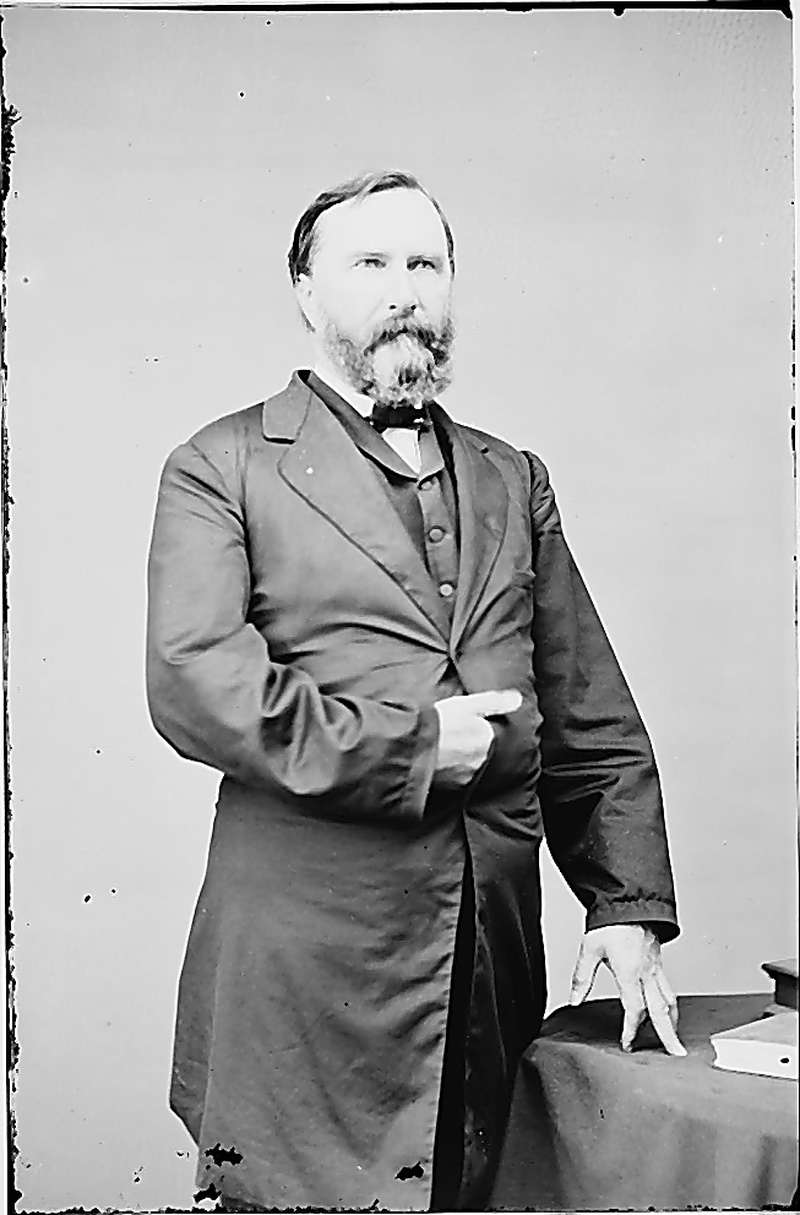 Lt. Gen. James Longstreet, circa 1860-1865. Library of Congress, Brady Collection, public domain.
The assault Longstreet had been ordered to launch was supposed to begin early. It did not begin early.
Part of the delay was legitimate. Law's brigade did not finish its march and arrive on the field until late morning, having covered nearly 25 miles through the night. Longstreet refused to step off without his full complement of men. That cost hours.
Then came the approach march itself. To reach their attack positions without being spotted by Union signal officers watching from Little Round Top, Longstreet's columns had to take a long, circuitous route behind the Confederate lines, doubling back when they crested a ridge that gave them away, starting the march over again. It was noon. Then one o'clock. Then two. Then three. By the time Hood's division was finally in position on Warfield Ridge, it was approaching four in the afternoon.
Those lost hours were not idle hours for the Union army.
Sickles Makes Everything Worse
While Longstreet's columns were grinding through their approach march, Union General Daniel Sickles was making a decision that would reshape the entire battle.
Sickles commanded the Third Corps, assigned to hold the lower end of Cemetery Ridge and anchor the Union left on Little Round Top. He did not like his position. The ground was low, he thought, and poorly suited for artillery. A slightly elevated ridge to his front, along which ran the Emmitsburg Road, looked better to him. Without orders from Meade, he marched his entire corps forward to occupy it.
The move created a salient, a V-shaped protrusion in the Union line, jutting out ahead of the main position at the Peach Orchard. It was too wide for two divisions to defend, and it left Little Round Top essentially unoccupied. When Meade rode to see what Sickles had done, he was furious. He explained, with strained patience, that the position could not be held. Then a distant rumble of artillery told him it was too late to fix it. Longstreet's guns had opened.
Meade would spend the rest of the afternoon frantically pulling troops from across his line to plug the holes Sickles had created.
Hood Attacks, and Asks to Be Let Around
At roughly 4 p.m., John Bell Hood's division stepped off from Warfield Ridge. Almost immediately Hood sent a courier back to Longstreet with a request. His scouts had ridden around the southern end of the Union position and found Big Round Top unoccupied. If Longstreet would let him swing his division around below the Round Tops and come up behind the Union left, Hood believed he could roll the entire flank.
Longstreet refused. Lee's order was to attack up the Emmitsburg Road. That was the order.
Hood reportedly sent additional requests back through couriers. The answer was the same each time.
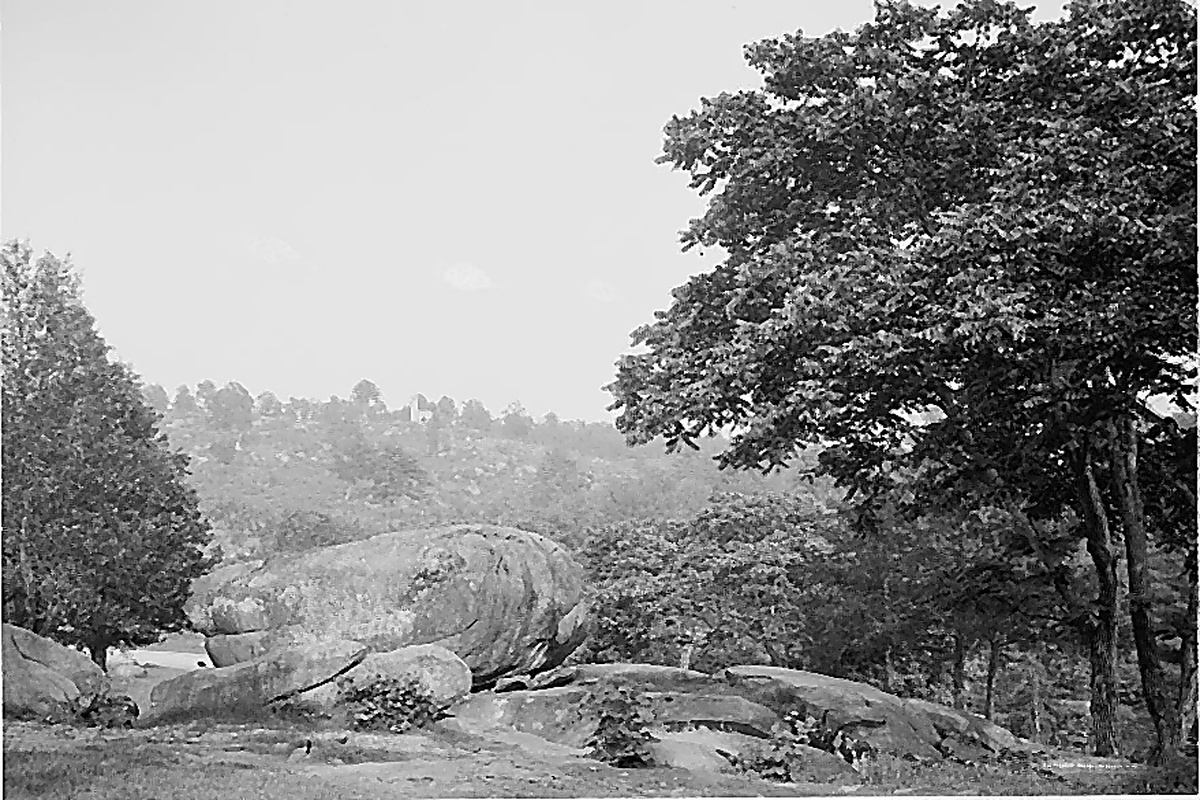
Minutes into the assault, Hood was struck in the arm by artillery fire and carried from the field. His division went forward without centralized command, and it drifted east, away from the road and toward the rocky terrain below the Round Tops. The attack that Lee had designed to roll northward along the Emmitsburg Road instead fragmented and drove east, into the boulders of Devil's Den, up the slopes of Little Round Top, through the carnage of the Wheatfield and the Peach Orchard.
The fighting that followed was some of the most ferocious of the entire war.
The Field Burns
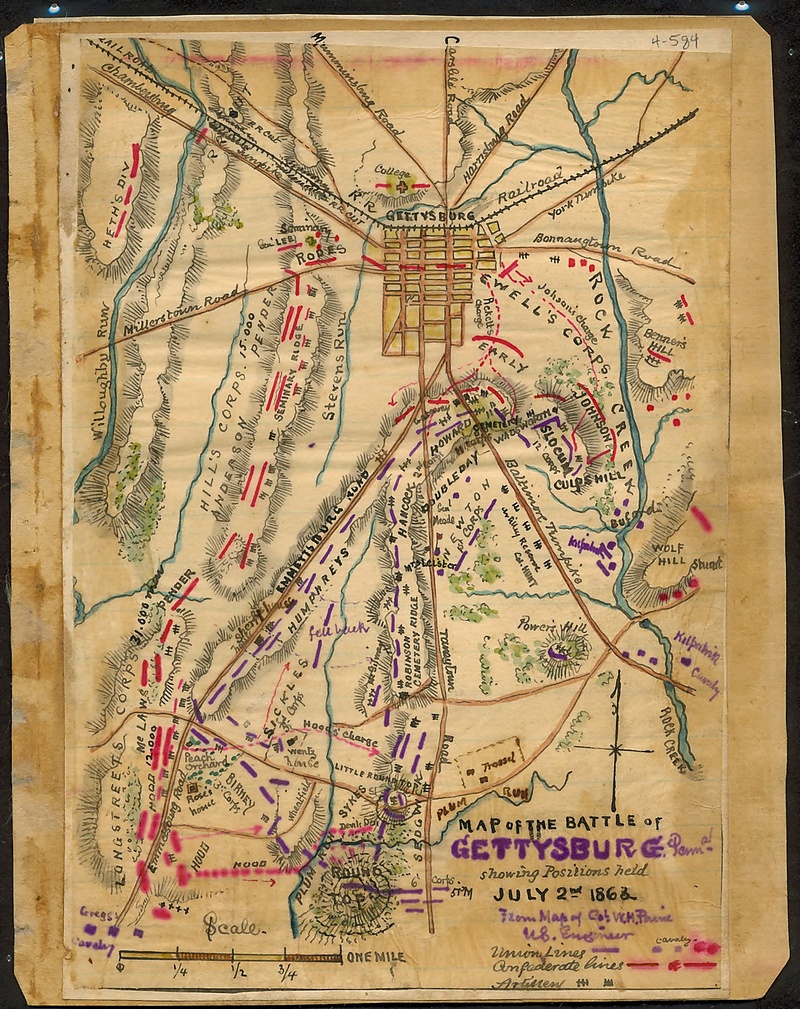 Map of the Battle of Gettysburg, Penna., showing positions held July 2nd, 1863. From map of Col. W.H. Paine, U.S. Engineer. Library of Congress, public domain.
At Devil's Den, Confederate and Union infantry fought at close range among enormous boulders for hours, the 3rd Arkansas and 1st Texas driving hard against Hobart Ward's Union brigade. At Little Round Top, Union engineers officer Gouverneur Warren spotted the undefended summit and sprinted to find troops to hold it, reaching the crest minutes ahead of Hood's advancing men. The 20th Maine under Joshua Chamberlain anchored the extreme left of the Union line and repulsed assault after assault before making the bayonet charge that has passed into legend.
The Wheatfield changed hands repeatedly through the afternoon, perhaps six times depending on how you count. Eleven Confederate brigades fought thirteen Union brigades across twenty acres of farmland in two hours of combat that left roughly 5,000 to 6,000 men killed or wounded in that single field alone. Survivors called Plum Run, running red through the valley below, Bloody Run. They called the valley itself the Valley of Death.
At the Peach Orchard, William Barksdale led his Mississippi brigade on horseback with his long white hair streaming, smashing through the point of Sickles' salient and collapsing the entire Union III Corps position. Sickles himself was struck by a cannonball that took his leg. He was carried off the field sitting upright on a stretcher, cigar clamped in his teeth, trying to wave his men forward.
As McLaws' division drove through the Peach Orchard, Richard Anderson's Confederate division pressed north along Cemetery Ridge against a Union center that Meade had stripped to reinforce his left. One Confederate brigade, under Ambrose Wright, may have briefly reached the crest of Cemetery Ridge itself before being driven back. On Culp's Hill, Ewell's corps finally attacked after dark, gaining some of the abandoned Union entrenchments but unable to dislodge George Greene's New Yorkers from the main summit.
By ten o'clock that night, the guns had gone quiet.
What the Day Cost
The Army of the Potomac had held. Barely, and at savage cost, but it had held. Meade's use of his interior lines, shifting reserve troops rapidly from one crisis point to the next, had blunted every Confederate breakthrough. Cemetery Ridge was still in Union hands. Little Round Top was still in Union hands. The key terrain that controlled the battlefield belonged to the same army that had arrived there.
The price was staggering. Union casualties on July 2 numbered somewhere around ten thousand men killed, wounded, or missing. Confederate losses were approximately six to seven thousand. The III Corps, Sickles' command, had essentially ceased to exist as a fighting organization. Its salient had been shattered, its commander was in a hospital, and its survivors were folded into other units.
That night, Meade convened his corps commanders for a council of war. Despite the beating the army had taken, they voted unanimously to stay and fight. Meade had already made up his mind before the meeting started. As the officers filed out, he pulled aside General John Gibbon and offered a prediction. Lee had struck both flanks and failed. If he attacked again on July 3, Meade said, it would be against the center.
In Confederate headquarters, the mood was darker. A staff officer noted that Lee was "not in good humor over the miscarriage of his plans." But Lee's official report struck a more optimistic tone. His men had made progress, he wrote. With better coordination, the result would have been different. He was going to attack again.
Longstreet spent that same night arguing, again, for the flanking movement. Again, Lee refused to hear it.
The Weight of the Argument
The question of what went wrong on July 2 at Gettysburg is one the participants spent decades fighting over in print. After the war, a circle of Confederate veterans led by Jubal Early built what became known as the Lost Cause interpretation of the battle: Longstreet had been ordered to attack at sunrise, he had delayed out of sullenness or insubordination, and his tardiness had cost the Confederacy the battle and perhaps the war.
Longstreet rejected this version in his memoir with barely controlled fury. The sunrise order, he wrote, never existed. The delay in the approach march was imposed by the need for concealment and by waiting for Law's brigade. The plan itself, he maintained, was flawed from the start. The Union position was too strong to be taken by frontal assault. He had said so the night before. He had said so again that morning.
Most modern historians agree that no reliable evidence supports the claim that Lee ordered Longstreet to attack at sunrise. No written order has ever been found. The witnesses who claimed to have heard such an order contradicted each other on the details, and several of the loudest accusers had their own postwar axes to grind. The delay in the approach march was real, but it stemmed from the need for concealment and the wait for Law's brigade, not from deliberate foot-dragging.
What the historical record cannot settle is the harder question underneath the facts: whether James Longstreet was right that morning when he told Robert E. Lee the attack should not be made at all. Whether a different decision, taken before sunrise on July 2, 1863, might have changed what came after. That argument has never been resolved, and it probably never will be.
What is not in dispute is what the day produced. The Army of the Potomac, battered and stretched thin, had survived the worst Longstreet could throw at it. The Confederates held Devil's Den and the Peach Orchard, ground that cost them enormously to take, ground they could not exploit. The high ground still belonged to Meade.
One more day of battle remained. And the man who had spent July 2 arguing against the attack would spend the morning of July 3 trying, one last time, to stop it.