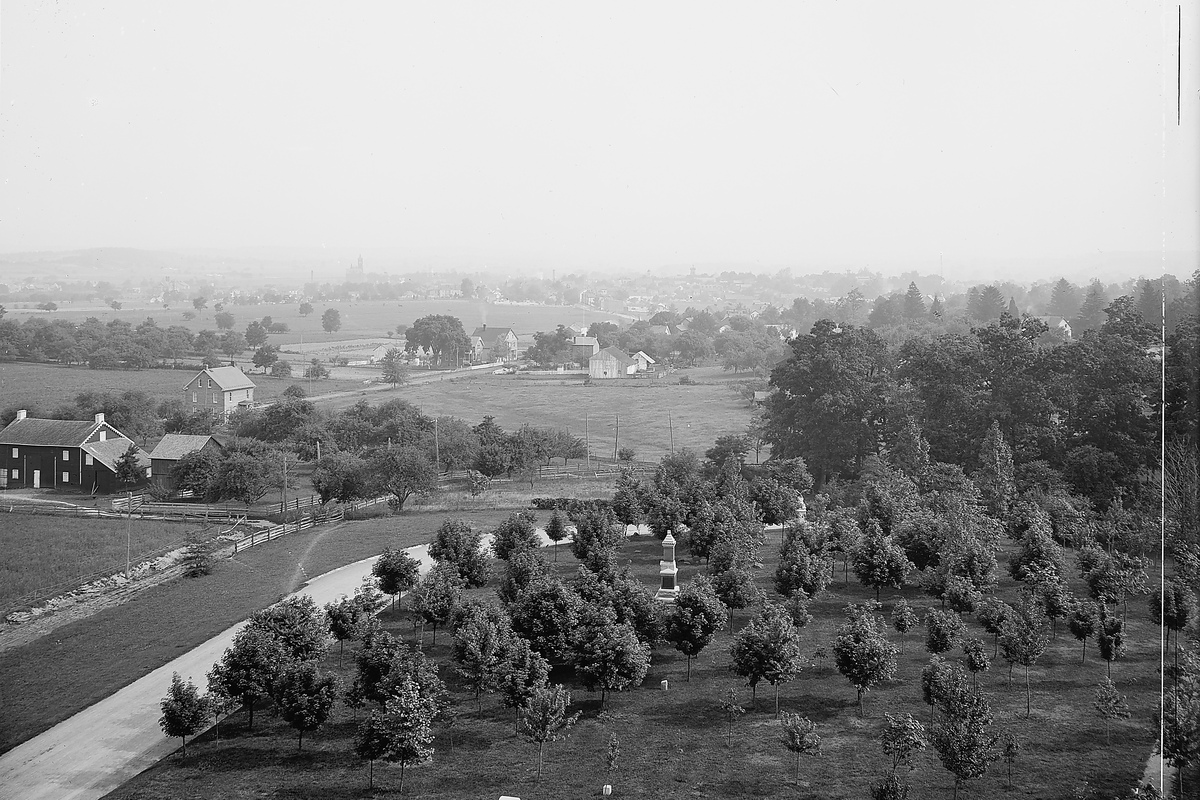
Confederate gunners on Seminary Ridge watched something strange happen that afternoon. Union cannon along Cemetery Ridge, guns that had been trading fire with them for the better part of two hours, began falling silent, some deliberately, others because they had genuinely been battered or run low on ammunition. To the men watching through the smoke, the mix looked like exactly what they had hoped for. The Union artillery was being knocked out.
Not all of it. Union artillery chief Henry J. Hunt had ordered a good number of his batteries to slacken and, in many cases, stop firing, in a staggered sequence that made the pullback look like guns being destroyed one after another rather than a coordinated pause. He wasn't retreating. He was conserving ammunition for the infantry attack he expected was coming next.
The Man Who Helped Write the Book
Hunt's confidence in that moment did not come from nowhere. By the summer of 1863 he was among the most qualified artillery officers in the Union Army to make exactly this kind of call, and the men serving under him knew it.
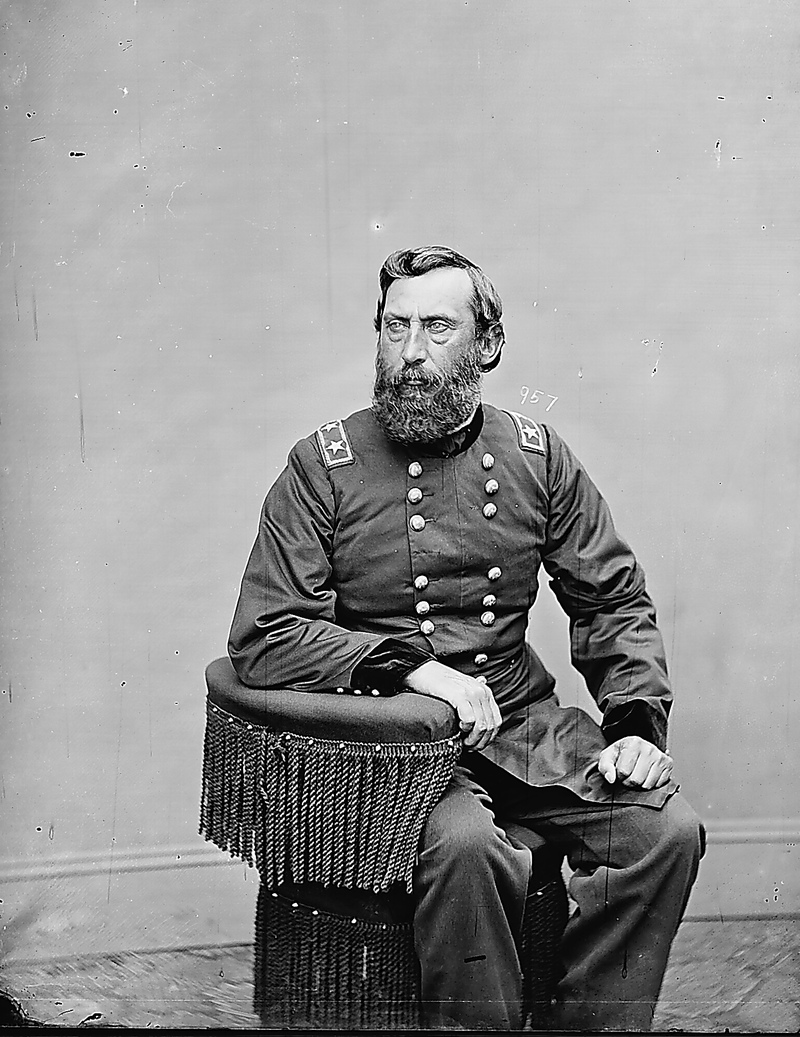 Brigadier General Henry J. Hunt, chief of artillery for the Army of the Potomac.
He had graduated West Point in 1839 and earned brevet promotions for gallantry in the Mexican War, at Contreras, Churubusco, and Chapultepec. In 1856 the Army put him on a three-officer board, alongside William H. French and William F. Barry, tasked with rewriting field artillery doctrine from the ground up. The result, Instructions for Field Artillery, published by the War Department in 1861, became the standard U.S. Army manual for field artillery officers. Hunt had helped write the rules that many of the men on Cemetery Ridge were following that day.
He had also trusted this same combination, massed guns, strict fire discipline, and carefully preserved ammunition, to stop a Confederate assault once before. At Malvern Hill in July 1862, Hunt helped concentrate roughly a hundred Union guns along the crest, where their fire devastated Confederate assaults with relatively little assistance from the infantry. Malvern Hill had shown him what that combination could do. Gettysburg would ask more of it than anything he'd tried before.
The Bombardment Begins
Around 1 p.m. on July 3, somewhere between 150 and 170 Confederate guns, one of the largest concentrations of field artillery assembled in the war, opened on the Union center. Union batteries held their fire for the first several minutes. Then roughly 80 Union guns answered, and a genuine artillery duel developed along Cemetery Ridge for close to two hours.
It was not a quiet two hours. It is routinely described as the largest artillery bombardment of the war. Men on both sides described the ground itself shaking. But Hunt, watching the effect of the Confederate fire, judged that most of it was passing overhead and doing little real damage, striking open ground behind the Union line rather than the infantry sheltered along it. He later wrote in his own report that most of the enemy's projectiles passed overhead, sweeping ground in the Union rear that cost the Confederates ammunition without costing the Union much of anything. If the barrage wasn't hurting his men badly, there was little reason to keep spending shells on a counter-battery duel when an infantry assault was almost certainly coming next.
That was when Hunt began ordering his batteries to slow down, and in many cases stop.
The General Who Told His Commander No
Hunt's decision to quiet the guns did not sit well with everyone on the ridge. Winfield Scott Hancock, commanding most of the infantry in the Union center, was a major general and corps commander, while Hunt was a brigadier general serving as the army's chief of artillery. Hancock intervened, riding along the line and ordering artillery to keep firing, contrary to Hunt's instructions. His men were pinned flat under the barrage, and he wanted guns answering, both to hit the Confederate batteries and to keep his infantry's morale from cracking under an hour or more of shelling with no reply of their own.
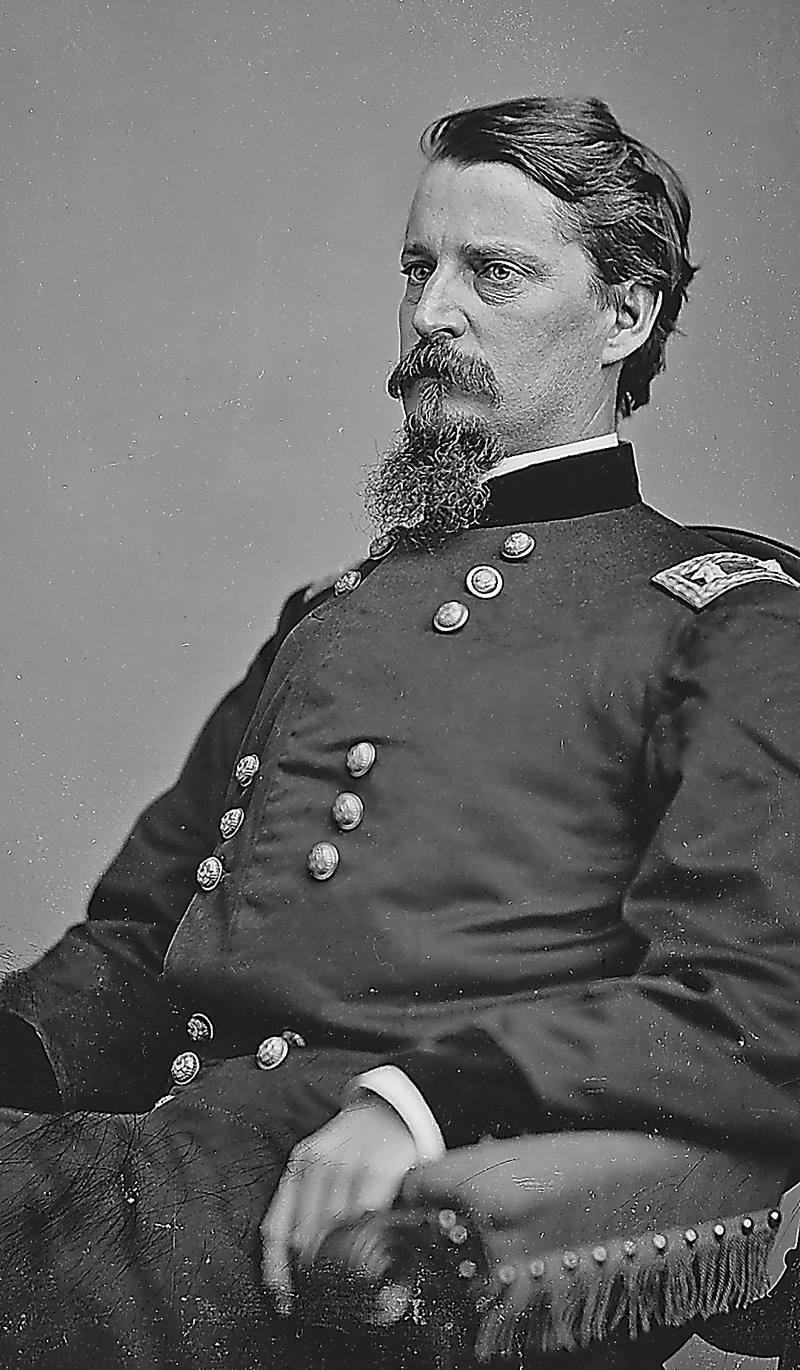 Major General Winfield Scott Hancock, whose corps held the Union center on Cemetery Ridge.
Hancock's instinct was not unreasonable. When an officer warned him he was needlessly risking his life by riding the line during the bombardment, Hancock is said to have replied that there were times a corps commander's life simply did not count. This was not a man inclined to sit quietly while his infantry absorbed punishment.
What followed was not a clean standoff but a genuinely messy split in the chain of command. Some II Corps batteries under Hancock's artillery chief, Captain John G. Hazard, continued firing on Hancock's orders. In his later account, Hunt said those batteries exhausted their long-range ammunition during the bombardment, leaving them with less to use when the Confederate infantry finally came forward. He contrasted them with the batteries under Lieutenant Colonel Freeman McGilvery, which followed Hunt's instructions and held their fire. Hunt believed the difference mattered. "Had my instructions been followed here, as they were by McGilvery," he later wrote, "I do not believe that Pickett's division would have reached our line."
It is a striking moment to sit with. Hunt's authority came not from superior rank, but from his position as the Army of the Potomac's chief of artillery, his knowledge of the ammunition situation, and his assessment of what was about to happen.
What the Silence Was Buying
E. Porter Alexander, directing the Confederate bombardment from Seminary Ridge, watched the Union guns go quiet and read it as confirmation his fire was finally doing serious damage. Even so, he had his own doubts about what would come next. He later wrote that launching infantry into that fire, across nearly three-quarters of a mile of open ground at midday in July, seemed close to madness. Those doubts did not stop him from sending Pickett the warning Longstreet had ordered him to give: if the infantry was going forward, it needed to move immediately, while Alexander still had artillery ammunition left to support it.
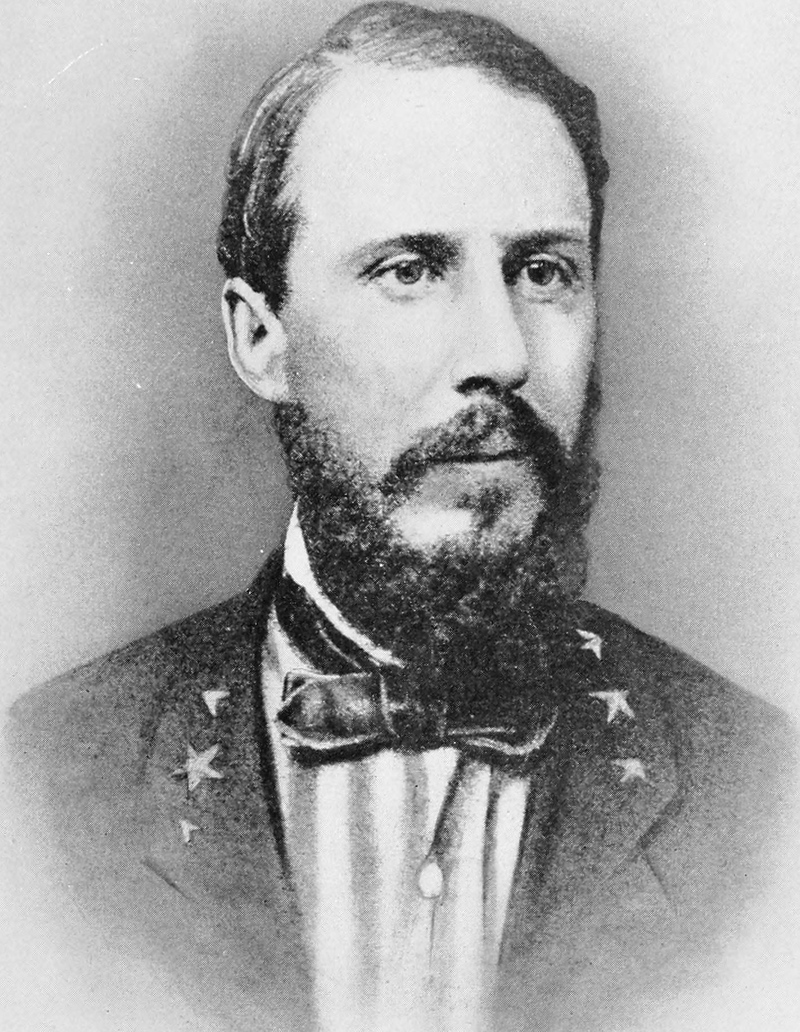 Colonel Edward Porter Alexander, who directed the Confederate artillery bombardment from Seminary Ridge.
The Confederate infantry that stepped off toward Cemetery Ridge that afternoon, roughly 12,500 men, advanced after the bombardment had created the impression that much of the Union artillery had been disabled.
It hadn't been. It had been waiting.
The Bill Comes Due
By around 3 p.m. the cannonade subsided and the Confederate infantry began its advance. Union batteries, shifting increasingly to canister, tin cans packed with iron balls that turned a cannon into a giant shotgun at close range, opened again with devastating effect, joined by flanking fire from batteries as far away as Cemetery Hill and the Little Round Top area.
The fighting at the low stone wall near the Copse of Trees, the spot later remembered as the High Water Mark, became as much an artillery fight as an infantry one. First Lieutenant Alonzo Cushing was severely wounded in the abdomen during the fighting and kept directing his battery's fire regardless. He stayed at his gun until a bullet through the mouth killed him as Confederate troops closed on the position. Nearby, Andrew Cowan's battery came up at a gallop and fired double canister at close range into the breach, the moment still remembered today in his battery's monument inscription: "Double canister at ten yards."
When Confederate troops reached some of the Union guns and tried to turn them on their former owners, they found the pieces effectively useless. Much of their ammunition had already been expended in the fighting.
Confederate losses were catastrophic. Pickett's division alone lost roughly half its men, and all three of its brigade commanders were killed or wounded: Garnett killed, Armistead mortally wounded, Kemper wounded and captured. It was, in part, the consequence of the ammunition Hunt had deliberately conserved two hours earlier.
A Decision Made Twice, By Two Different Men
What makes this worth pulling out of the larger story of Pickett's Charge is not just the tactics. It is the command dynamic underneath it. Two Union generals looked at the same two hours of bombardment and reached opposite, incompatible conclusions about what their guns should be doing that afternoon, and the officer who turned out to be right was not the one with more rank on the field. Hancock's instinct, protect the infantry's morale, keep firing back, was not unreasonable on its own terms. It was simply wrong about what the next hour would demand. The divided, often contradictory orders flying up and down Cemetery Ridge that afternoon, and the fact that enough of Hunt's batteries held their fire despite them, was one of several decisions that helped determine what happened at that stone wall.
Confederate artillery had spent two hours trying to break an enemy that, from Seminary Ridge, appeared to be falling apart. It wasn't falling apart. Much of it was doing what Henry Hunt's artillery doctrine demanded: conserving fire when it was ineffective, and saving ammunition for the moment when it mattered most.