They had been planning it for months.
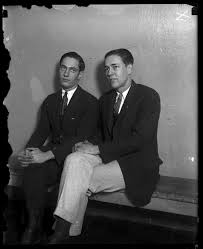
Nathan Leopold was 19 years old, the son of a wealthy Chicago businessman, and one of the most gifted students the University of Chicago had ever seen. He had studied 15 languages. He was a nationally recognized ornithologist. He had completed his undergraduate degree with Phi Beta Kappa honors and planned to begin studies at Harvard Law School after a trip to Europe. Richard Loeb was 18, the son of a retired Sears Roebuck vice president, and reportedly the youngest graduate in the history of the University of Michigan. The two had been in a relationship since 1921.
Together they had read Nietzsche and concluded that truly superior men existed beyond the reach of ordinary morality. In a letter to Loeb, Leopold had written that a superman is exempted from the ordinary laws which govern men on account of certain superior qualities inherent in him.
They decided to commit the perfect crime.
Not for money. Not out of anger or desperation. For the intellectual satisfaction of proving it could be done.
On May 21, 1924, they lured 14 year old Bobby Franks into a rented car. Bobby was Richard Loeb's neighbor and had played tennis at the Loeb home. He knew them. He trusted them. Loeb struck him in the head with a chisel handle, then dragged him into the back seat where he died. They drove to a predetermined spot near Wolf Lake on Chicago's south side, removed his clothes, poured hydrochloric acid over his face to obscure identification, and stuffed his body into a drainage culvert near the Pennsylvania Railroad tracks.
Then they went home and had dinner.
The plan began to unravel almost immediately. A laborer discovered the body the next morning. More significantly, a pair of glasses was found nearby, fitted with an unusual hinge mechanism that had been sold to only three people in Chicago. One of them was Nathan Leopold.
When police questioned him Leopold explained that the glasses must have fallen from his pocket during a bird watching trip. But his alibi for the day of the murder fell apart under questioning. His chauffeur told police he had been repairing Leopold's car that entire afternoon. His wife confirmed it.
Within days both men had confessed, each blaming the other for striking the fatal blow.
Chicago had never seen anything like it. Two brilliant young men from prominent families, with no apparent motive beyond an abstract theory of their own superiority, had committed what newspapers called the crime of the century. The state of Illinois prepared to hang them.
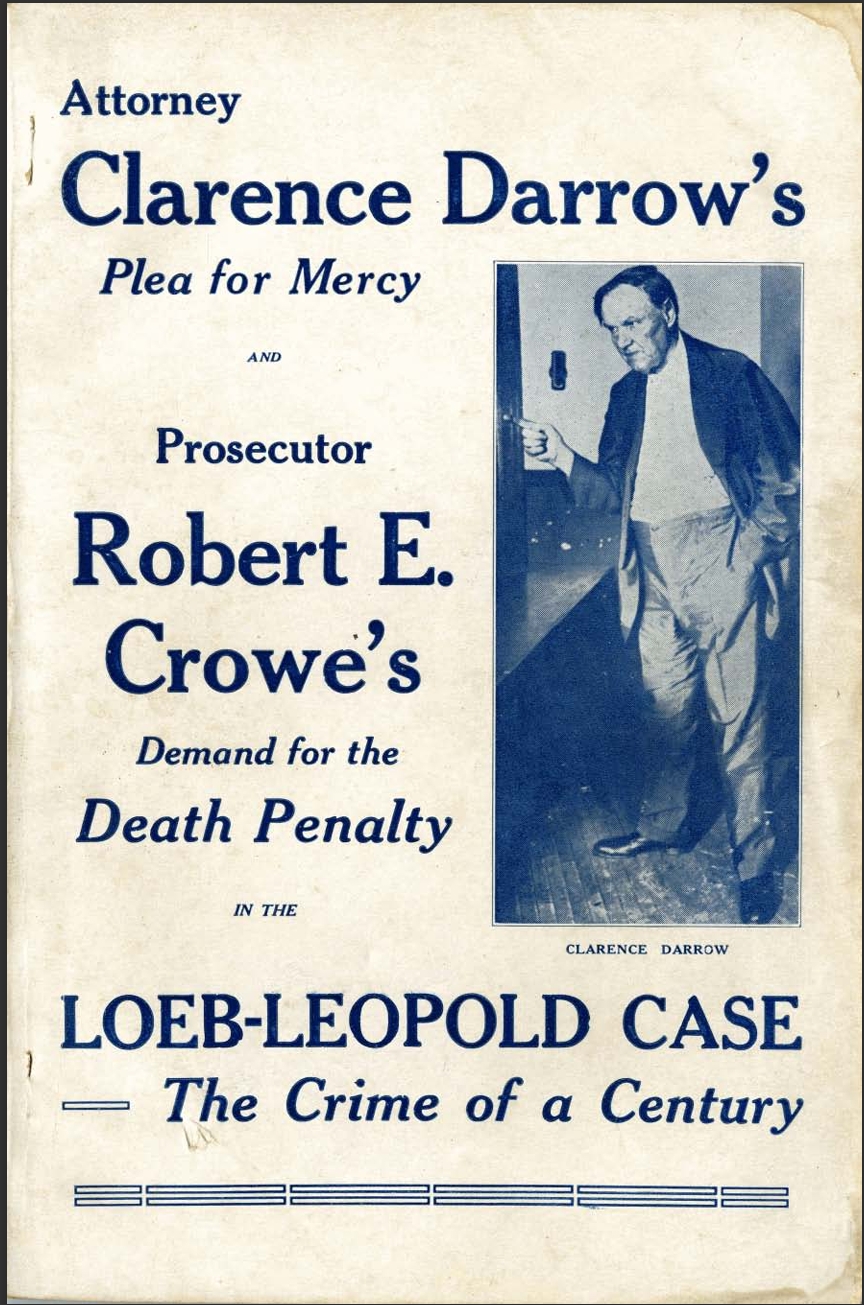
Then Clarence Darrow took the case.
Darrow was 67 years old and the most famous defense attorney in America. He had spent his career defending labor organizers, the poor, and the powerless. Taking the Leopold and Loeb case shocked many of his admirers. He was paid $65,000 for his services, equivalent to roughly a million dollars today. But Darrow had a larger purpose than the fee.
He entered guilty pleas for both defendants, which meant there would be no jury trial. The case went directly to sentencing before a single judge, John Caverly. Darrow's strategy was to save their lives and in doing so put capital punishment itself on trial.
His closing argument lasted twelve hours spread over two days. He did not argue that Leopold and Loeb were innocent. He argued that executing them would be an act of vengeance masquerading as justice. He drew on psychiatry, philosophy, and a deep reading of human nature to argue that the death penalty had never deterred a single crime and never would. He spoke about the randomness of human development, the role of environment and heredity in shaping who a person becomes, and the brutality of a justice system built on punishment rather than understanding. He wept openly at points. The courtroom was silent.
Judge Caverly sentenced both men to life in prison plus 99 years. He stated that his decision was based primarily on the youth of the accused and on his personal opposition to imposing the death penalty on defendants under the age of 21.
Richard Loeb was killed in prison in January 1936, attacked with a razor by a fellow inmate. He was 30 years old.
Nathan Leopold served 33 years before being paroled in 1958. He moved to Puerto Rico, earned a master's degree at the University of Puerto Rico, worked in public health and medical research, married, and wrote a memoir titled Life Plus 99 Years that spent 14 weeks on the New York Times bestseller list. He died of a heart attack on August 29, 1971, at the age of 66.
Bobby Franks never got to grow up.
Darrow's closing argument in the Leopold and Loeb case is considered one of the great speeches in American legal history. Its arguments against capital punishment echoed through the courts for decades. The case accelerated a national conversation about the death penalty, the criminal mind, and the limits of human responsibility that has never fully concluded.
The full closing argument transcript is linked below. It is worth reading not as a defense of what Leopold and Loeb did, which was indefensible, but as a document of what one man believed about justice, mercy, and the purpose of the law.