The President Who Asked
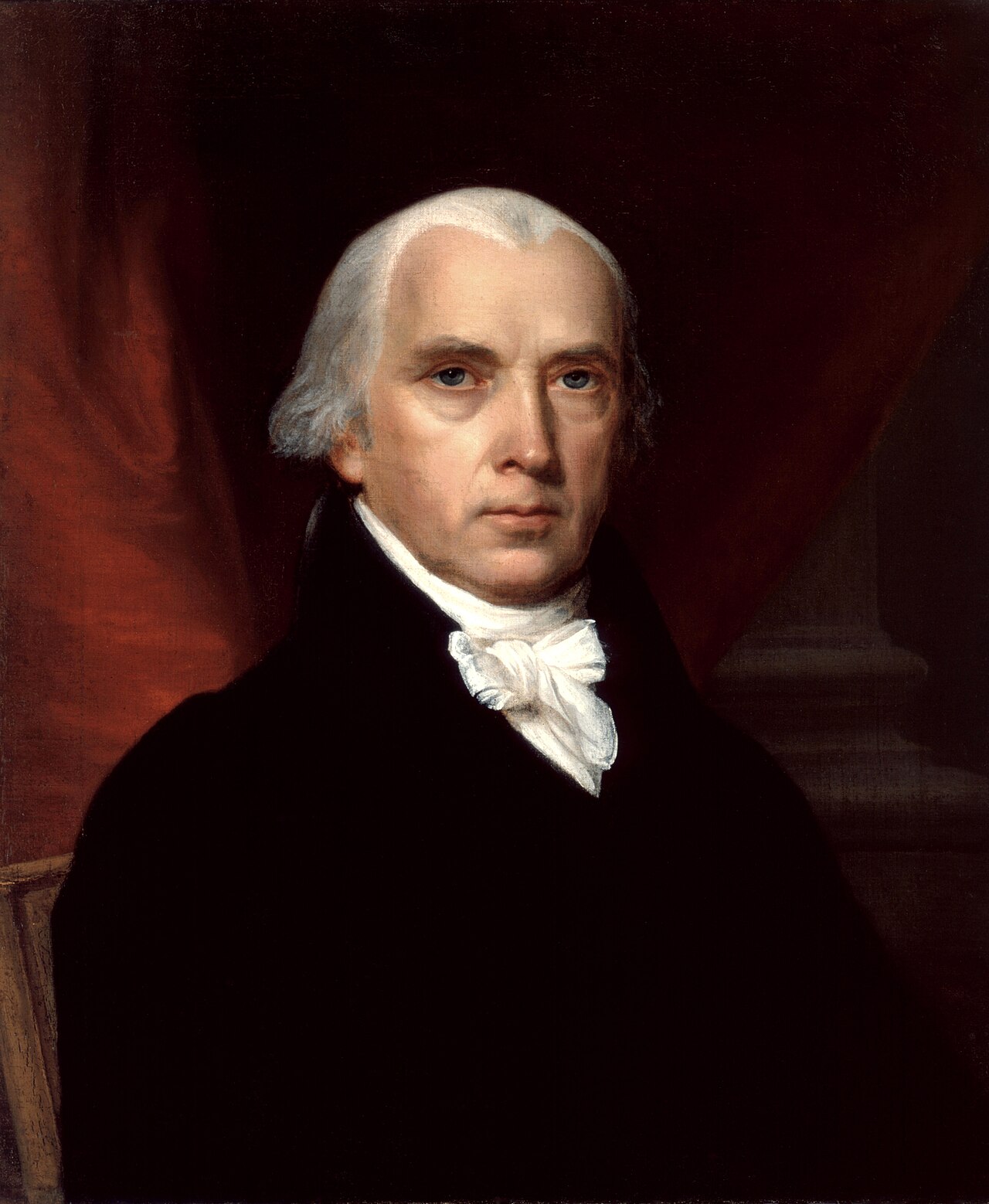
On the morning of June 1, 1812, President James Madison sat down and wrote one of the most consequential letters in American history. It was addressed to the Senate and House of Representatives of the United States. It was not a proclamation. It was not an executive order. It was a request. Madison laid out his case across several pages of careful, measured prose. British warships were stopping American vessels on the open ocean and kidnapping sailors off the decks. Trade routes were being strangled by blockades that violated every principle of neutral rights. British agents were arming Native American tribes on the western frontier and encouraging violence against American settlers. Madison described all of it in detail, and then he did something that would become almost unrecognizable to later generations of Americans. He left the decision to Congress. The closing lines of his message are worth reading slowly. Madison wrote that whether the United States shall continue passive under these progressive usurpations, or shall commit a just cause into the hands of the Almighty, "is a solemn question which the Constitution wisely confides to the legislative department of the Government." He was not telling Congress what to do. He was reminding them that it was their job to decide.
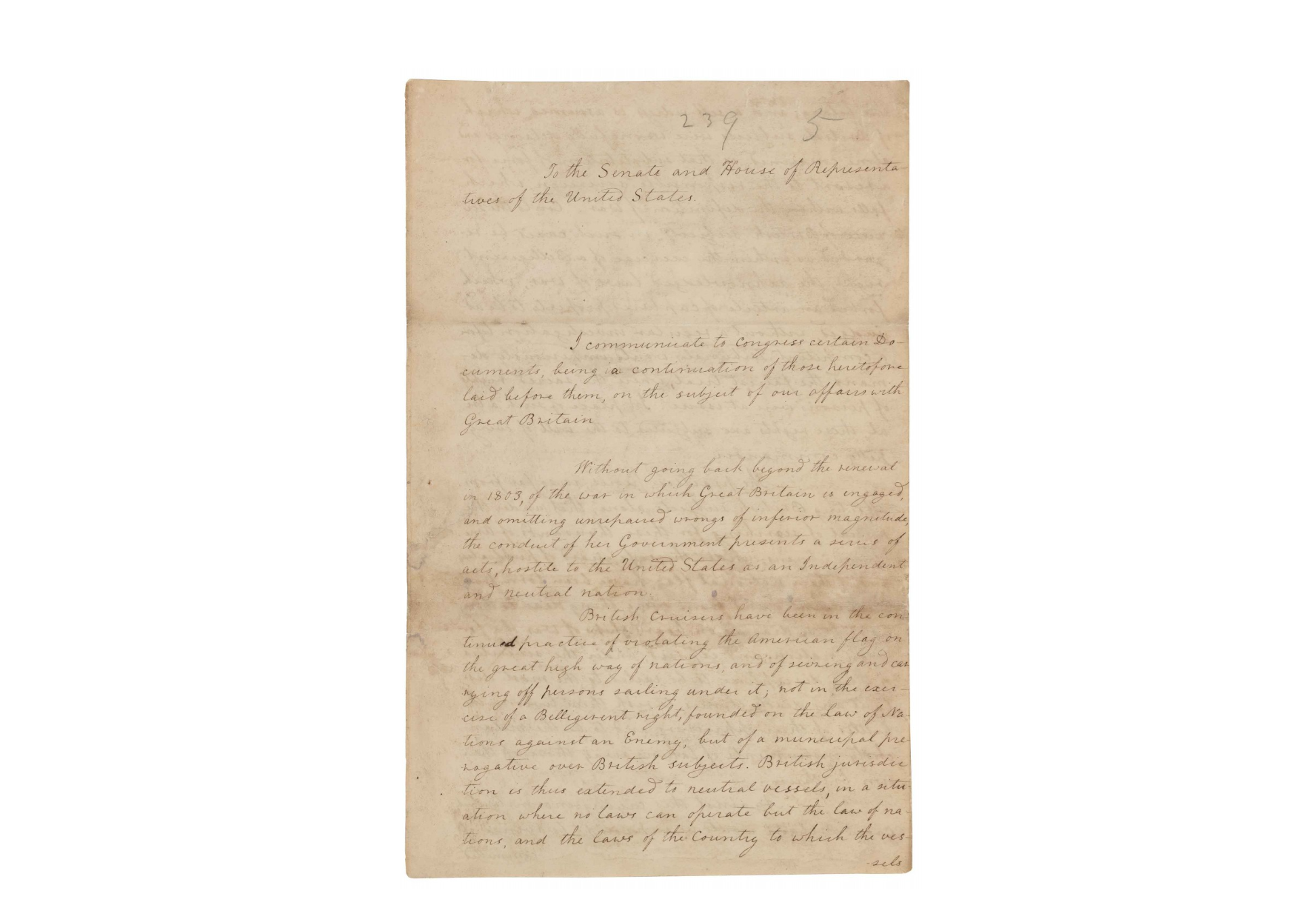 The opening page of Madison's handwritten war message, addressed to the Senate and House of Representatives of the United States, June 1, 1812. Library of Congress, James Madison Papers.
The Grievances
The impressment of American sailors had been building for years before Madison put it to paper. British naval commanders operated under the assumption that any man born in Britain remained a British subject regardless of what papers he carried or what flag flew above his ship. They boarded American vessels, lined up the crew, and took whoever they wanted. Madison's message described thousands of American citizens torn from their country and dragged on board ships of war of a foreign nation, forced to fight in battles on behalf of their captors. It was not an exaggeration. Estimates from the period suggest somewhere between ten thousand and fifteen thousand American sailors were pressed into British service between 1793 and 1812. The United States had sent diplomatic protests, proposed agreements, and tried every available channel of negotiation. None of it worked. Beyond the sailors, Madison catalogued the Orders in Council, a series of British trade decrees that effectively cut American commerce off from European markets. American merchants were watching their goods confiscated at sea, their ships seized, and their livelihoods destroyed by a foreign power that saw no reason to stop. The frontier situation added another dimension entirely. British officials in Canada were maintaining relationships with tribal leaders and, in Madison's assessment, actively encouraging hostilities against American settlers pushing westward. He concluded his survey of grievances with a single sentence that carried the weight of everything that had come before it. On the side of Great Britain, he wrote, existed a state of war against the United States. On the side of the United States existed a state of peace toward Great Britain. That imbalance, he argued, could not stand indefinitely.
The Vote
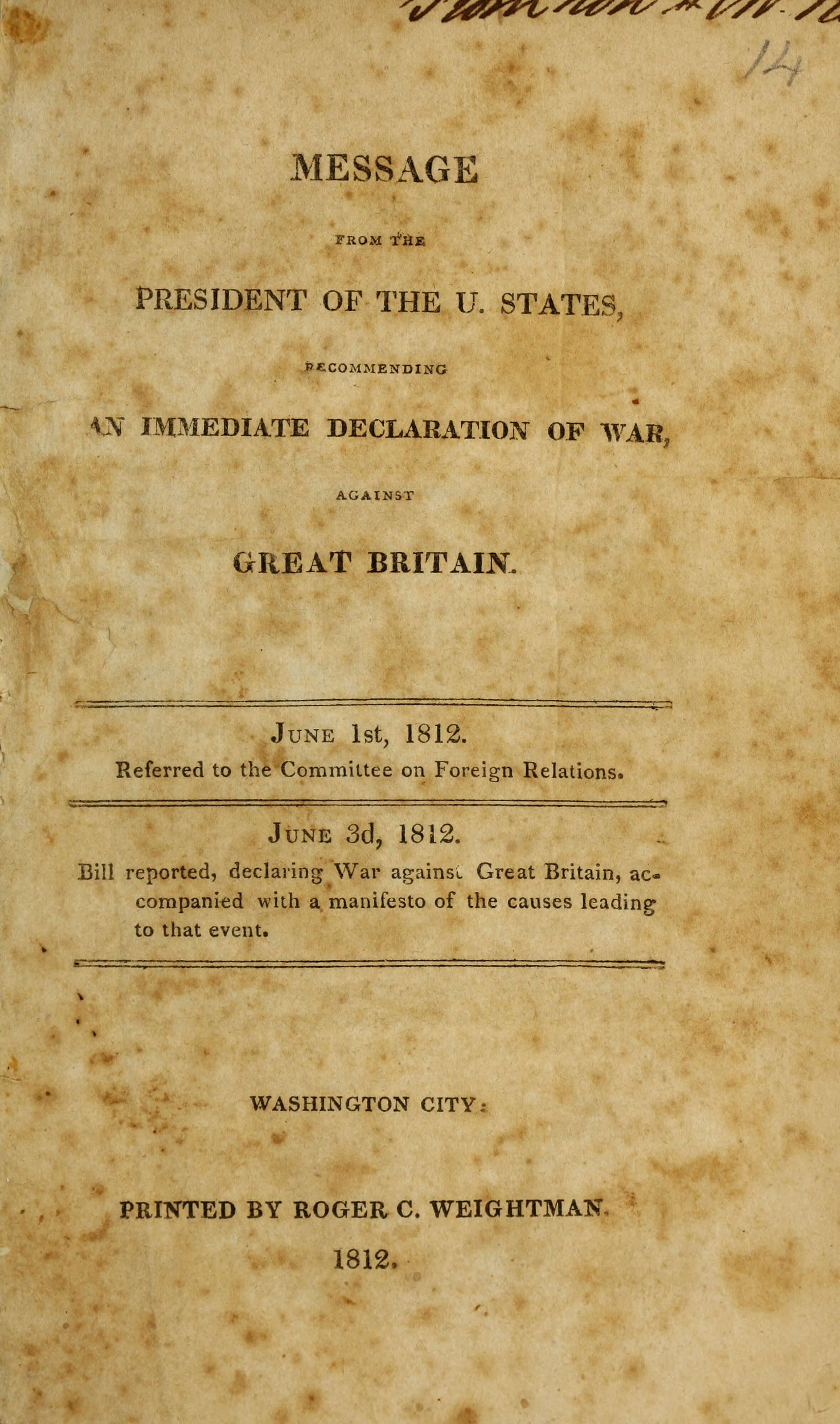
Congress did not move quickly. The war message arrived on June 1st and was referred immediately to the Committee on Foreign Relations. By June 3rd the committee reported a bill. The House debated it and passed it seventy-nine to forty-nine. The Senate approved it nineteen to thirteen. It was the narrowest margin of any war declaration in American history. Madison signed the declaration on June 18, 1812, and the War of 1812 officially began. The vote was entirely partisan. Every congressman who voted in favor was a Democratic-Republican. Not a single Federalist crossed over. Even within Madison's own party the support was far from unanimous, with roughly a quarter of Democratic-Republicans either voting against the measure or abstaining entirely. Critics called it Mr. Madison's War almost immediately, a label that stuck for the better part of two centuries. What made the outcome stranger still is that the war might never have happened. Three weeks after Madison's message reached Congress, the British government quietly repealed the very trade restrictions that sat at the heart of his grievances. The news took too long to cross the Atlantic. By the time it arrived, the declaration had already been signed. The war itself did not go according to plan. American forces attempted an invasion of Canada that failed. The British burned Washington in the summer of 1814, setting fire to the Capitol and the White House while Madison and his cabinet fled. The conflict ground on until the Treaty of Ghent was signed on December 24, 1814, restoring roughly the same territorial boundaries that had existed before the fighting began. Historians still debate whether the United States won, lost, or simply survived.
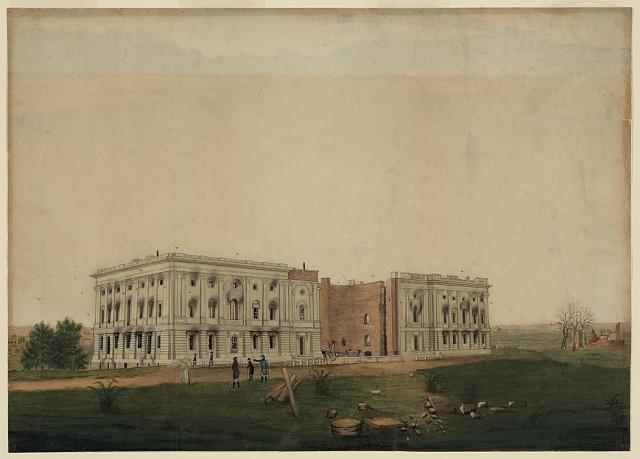 The United States Capitol building after the British burned it on August 24, 1814, as drawn by George Munger, circa 1814. Library of Congress Prints and Photographs Division. Public domain.
The Question That Outlasted the War
What Madison did on June 1, 1812 was constitutionally straightforward. Article One of the Constitution grants Congress, not the president, the power to declare war. Madison was the primary architect of that document. He knew exactly what it said and he followed it precisely, which is part of what makes the moment historically interesting. It was the first time the United States had formally declared war on another nation in the twenty-three years since the Constitution took effect. It would not be repeated in the same form very often. Congress formally declared war five times in American history, the last being World War II in 1941. Since then the country has engaged in major military conflicts in Korea, Vietnam, the Persian Gulf, Afghanistan, Iraq, and numerous smaller operations, none of them preceded by a formal declaration of war from Congress. The War Powers Resolution, passed in 1973 in the aftermath of Vietnam, attempted to address the growing gap between the Constitution's text and presidential practice. It requires the president to notify Congress within forty-eight hours of committing forces to hostilities and limits unauthorized deployments to sixty days. Presidents of both parties have questioned its constitutionality. The tension between executive authority and congressional war powers remains an active and unresolved debate in American constitutional law, without a clear answer on either side. Madison would have recognized the question even if the circumstances would have baffled him. He signed his June 1st message as a man who genuinely believed the decision to go to war was too grave to rest with any single person, including himself.
The original printed copy of Madison's June 1, 1812 war message was distributed by Roger C. Weightman in Washington City and is held in the collections of the Library of Congress. The handwritten manuscript is part of the James Madison Papers, also at the Library of Congress, and is in the public domain. Congress declared war on June 18, 1812. The Treaty of Ghent was signed December 24, 1814, and ratified by the United States Congress on February 17, 1815.