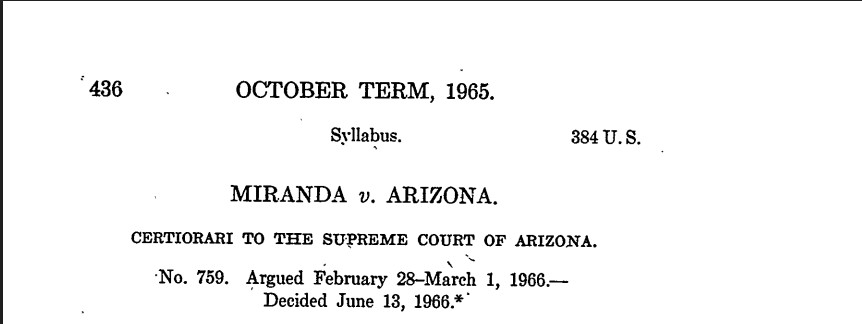
On the morning of March 13, 1963, Phoenix police officers Carroll Cooley and Wilfred Young drove to a modest house and arrested a twenty-two-year-old laborer named Ernesto Miranda. They brought him to the station, placed him in a lineup, and then walked him into Interrogation Room No. 2. Two hours later they walked out with a signed confession.
At the top of that confession form was a pre-printed line. It read that the statement had been made voluntarily, without threats or coercion, and with full knowledge of the signer's legal rights. Miranda signed it.
The problem was that no one had informed him of the specific constitutional protections the Court would later require police to explain.
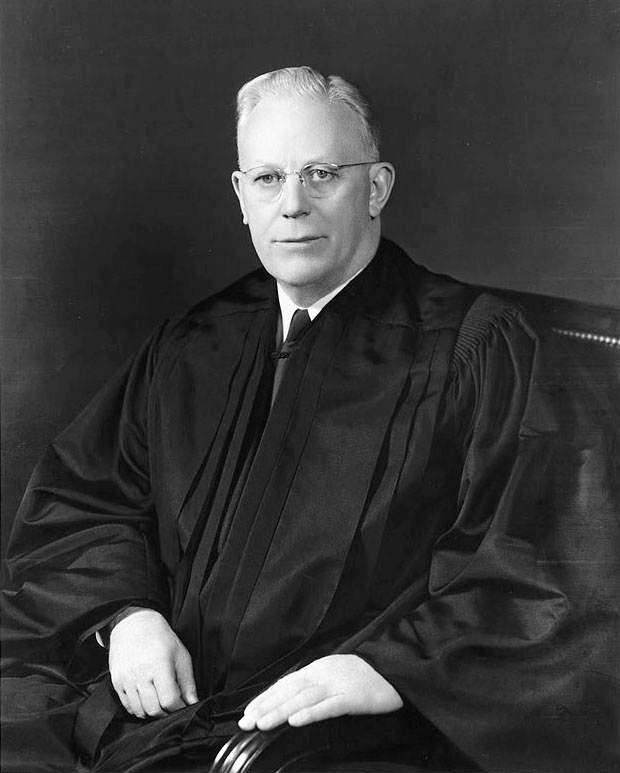 Chief Justice Earl Warren, who wrote the majority opinion in Miranda v. Arizona on behalf of a 5-4 Court.
The Man and the Room
Ernesto Miranda had an eighth-grade education and a history of minor run-ins with the law. He was not a sophisticated legal mind. When detectives told him that the young woman he was accused of kidnapping and raping had positively identified him, he confessed, both orally and in writing. His court-appointed attorney, Alvin Moore, objected at trial that the confession was not truly voluntary because Miranda had never been told he could remain silent or demand a lawyer. The judge overruled the objection. Miranda was convicted and sentenced to twenty to thirty years in prison on each count.
Moore appealed to the Arizona Supreme Court, which affirmed the conviction, noting that Miranda had not specifically asked for an attorney. The case then moved to Washington.
Attorney John Paul Frank, a former law clerk to Justice Hugo Black, led the legal strategy for Miranda's appeal and wrote the Supreme Court briefs. His law partner John J. Flynn delivered the oral argument before the justices. Gary Nelson represented the State of Arizona. The Court agreed to hear the case alongside three similar ones from New York, Kansas City, and California, all involving suspects questioned in custody without being informed of their rights.
Five to Four
On June 13, 1966, the Supreme Court issued its ruling. Chief Justice Earl Warren wrote for a five-justice majority that included Hugo Black, William O. Douglas, William Brennan, and Abe Fortas. The decision was 5-4.
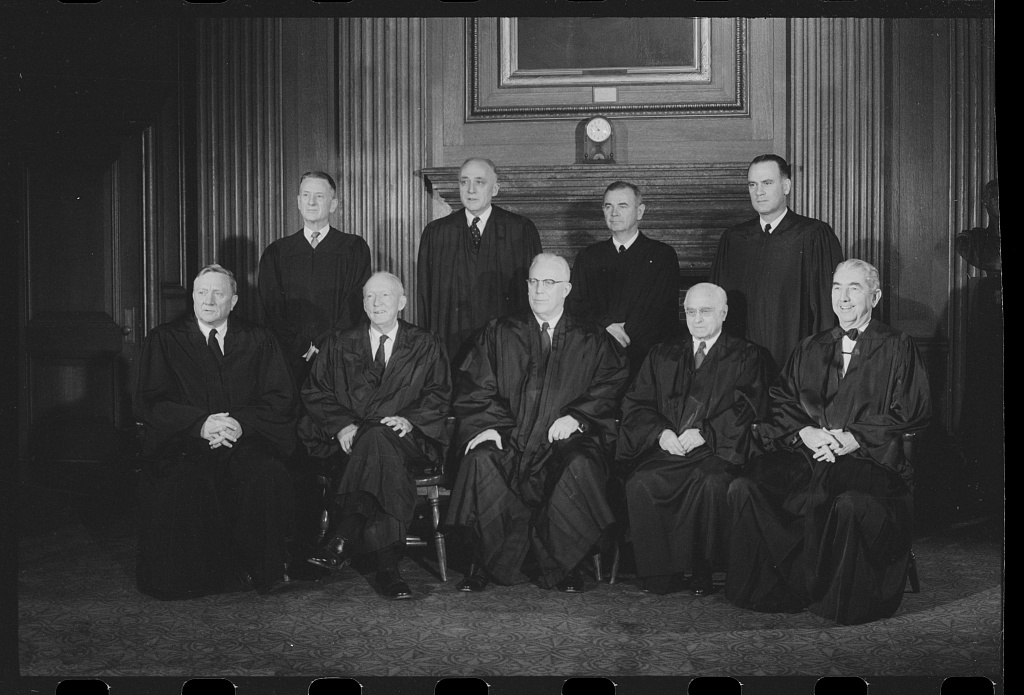 The Warren Court, which issued some of the most transformative decisions in the history of American constitutional law.
Warren's argument was direct. The atmosphere of a police interrogation room is inherently coercive. A person cut off from the outside world, seated across from law enforcement officers, faces pressures that work to undermine the will to resist. That pressure, Warren wrote, triggered the Fifth Amendment's protection against self-incrimination. Before any questioning could begin, a suspect in custody had to be warned that they had the right to remain silent, that anything they said could be used against them in court, that they had the right to have an attorney present, and that if they could not afford one, the government would appoint one before questioning began.
Warren also pointed to the FBI, which had long required its agents to inform suspects of their right to remain silent and to counsel. If the federal bureau could operate under those rules without collapsing, Warren argued, local police could too.
The four dissenters pushed back hard. Justice John Marshall Harlan called the majority opinion heavy-handed and accused the Court of inventing a constitutional requirement with no basis in the text or history of the Fifth Amendment. Justice Byron White issued the most pointed warning, arguing that the new rule would in some unknown number of cases return killers and rapists to the streets. Justice Tom Clark, who concurred in part and dissented in part, believed the Court had moved too far too fast and preferred a case-by-case approach that weighed all the circumstances of each interrogation.
What the Paper Actually Said
The irony embedded in Miranda's own confession document is worth pausing on. The form included a typed declaration that the statement was made with full knowledge of legal rights. Miranda signed that line. But the officers who handed him the form had never explained those rights to him. The Court concluded that the confession rested on a foundation the Constitution could not support. The paper said he knew. Nobody had told him.
Miranda became the lead case in a group of four consolidated cases decided together, which is why the ruling addressed interrogation practices nationwide rather than one Arizona conviction alone. The others involved suspects in New York, Kansas City, and California, each questioned in custody without adequate warning.
Miranda's conviction was overturned. Arizona retried him in 1967, this time without the confession as evidence. The prosecution instead called Twila Hoffman, the woman Miranda had been living with, who testified that he had admitted the crime to her. He was convicted again and sentenced to the same term.
He was paroled in 1972. In an odd footnote to history, Miranda spent part of his post-prison years signing police officers' wallet cards, the small printed cards carrying the warning that now bore his name, for a dollar apiece. He was stabbed to death in a Phoenix bar on January 31, 1976.
What It Became
The ruling hit American law enforcement like a thunderclap. Richard Nixon, both as a presidential candidate and later as president, made Miranda a centerpiece of his argument that the Warren Court had gone soft on crime. Congress passed the Omnibus Crime Control and Safe Streets Act of 1968, which purported to overrule Miranda for federal criminal cases and restore a looser standard. The Justice Department quietly refused to invoke that law for thirty years, aware that its constitutional standing was shaky.
The warning itself, meanwhile, became part of the fabric of American life. It appeared in crime novels, police procedurals, and television dramas until it was as familiar as the national anthem. The Supreme Court confirmed its constitutional status in Dickerson v. United States in 2000, with Chief Justice Rehnquist writing for a 7-2 majority that the warnings had become part of our national culture.
The Court has carved out exceptions over the decades, including a public safety exception allowing police to question suspects about immediate dangers before reading the warning. And in Berghuis v. Thompkins in 2010, the Court held that a suspect who receives the warnings and then voluntarily speaks has implicitly waived the right to remain silent, even without explicitly saying so.
But the core requirement Warren established on June 13, 1966 has held. Before a word of a custodial interrogation can be used in court, a suspect must be told what the law gives them. The man who made that rule necessary signed a form saying he already understood it, in an interrogation room where no one had told him anything at all.
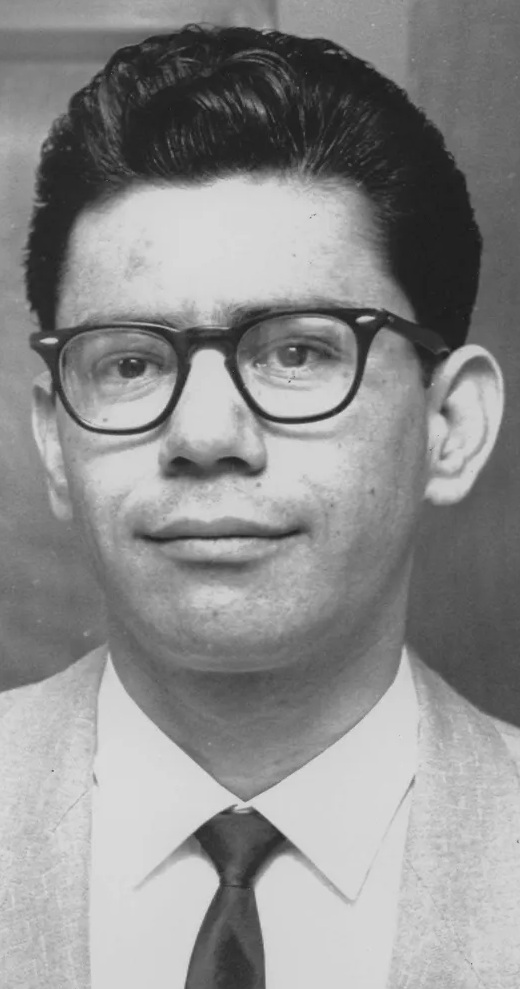 Ernesto Miranda in 1967, the year Arizona retried and reconvicted him after the Supreme Court threw out his original confession-based conviction.
After Miranda's death in 1976, Phoenix police arrested a suspect named Enezeno Moreno. Officers read Moreno his Miranda rights. He invoked them and refused to speak. Without a confession and with witnesses who would not cooperate, police lacked the evidence to charge him. No one was ever convicted for Ernesto Miranda's murder. The warning he made necessary had, in a final twist, been used by the man accused of killing him.