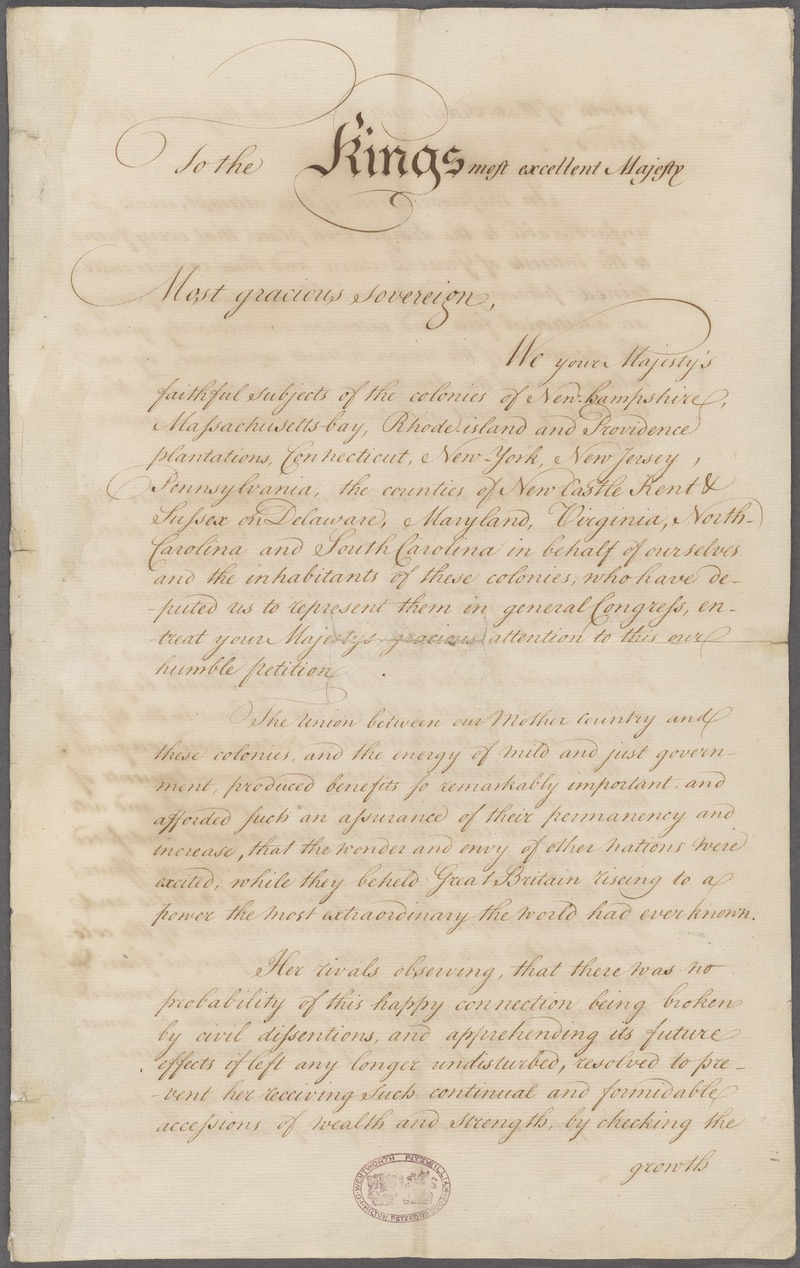
On July 5, 1775, the Second Continental Congress sat in the Pennsylvania State House and signed off on a letter to King George III. It opened with the words "Most Gracious Sovereign" and closed with a prayer for his "long and prosperous reign." The men who wrote it called themselves his faithful subjects. They asked him, humbly, to make the fighting stop.
Three weeks earlier, that same Congress had created an army. Two weeks earlier, it had voted to invade his territory in Canada.
Both things were true at once. That's not a contradiction historians have papered over. It's the whole point.
A Petition and an Invasion, Weeks Apart
By the time Congress sat down to write what became known as the Olive Branch Petition, blood had already been spilled at Lexington, Concord, and Bunker Hill. Congress had appointed George Washington commander of a new Continental Army in mid-June. And in the same stretch of weeks, delegates authorized an invasion of British Canada, hoping Canadians might join the colonial cause, or at least stay out of the fight against them.
None of that stopped Congress from also sending George III a letter asking for peace.
To modern eyes this looks like Congress talking out of both sides of its mouth. To the men writing it, it wasn't contradiction so much as insurance. If the King answered, they'd have their reconciliation without further bloodshed. If he didn't, they'd have proof, to the rest of the world and to their own undecided countrymen, that they had tried everything short of independence before they broke with him for good.
Written by Jefferson, Softened by Dickinson
The petition wasn't a single man's idea, and its first draft wasn't even the one that got sent.
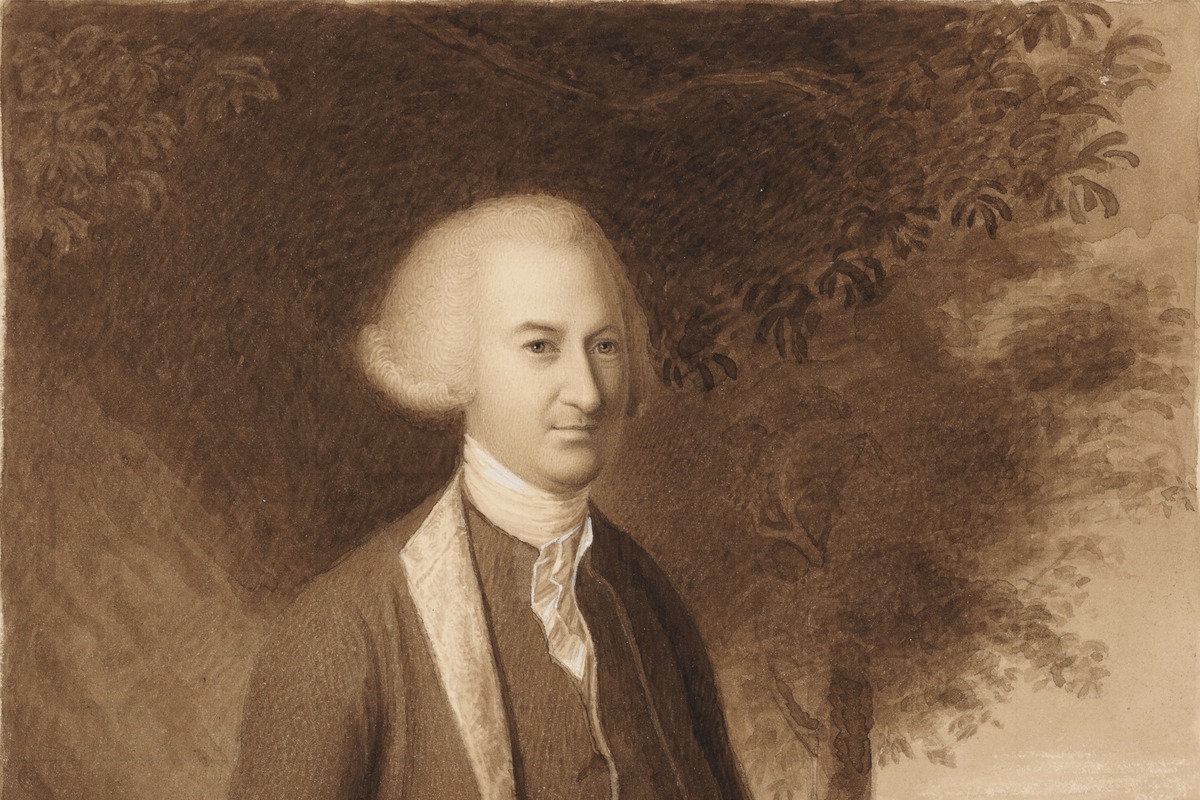
Thomas Jefferson prepared the first draft. Congress read it and decided it ran too hot, too close to a declaration of grievances against the Crown itself rather than a plea for the King's help against his own Parliament. The job of rewriting it fell to John Dickinson of Pennsylvania, a delegate who still believed, more than almost anyone else in that room, that peace with Britain was possible and worth chasing.
Dickinson had the help of a drafting committee that included Benjamin Franklin, John Jay, John Rutledge, and Thomas Johnson. But the petition that emerged was recognizably his: careful, deferential, and aimed squarely at the King rather than Parliament. It blamed "artful and cruel enemies" close to the throne for poisoning the relationship between Britain and her colonies. It never once used the word "Parliament" as the villain outright. It let George III imagine himself as the wronged party's best hope, not its obstacle.
The petition named twelve colonies. Georgia had not yet sent delegates to the Second Continental Congress, so the colony was omitted.
The Letter That Undercut Its Own Petition
John Adams thought the whole effort was a waste of paper.
Adams wrote to his friend James Warren that war was already inevitable, and that Congress ought to be raising a navy and taking British officials prisoner rather than drafting polite letters to the man they were fighting. British agents intercepted that letter. Its contents reached London at almost the same moment the Olive Branch Petition itself did.
For British officials looking for a reason to dismiss the petition, Adams handed them one. If a leading member of Congress was privately calling the peace offer pointless while other delegates signed it in good faith, why should the King take it seriously at all? Congress had tried to speak with one voice. Adams' letter suggested it didn't have one.
Answered Before It Arrived
Richard Penn and Arthur Lee carried the petition across the Atlantic and spent weeks trying to get it in front of the King. They handed a copy to Colonial Secretary Lord Dartmouth on August 21, then delivered the original on September 1. The answer came back the next day, and it wasn't really an answer at all: "as his Majesty did not receive it on the throne, no answer would be given."
George III refused to receive it. There's no record he ever read it personally, not that it mattered. On August 23, word of the casualties at Bunker Hill reached him, and he issued his own Proclamation of Rebellion, declaring the colonies in a state of "open and avowed rebellion" and ordering every loyal subject to help suppress it. The petition asking for peace hadn't even reached his hands yet. His rejection of it was already public.
Congress had sent an offer to a King who had effectively made his decision before it arrived.
What Came After
Parliament followed the King's proclamation with the American Prohibitory Act that December, banning trade with the colonies outright and declaring that American ships could be seized as enemy vessels. Many colonists saw it as effectively Parliament's own declaration of war, delivered a full six months before America wrote one of its own.
By January 1776, Thomas Paine's Common Sense was circulating through the colonies, arguing plainly that reconciliation was a dead idea and independence was the only one left standing. Congress adopted the Declaration of Independence that July, not quite a year after it had begged the same King for peace.
Many of the men who approved the Olive Branch Petition would sign the Declaration of Independence less than a year later. Others who backed the petition never signed the Declaration at all, having left Congress before it came to a vote. History rarely moves those men in a straight line, and this one didn't either. It moved them from a plea for reconciliation to a break with the Crown in the space of twelve months, with a war already underway the entire time.
The petition itself never got a reply. It didn't need one. The King had already answered, just not to them.