On the morning of June 26, 1975, FBI Special Agents Ronald Williams, age twenty-seven, and Jack Coler, age twenty-eight, drove onto the Pine Ridge Indian Reservation in southwestern South Dakota in separate unmarked cars. They were looking for a young man named Jimmy Eagle, wanted on a robbery charge involving the theft of a pair of cowboy boots.
By four twenty-five that afternoon, both agents were dead.
What happened between eleven fifty in the morning and that moment — who fired the fatal shots, why the government's case shifted, and what the FBI withheld for decades — remains one of the most fiercely disputed questions in modern federal criminal history. One man nonetheless served forty-nine years in federal prison for it.
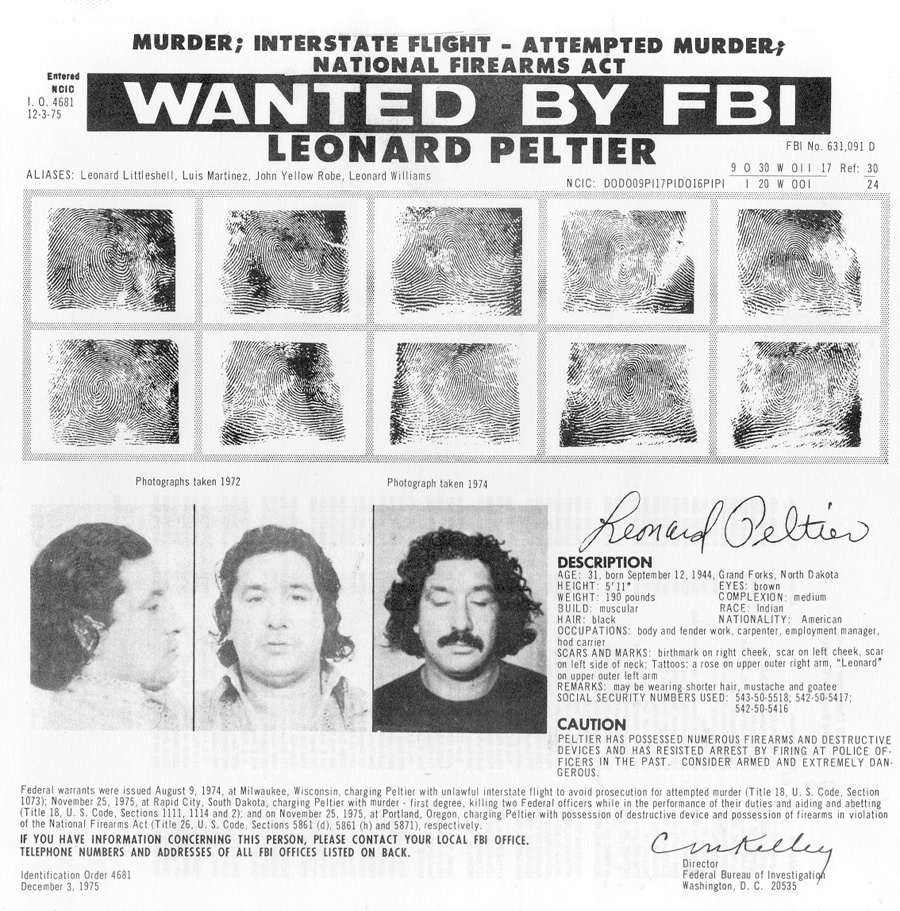
His name was Leonard Peltier. He was eighty years old when he walked out.
The Reservation They Drove Into
To understand June 26, 1975, you have to understand what Pine Ridge was in the two years before it.
In 1972, Richard Wilson was elected tribal chairman of the Oglala Sioux. Wilson created a private militia — the Guardians of the Oglala Nation, known by the acronym GOON — that his opponents accused of terrorizing AIM supporters and tribal traditionalists. In the roughly two years between the Wounded Knee occupation of 1973 and the shootout at Jumping Bull Ranch, Pine Ridge recorded more than sixty suspicious or unsolved violent deaths. A reservation of twelve thousand people had a higher murder rate than the rest of the state of South Dakota combined.
The American Indian Movement had been asked by Oglala Lakota elders to send members to the reservation to help protect traditionalists from GOON attacks. Leonard Peltier was among those who answered that call. By June 1975 he was camped with other AIM members on the property of Harry and Cecilia Jumping Bull.
Peltier was not a neutral presence. He was a fugitive — an outstanding federal warrant in Milwaukee charged him with unlawful flight to avoid prosecution for the attempted murder of an off-duty police officer. He would later be acquitted of that charge, in February 1978. But on June 26, 1975, he was a wanted man who had reasons to run from federal agents.
The FBI, for its part, was not conducting routine law enforcement. An internal FBI position paper issued two months before the shootout, titled "FBI Paramilitary Operations in Indian Country," outlined procedures for paramilitary operations against heavily armed AIM militants. The Rapid City field office had sent six temporary duty agents to supplement its twelve-agent force specifically because of rising tensions on the reservation. Jack Coler was one of those TDY agents — a temporary assignment that would cost him his life.
Eleven Fifty A.M.
On the morning of June 26, Williams and Coler returned to Pine Ridge to continue their search for Jimmy Eagle. Around eleven fifty, Agent Williams radioed that he had spotted a red and white vehicle and was going to stop it. His transmissions were not recorded — the FBI had no system in place to do so. What other agents overheard from a distance is the only record of what Williams said.
Seconds later, Williams radioed again: the vehicle had stopped, the occupants had exited the car, and it appeared they were preparing to fire.
Testimony would later establish that the vehicle contained Leonard Peltier, Norman Charles, and Joe Stuntz. Peltier's vehicle stopped approximately two hundred fifty yards in front of the agents' cars. What happened in the next ten minutes left both agents dead, with one hundred twenty-five bullet holes in their vehicles — not counting rounds that struck the agents themselves or passed through glass.
Agent Gary Adams was the first to respond, racing twelve miles at ninety miles an hour. He never reached Williams and Coler in time. As he arrived in the area, his own tires were shot out. Sniper fire continued throughout the afternoon. Rescue was impossible. It was not until four twenty-five p.m. that authorities recovered the agents' bodies from beside Coler's vehicle.
The pathology was brutal. Coler had been shot in the arm — the wound nearly severing it, disabling him at the trunk of his own car where he had been reaching for his long guns. Williams wrapped his shirt around Coler's arm as a tourniquet; bullet holes in that shirt coincided with wounds Williams had already taken to his arm and side. Williams then received a defensive wound through his right hand — the bullet passed through his hand into his head, killing him instantly. Coler, already down and incapacitated, was shot once in the top of the head and then fatally once near the jaw.
The forensic evidence strongly suggested both men had been killed at close range after they had already been incapacitated. FBI investigators concluded the agents' firearms, collectively, had fired five rounds total during the entire incident.
Also killed that day: Joe Stuntz, an AIM member and member of the Coeur d'Alene Tribe, twenty-three years old, shot in the head by a law enforcement officer. No homicide investigation comparable to that conducted into the agents' deaths was ever undertaken into his killing. His body was found wearing Agent Coler's FBI jacket from the trunk of Coler's car.
What the FBI Said Happened
The government's case rested on ballistics. Physical evidence showed that at least three .223 caliber bullets had been fired at the agents from close range. Only a single .223 shell casing was recovered from the open trunk of Agent Coler's car — the FBI's theory being that the killers had attempted to remove all casings from the scene and missed this one.
Government witnesses testified that Peltier was the only person present known to be carrying an AR-15 rifle, the only weapon present capable of firing a .223 round. One hundred fourteen additional .223 casings were recovered from the general crime scene area — all matched, the FBI said, to the same AR-15.
That rifle surfaced again on September 10, 1975, when a station wagon loaded with weapons and explosives blew up on the Kansas Turnpike near Wichita. A burned AR-15 and Agent Coler's .308 rifle were recovered from the wreckage. Present in the car were Peltier associates Robert Robideau, Norman Charles, and Michael Anderson. The FBI Laboratory later matched extractor marks on the shell casing found in Coler's trunk to that recovered AR-15. An eyewitness also placed Peltier, Robideau, and Butler walking to the agents' cars after the shooting.
After Peltier fled to Canada, an Oregon State Trooper stopped his recreational vehicle. Peltier fired at the trooper and ran. Agent Coler's handgun was found in a bag under the front seat with Peltier's thumbprint on it. When the Royal Canadian Mounted Police finally caught him in Hinton, Alberta on February 6, 1976, Peltier was heavily armed. He told the RCMP that two FBI agents had been shot when they came to the reservation to serve a warrant on him.
That admission — that he knew why he was wanted — would be used against him at trial.
The Two Trials
Four men were charged in connection with the killings: Peltier, Robert Robideau, Darrelle Butler, and Jimmy Eagle. Charges against Eagle were dropped for lack of evidence.
Robideau and Butler went to trial first, in Cedar Rapids, Iowa, in the summer of 1976, while Peltier was in Canada fighting extradition. Their trial was substantively different from what would follow. The government's two strongest witnesses — Angie Long Visitor and Michael Anderson — could not be located and did not testify. The jury heard extensive testimony about the history of FBI conduct on Pine Ridge and the atmosphere of violence and fear that preceded the shooting. Both defendants argued self-defense: they had not known the agents were FBI, they were responding to what felt like an attack in a war zone. The jury acquitted both men. The jury foreman later said the atmosphere of fear on the reservation was a significant factor.
Peltier's trial in Fargo, North Dakota, in early 1977, was a different proceeding almost by design. The government secured a sequestered jury, a gag order on attorneys, and a pretrial ruling that the FBI could not be "put on trial" unless the evidence was directly relevant to Peltier's guilt or innocence. The testimony about Pine Ridge's broader history of violence and FBI conduct — the testimony that had helped acquit Robideau and Butler — was largely excluded.
Long Visitor and Anderson were now available and testified. The jury saw autopsy and crime scene photographs that the Cedar Rapids jury had never seen. Peltier could not argue self-defense as effectively as his co-defendants had, because the forensic evidence placed him at the agents' cars at close range rather than firing from a distance. On April 18, 1977, after a five-week trial, the jury convicted Peltier on two counts of first-degree murder. On June 1, 1977, Chief U.S. District Judge Paul Benson sentenced him to two consecutive life terms.
What the Government Couldn't Explain
The problems with the government's case emerged over years of appeals, FOIA requests, and recantations — and they were serious.
The witness who never met him. Peltier's extradition from Canada rested significantly on affidavits signed by Myrtle Poor Bear, a Native American woman who claimed to be Peltier's girlfriend and an eyewitness to the killings. After extradition, subsequent interviews established that Poor Bear did not know Peltier and had not been present at the shooting. She later stated FBI agents had coerced her into signing the affidavits under threat. When she attempted to recant and testify at trial, the judge barred her on grounds of mental incompetence — meaning her fabricated affidavits helped bring Peltier to the United States but her recantation never reached the jury. Canada's Solicitor General at the time later stated that the extradition documents had contained false information.
The prosecution theory that changed. Peltier had been indicted and tried on the theory that he had personally fired the shots that executed the agents. In subsequent appeals, the government shifted — acknowledging it could not prove beyond a reasonable doubt that Peltier had fired the fatal shots, arguing instead that he was guilty as an aider and abettor. The defense called this a fundamental change in prosecutive strategy. The appeals court acknowledged the shift but declined to overturn the conviction.
The ballistics report that wasn't complete. An October 1975 FBI laboratory teletype reported a firing pin mismatch — the AR-15 recovered from the Kansas explosion did not match the firing pin impression on the casing found in Coler's trunk. The defense argued this was exculpatory evidence that had been withheld. The government's explanation was that the October teletype reflected only an early stage of the examination. When additional testing was completed in December 1975 and January 1976, FBI examiners concluded that extractor marks — rather than firing pin impressions — linked the casing from Coler's trunk to the recovered AR-15. The appeals court accepted this explanation. A 2004 FOIA-prompted examination by an independent expert found that some casings from the scene did not come from the rifle tied to Peltier — but the court ruled the new evidence was immaterial because it did not pertain to the specific casing from Coler's trunk.
The documents the FBI withheld. Peltier's attorneys spent decades fighting for FBI files related to the case. The government acknowledged the existence of tens of thousands — and by some estimates nearly one hundred thousand — pages of documents that had not been disclosed. A federal judge in 2006 ruled that the FBI did not have to release five of eight hundred twelve documents from its Buffalo field office, citing national security concerns.
The red truck that became an orange van. FBI radio intercepts originally confirmed the agents had been pursuing a red pickup truck. The FBI confirmed this account the day after the shootout. At trial, however, agents testified they had been looking for an orange and white van — a vehicle matching the one Peltier drove. The government maintained there was no contradiction because multiple suspect vehicles had been sought simultaneously. The defense argued the shift was a deliberate recasting of the facts. It remained one of the most contested evidentiary disputes in the case.
Two trial witnesses recanted their statements, saying they had been made under duress. At least one witness received immunity from prosecution in exchange for testimony against Peltier.
In 1999, one of the federal prosecutors who had supervised Peltier's appeals wrote to the Department of Justice supporting clemency, stating the case against Peltier "was a very thin case that likely would not be upheld by courts today." In 2021, that same former U.S. Attorney wrote directly to President Biden: "I have realized that the prosecution and continued incarceration of Mr. Peltier was and is unjust. We were not able to prove that Mr. Peltier personally committed any offense on the Pine Ridge Reservation."
One question readers often ask is why the conviction stood if the appellate courts acknowledged so many problems. The answer is a technical but important one. The courts repeatedly concluded that serious misconduct had occurred during parts of the investigation and extradition. But they also ruled that those problems did not undermine the legal basis for the jury's verdict under the standards governing federal appeals — standards that require far more than doubt to overturn a conviction. The courts did not find Peltier innocent. They found that the errors, however serious, did not rise to the legal threshold required to undo what the Fargo jury had decided.
Forty-Nine Years of Appeals
Every avenue closed. The Eighth Circuit affirmed the conviction in 1978. The Supreme Court denied certiorari in 1979 and again in 1987. An evidentiary hearing in 1984 on the ballistics teletype produced no relief. A habeas petition filed in 1990 was ultimately rejected.
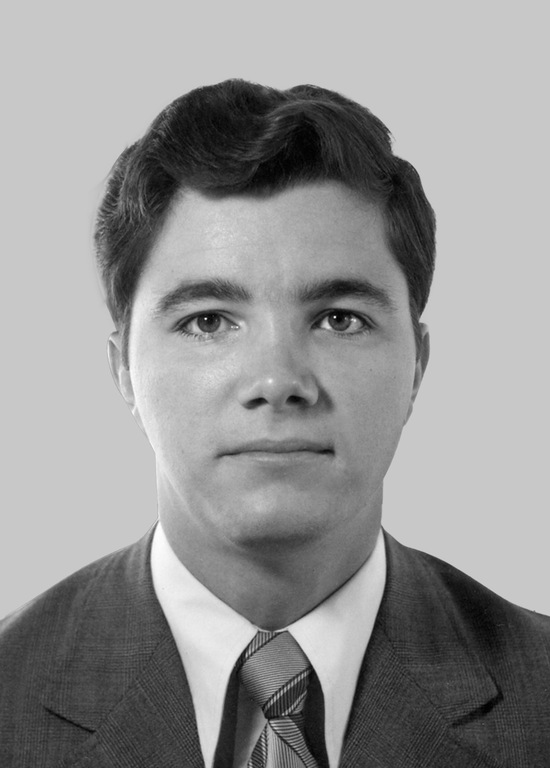 Special Agent Ronald A. Williams, age 27, killed June 26, 1975.
In 1979, Peltier escaped from the federal penitentiary in Lompoc, California. Another inmate was killed during the escape. Peltier was recaptured three days later after a farmer reported him armed in a field near Santa Maria. He was convicted of escape and felon-in-possession charges; the escape conviction stood and was affirmed on appeal.
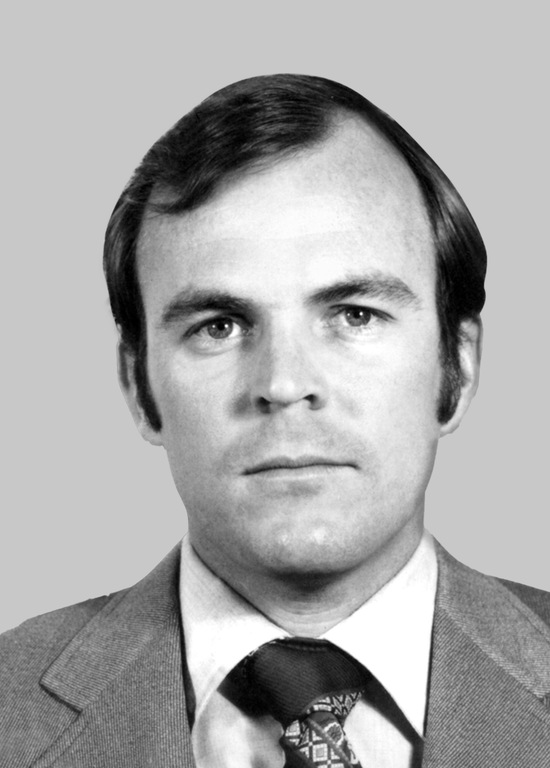 Special Agent Jack R. Coler, age 28, killed June 26, 1975.
Support for Peltier's release came from across the world — Archbishop Desmond Tutu, the Dalai Lama, Amnesty International, the European Parliament, the United Nations Working Group on Arbitrary Detention, which in 2022 ruled his detention arbitrary and in violation of international human rights norms. Nelson Mandela. Pope Francis. The prosecutor who put him away.
It made no difference to the courts or to any sitting president. Clinton declined to act in 2001, reportedly after several hundred FBI agents and the families of the dead agents demonstrated outside the White House. Obama denied clemency in 2017. Trump received a petition and did not act. The Parole Commission denied release in 1993, 1996, 1998, 2009, and most recently in July 2024 — setting his next full hearing for 2039, when Peltier would be ninety-four years old.
By the time of that 2024 denial, Peltier was nearly blind from diabetes, suffering from kidney disease, an untreated aortic aneurysm, and heart trouble. He required a wheelchair.
The Last Document
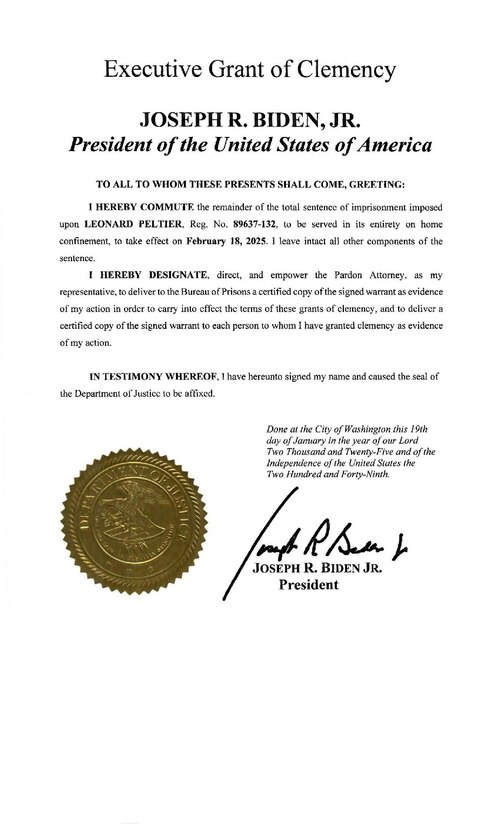
On January 19, 2025 — his final full day in office — President Joe Biden signed the Executive Grant of Clemency commuting Leonard Peltier's sentence to home confinement, effective February 18, 2025.
It was not a pardon. The underlying conviction was not disturbed. The document said simply that Peltier had spent most of his life behind bars and was now in failing health.
Former FBI Director Christopher Wray, in a private letter to Biden obtained by the Associated Press, called Peltier a "remorseless killer" and urged the President in the strongest possible terms not to act. The FBI Agents Association called the commutation "disgraceful." The family of Jack Coler said they were frustrated and very angry.
On February 18, 2025, Leonard Peltier, age eighty, walked out of USP Coleman in Florida. He did not stop to speak to reporters. He was transferred by jet to the Turtle Mountain Indian Reservation in Belcourt, North Dakota — his home — where his tribe had arranged a house for him.
President Biden's Executive Grant of Clemency for Leonard Peltier, signed January 19, 2025. The underlying conviction was not pardoned.
He had been incarcerated since 1977. The identity of the person who fired the fatal close-range shots that killed Ronald Williams and Jack Coler remains disputed despite nearly fifty years of litigation.
Two families lost fathers and husbands. One man lost half a century. The FBI's own case file — available in full at the source link below — remains the only official account of what the government says happened that morning in South Dakota. Read it, and decide for yourself what it proves.