On June 5, 2013, readers opened The Guardian and learned that their government had been secretly collecting the phone records of millions of Americans. Every call. Every number. Every timestamp. Collected daily, handed over to the NSA by court order, without the knowledge of a single person whose records were taken.
The man who made that possible was 29 years old. He was sitting in a hotel room in Hong Kong. And he had been planning this moment for years.
Who Edward Snowden Was
Edward Joseph Snowden was born on June 21, 1983, in Elizabeth City, North Carolina, into a family that had spent generations in federal service. His father was a warrant officer in the Coast Guard. His mother worked as a clerk at the U.S. District Court. His maternal grandfather was a rear admiral who later became a senior FBI official and was at the Pentagon on September 11, 2001. Snowden grew up assuming he would follow the same path.
He dropped out of high school after a bout of mononucleosis kept him bedridden for nearly nine months, passed the GED, and took classes at Anne Arundel Community College. He had no undergraduate degree. What he had instead was a rare and instinctive ability with computers that would open doors no diploma could.
In 2006, after attending an intelligence-community job fair, Snowden joined the CIA. The agency sent him to their school for technical specialists, then posted him to Geneva with diplomatic cover, where he was responsible for maintaining network security at the U.S. Permanent Mission to the United Nations. He was given a diplomatic passport, a four-bedroom apartment near Lake Geneva, and, by his own account, the reputation of the top cybersecurity expert in the country.
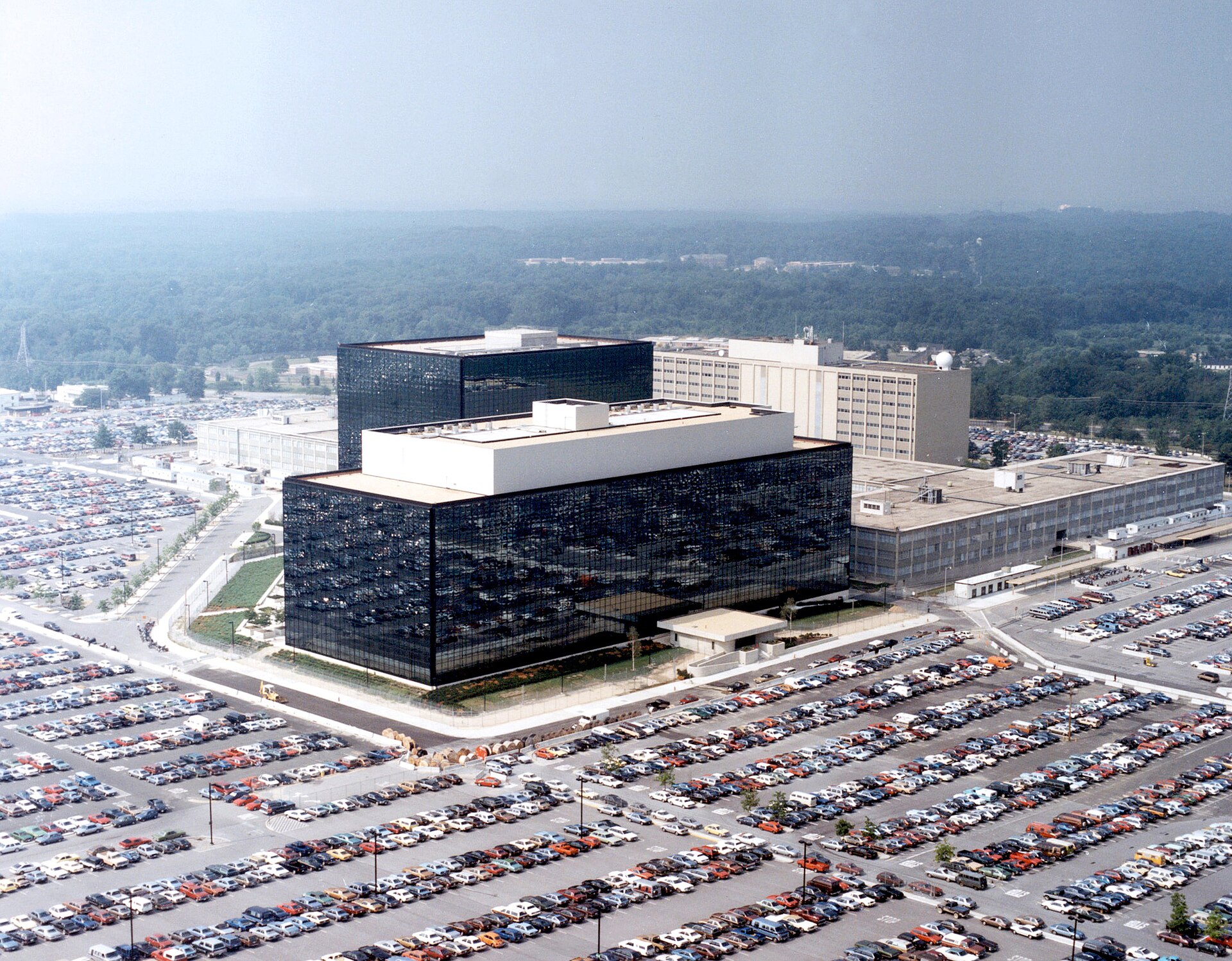
He left the CIA in 2009 after growing suspicious of how the agency operated. He went to work for Dell, which managed computer systems for the NSA, and was assigned to an NSA facility near Tokyo. Later he moved to Maryland, then to Hawaii, where by 2012 he was serving as lead technologist at the NSA's information-sharing office.
He was, in the language of the intelligence community, a trusted insider with virtually unlimited access. The NSA had even offered him a position on Tailored Access Operations, its elite hacking unit. He turned it down.
What he was doing instead was reading. And the more he read, the more certain he became that the American public had no idea what was being done in their name.
The Breaking Point
The moment Snowden later identified as his point of no return was March 12, 2013. That day, Director of National Intelligence James Clapper sat before the Senate Select Committee on Intelligence and was asked directly: does the NSA collect any type of data at all on millions of Americans?
Clapper's answer was no. "Not wittingly," he said.
It was a lie. Snowden knew it was a lie. He had seen the documents.
"There's no saving an intelligence community that believes it can lie to the public and the legislators who need to be able to trust it," Snowden said later. "Seeing that really meant for me there was no going back."
Three days after Clapper's testimony, Snowden quit his job at Dell. He took a pay cut to accept a position at Booz Allen Hamilton, the consulting firm, specifically because that job would give him access to a broader set of classified programs. He needed documentation. He was already building a case.
In May 2013, he told his supervisors he needed time off for epilepsy treatment. He boarded a flight to Hong Kong. He did not come back.
What He Found
The surveillance apparatus Snowden documented was not a targeted program aimed at foreign terrorists. It was a system built to collect everything.
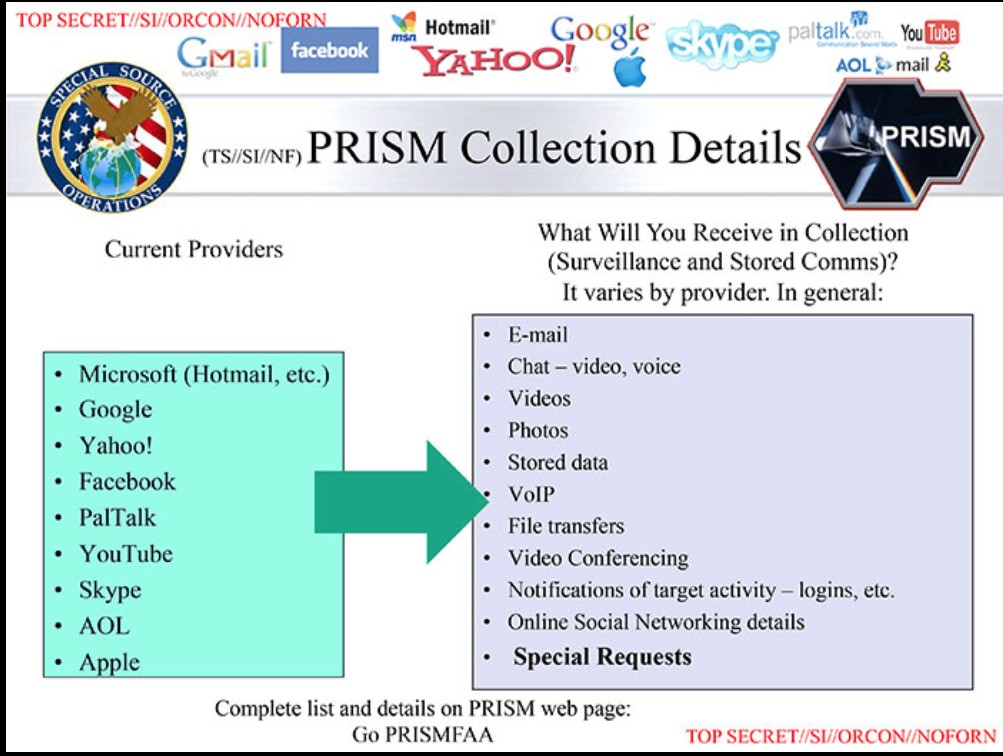
The first program to become public was PRISM, which went live in 2007 under the Bush administration and expanded significantly under President Obama. PRISM gave the NSA direct access to data held by nine of the largest technology companies in the United States: Microsoft, Google, Yahoo, Facebook, PalTalk, AOL, Skype, YouTube, and Apple. The data it pulled included email, video and voice chat, photos, stored documents, VoIP calls, file transfers, video conferencing logs, and what the classified briefing slides called "Special Requests."
The NSA's own internal documents described PRISM as "the number one source of raw intelligence used for NSA analytic reports." In 2012 alone, analysts cited PRISM data in nearly 1,500 entries in the President's Daily Brief.
Alongside PRISM was the bulk telephone metadata program. A secret order from the Foreign Intelligence Surveillance Court had compelled Verizon to hand over metadata from every phone call made on its network, within the United States and abroad, on a daily and ongoing basis. Not calls involving suspects. Not calls flagged by any investigation. All calls. The order was signed by a judge whose name and court were themselves classified. The people subject to it had no way to know it existed and no means to challenge it.
There was also XKeyscore, the NSA's search engine for the internet. Where PRISM and the phone metadata program were about collection, XKeyscore was about exploitation. It gave analysts the ability to search through a person's emails, browsing history, online chats, and metadata in near real time.
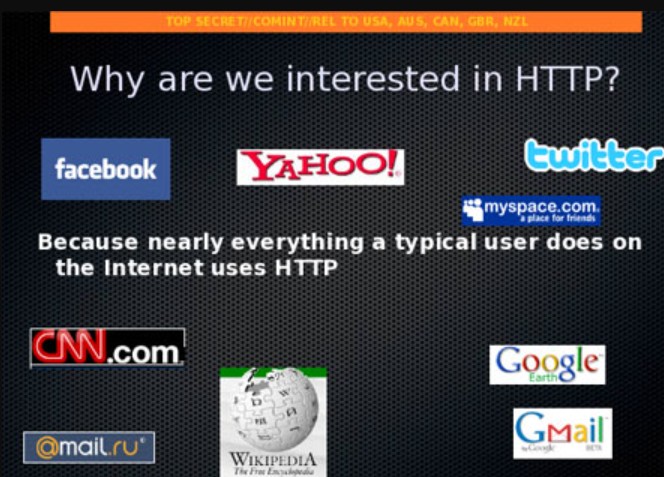 An NSA XKeyscore training slide explains the agency's rationale for monitoring HTTP traffic: "Because nearly everything a typical user does on the Internet uses HTTP." The slide was marked TOP SECRET//COMINT/REL TO USA, AUS, CAN, GBR, NZL, indicating it was shared across all Five Eyes intelligence partners. NSA / leaked 2013.
Snowden himself put it plainly: "I, sitting at my desk, could wiretap anyone, from you or your accountant, to a federal judge or even the president, if I had a personal email."
The Leak
Snowden had been in contact with Guardian journalist Glenn Greenwald since early 2013, communicating under the codename "Verax," the Latin word for truth-teller. He had also reached out to documentary filmmaker Laura Poitras, who had been flagged by the U.S. government for her films about the war on terror and detained at airports dozens of times as a result. Snowden had read about her case and decided she was the kind of person he could trust.
He brought Greenwald and Poitras to Hong Kong in late May 2013. He handed them the documents in person. He told them when to publish.
On June 5, 2013, The Guardian ran the first story: a secret Foreign Intelligence Surveillance Court order requiring Verizon to hand over phone records on all of its customers, every day, without limitation. The following day, The Guardian and The Washington Post both published details of PRISM. The slides were included. The company logos were visible. The categories of data were listed in plain language.
The response from the government was immediate. President Obama said the programs struck "the right balance" between security and privacy. Director of National Intelligence Clapper called the leaks damaging to national security. Former CIA director James Woolsey said Snowden should be hanged if convicted of treason.
On June 9, Snowden identified himself as the source, at his own request. "My sole motive is to inform the public as to that which is done in their name and that which is done against them," he said.
On June 14, federal prosecutors filed criminal charges: theft of government property and two counts of violating the Espionage Act of 1917. Each count carried a maximum of ten years in prison.
On June 21, the State Department revoked his passport while he was in transit.
He has not set foot on American soil since.
Stranded
Snowden's plan had been to reach Latin America. Ecuador had offered to consider his asylum application. Venezuela, Nicaragua, and Bolivia eventually followed. The routes there required crossing airspace controlled by countries under heavy U.S. diplomatic pressure, and the State Department had made clear it intended to use every available tool to intercept him.
On June 23, Snowden boarded an Aeroflot flight from Hong Kong to Moscow, intending to continue onward. The U.S. canceled his passport while he was in the air. He landed at Sheremetyevo Airport and could not leave. He spent 39 days in the international transit zone before Russia granted him temporary asylum on August 1, 2013.
He is still there. In 2020, Russia extended his residency permit indefinitely. In September 2022, Vladimir Putin granted him Russian citizenship.
James Clapper, the man who lied under oath to the U.S. Senate, was never charged with perjury. He retired in January 2017 and went into the private sector.
The Verdict History Delivered
In September 2020, the U.S. Court of Appeals for the Ninth Circuit ruled that the NSA's bulk collection of Americans' phone records was illegal under the Foreign Intelligence Surveillance Act and possibly unconstitutional under the Fourth Amendment. The court's opinion cited Snowden's disclosures extensively. It also stated plainly that the intelligence officials who had publicly defended the program were not telling the truth.
The ACLU called it a vindication of everything Snowden had said was wrong.
"I never imagined that I would live to see our courts condemn the NSA's activities as unlawful and in the same ruling credit me for exposing them," Snowden said after the decision was announced. "And yet that day has arrived."
The espionage charges remain pending. He remains in Moscow.
What It Changed
The Snowden disclosures triggered the most significant restructuring of U.S. intelligence law since the Patriot Act. In June 2015, Congress passed the USA Freedom Act, which for the first time placed statutory limits on the NSA's bulk collection of domestic telecommunications data. The law was a direct response to what Snowden had revealed.
Tech companies, embarrassed by the exposure of their cooperation with PRISM and facing international backlash, began building end-to-end encryption into consumer products at a pace the industry had never seen. The NSA's ability to vacuum up data from commercial platforms became measurably harder. The agency's own internal documents acknowledged that adversaries had changed their behavior in response to the disclosures.
The United Nations General Assembly unanimously adopted Resolution 68/167 in December 2013, declaring digital privacy a fundamental human right, citing the surveillance programs Snowden had exposed as its direct cause.
Pentagon Papers leaker Daniel Ellsberg called what Snowden did the most significant intelligence disclosure in American history.
The Pulitzer Prize for Public Service in 2014 went to The Guardian and The Washington Post for their reporting based on Snowden's documents. The prize committee cited their role in sparking a global debate about the relationship between national security and individual privacy that governments had actively worked to prevent.
The journalists accepted it. Snowden was not there.
Edward Snowden applied for asylum in 21 countries. All refused. He has said he would return to the United States and stand trial if the government guaranteed him the right to make a public interest defense before a jury. The government has refused that condition. The Espionage Act of 1917, under which he is charged, does not permit such a defense. The law was written to prosecute spies, not whistleblowers, and it does not distinguish between the two.