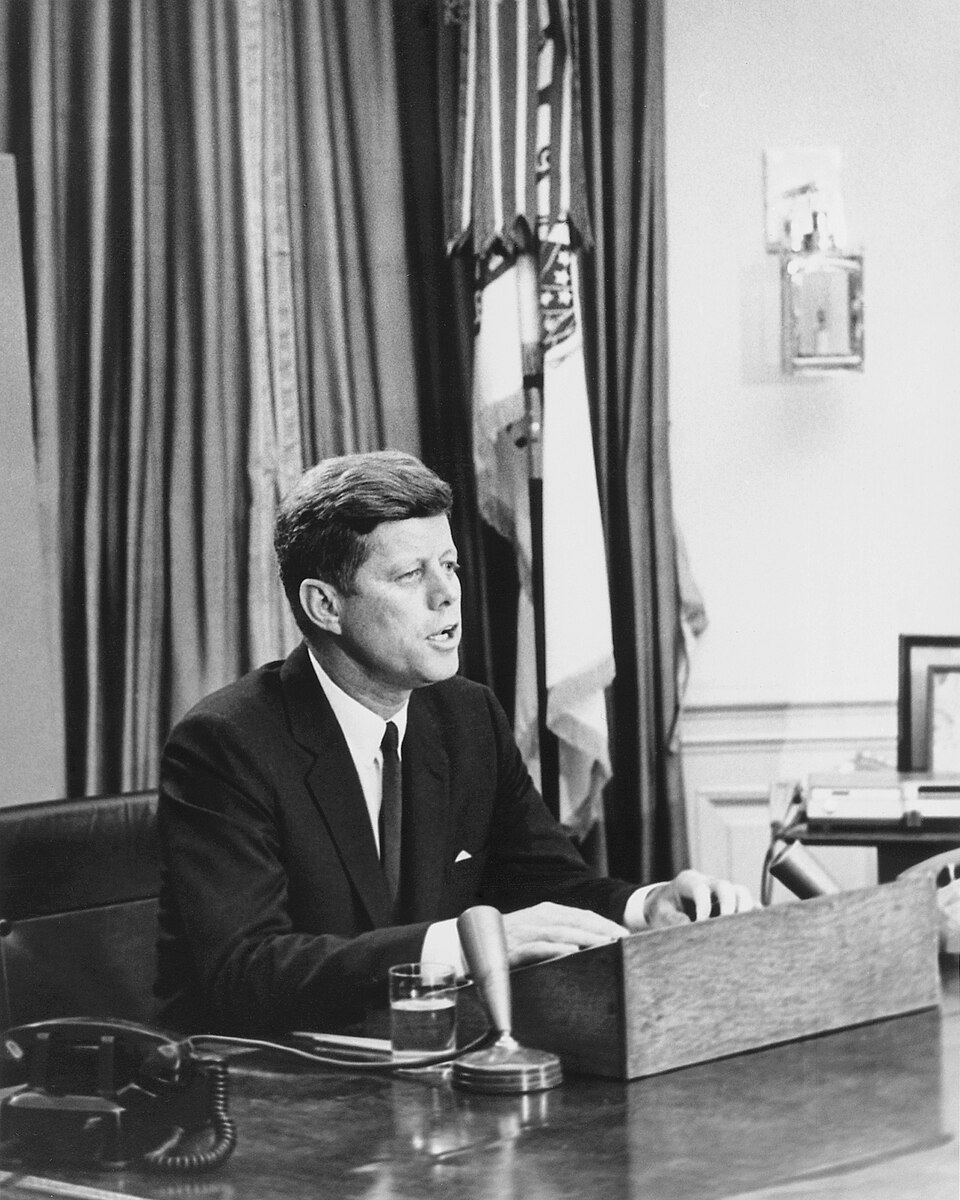
On the morning of June 11, 1963, George Wallace, the newly inaugurated governor of Alabama, drove to the campus of the University of Alabama in Tuscaloosa and planted himself in the doorway of Foster Auditorium. He had promised his constituents exactly this moment. Five months earlier, in his inaugural address, he had declared "segregation now, segregation tomorrow, segregation forever." Now he intended to deliver.
Two Black students, Vivian Malone of Mobile and James Hood of Gadsden, had been ordered admitted to the university by a federal district court. A federal injunction left virtually no legal path for Wallace to stop them. He knew it. His staff knew it. The press corps that had gathered knew it too. The stand in the schoolhouse door, as it came to be called, was always theater. But theater, in the right moment, can change everything.
Deputy Attorney General Nicholas Katzenbach arrived on the authority of President Kennedy, accompanied by federal marshals and members of the Alabama National Guard. He walked up to the doorway and asked the governor to step aside. Wallace read a proclamation denouncing the federal government and invoking states' rights under the Tenth Amendment, then refused to move. Katzenbach, rather than force a confrontation, escorted Malone to her dormitory and waited. He called Washington. Kennedy federalized the Alabama National Guard, pulling them out from under Wallace's command. That afternoon, Brigadier General Henry Graham of the National Guard arrived and informed Wallace, with some formality, that the guard was now under federal authority. Wallace made a final statement for the cameras and stepped aside.
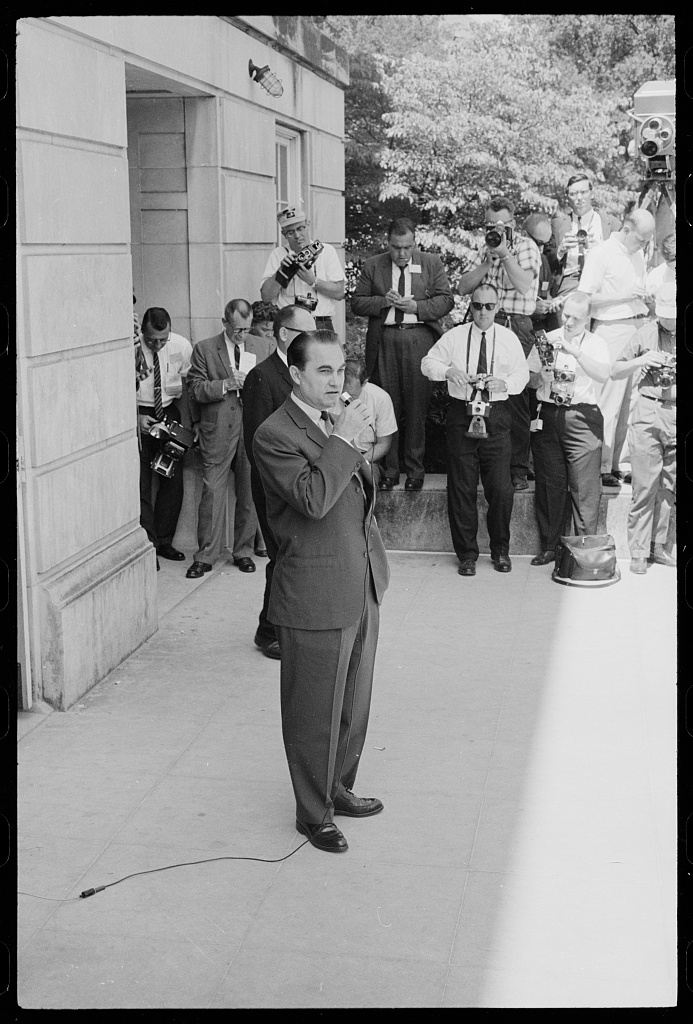 Governor George Wallace blocks the entrance to Foster Auditorium at the University of Alabama, June 11, 1963. Photo: Warren K. Leffler, Library of Congress.
Vivian Malone and James Hood walked through the doors of Foster Auditorium and registered for classes.
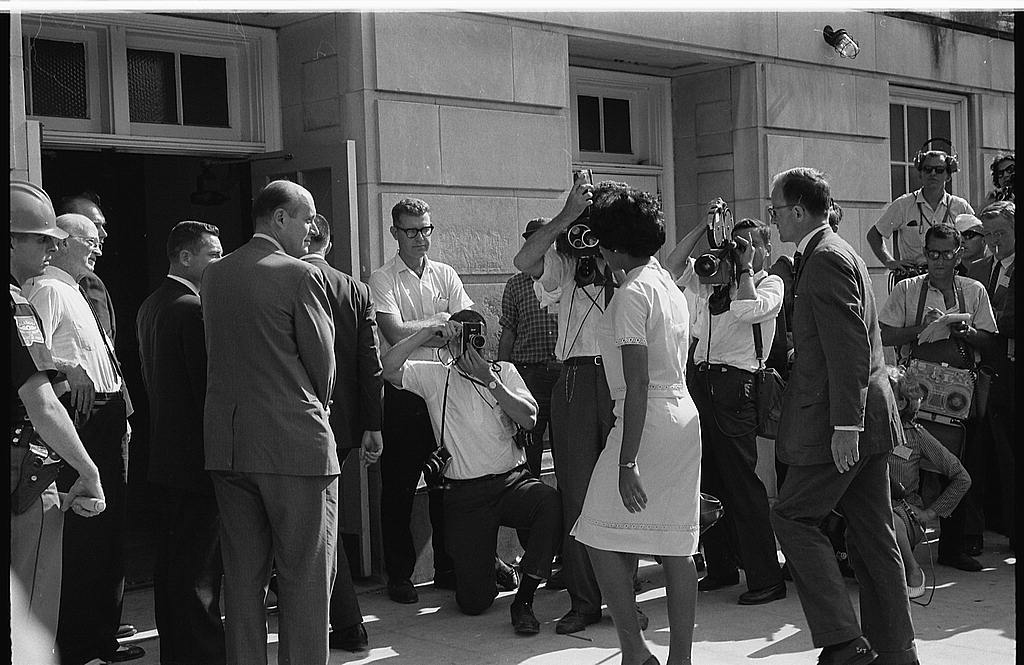 Vivian Malone walks through the crowd at Foster Auditorium to register for classes, June 11, 1963. Photo: Library of Congress.
The Speech That Almost Wasn't Written
That same afternoon, Kennedy made a decision that surprised nearly everyone on his staff. He called all three television networks and personally requested airtime at eight o'clock that evening. His advisers had assumed the Alabama confrontation ended the need for a speech. Kennedy disagreed.
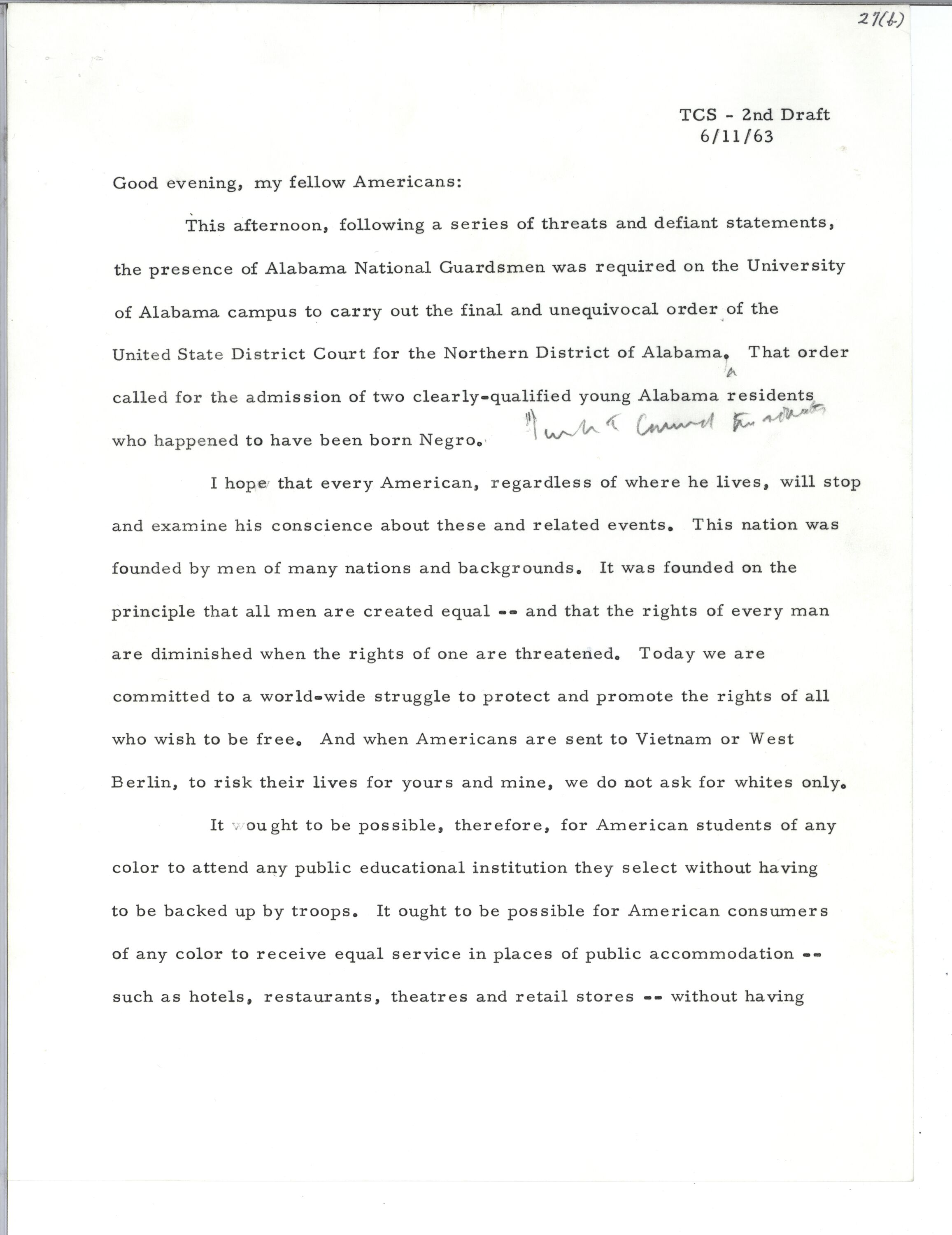
The timing of what followed reveals more about that day than almost anything else. Kennedy told his speechwriter Theodore Sorensen to begin drafting the address that afternoon, after the situation at Foster Auditorium had already resolved. Sorensen did not finish until less than five minutes before airtime. Kennedy, Robert Kennedy, Attorney General Burke Marshall, and Sorensen were still assembling and rewriting sections of the speech an hour before it was to air. At one point, with twenty minutes left, Sorensen had still not delivered the final pages. Kennedy outlined an extemporaneous version on the back of an envelope in case the draft never arrived. Sorensen made it with minutes to spare, barely giving the president time to read it through.
The document anchoring this article is that draft. Labeled "TCS, 2nd Draft, 6/11/63" at the top right, it shows the speech as it existed hours before it went to air. Handwritten edits run through the text. On one page, the word "cesspools" is crossed out and replaced. On another, "social revolution" becomes "great change." The closing paragraphs, which Kennedy largely delivered from memory or extemporaneously, show the most editing. Kennedy's signature appears at the bottom of the final page. The draft is held by the John F. Kennedy Presidential Library in Boston as part of the President's Office Files.
At eight o'clock, Kennedy sat down in the Oval Office and began speaking.
A Moral Crisis, Not a Legal One
The speech lasted roughly fifteen minutes. It was not a polished address in the way his best ones were. Parts of it were improvised. But that may be precisely why it landed the way it did.
Kennedy told the nation what had happened that day in Alabama. He did not frame it as a legal dispute or a question of states' rights. He framed it as a moral failure. He asked white Americans to consider what it would mean to live as a Black American, to be told you could not eat in a restaurant, send your child to the school nearest your home, or vote for the officials who governed your life. He said the country had been founded on the principle that all men are created equal, and that this nation would not be fully free until all its citizens were free.
He told Congress he would be sending civil rights legislation the following week.
For two and a half years, Kennedy had hedged on civil rights. He had moved slowly, avoided confrontation with Southern Democrats whose votes he needed, and declined to push for the kind of sweeping federal legislation that civil rights leaders had been demanding since before he took office. The Birmingham campaign earlier that spring, with its televised images of police dogs and fire hoses turned on peaceful protesters, had increased the pressure considerably. But it was Wallace in the doorway that morning that gave Kennedy the moment he could no longer defer.
You can hear Kennedy deliver the address in full at the Miller Center's audio archive: June 11, 1963 Address on Civil Rights.
What Happened After
Vivian Malone remained at the University of Alabama. She became the school's first Black graduate in May 1965, earning a degree in commerce and business administration. James Hood withdrew later that summer due to stress and threats, though he eventually completed his degree at the university decades later. Hood died in January 2013, just months before the fiftieth anniversary of the day he walked through that door.
Wallace spent the rest of his political life trying to outrun what he had done in that doorway. He ran for president four times on a platform built around racial resentment and states' rights. In his final years, after a 1972 assassination attempt left him partially paralyzed, he publicly apologized to Malone and Hood both. Malone accepted. Whatever his private reckoning was, history had already written its verdict.
Kennedy was assassinated in Dallas five months after his June 11 address. The civil rights bill he announced that evening was signed into law by Lyndon Johnson on July 2, 1964.
Primary Source
The draft of Kennedy's civil rights address, with handwritten edits, is available here: View the speech draft
Listen and Watch
Kennedy delivered this address live on national television on the evening of June 11, 1963. You can hear the original White House audio recording at the Miller Center. The CBS broadcast excerpt is held by the JFK Library.
The night of June 11, 1963 did not end with Kennedy's address. Just after midnight, in Jackson, Mississippi, NAACP field secretary Medgar Evers was shot in the back in the driveway of his home. He died shortly after. His assassin, Byron De La Beckwith, was not convicted until 1994.