On a Sunday morning in June 1972, most readers opening the Washington Post were focused on the usual mix of sports, weather, and weekend news. Well off the top of the front page was a short item, written in the flat, procedural language of crime reporting, about five men arrested for an unusual kind of break-in. Nothing about its placement or its prose suggested it was the opening line of the biggest scandal in the history of the American presidency.
The story ran under reporter Alfred E. Lewis's byline, headlined "Five Held in Plot to Bug Democratic Offices Here." Lewis was a 37-year veteran of the police beat, not an investigative reporter, and the story he filed read exactly like what it was: a routine account of a burglary, assembled from a police report. Two reporters barely out of their twenties, Bob Woodward and Carl Bernstein, had helped with some of the early legwork. At that point, there was little public indication that the break-in would become anything more than an unusual burglary case.
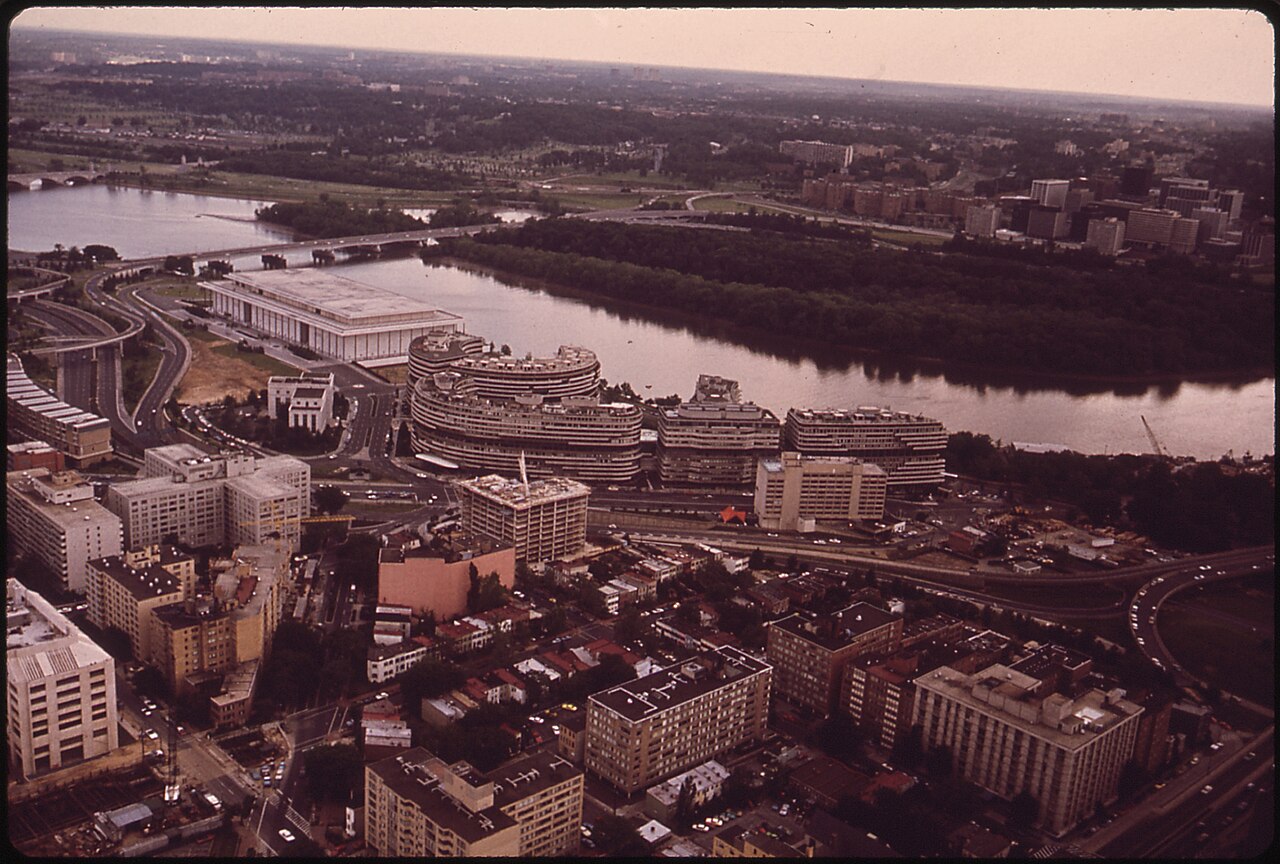
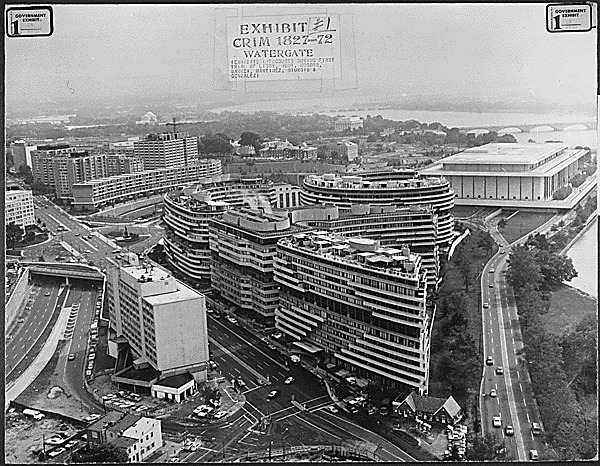
The Watergate complex, later marked as Government Exhibit #1 during the criminal trial of the burglars.
The Night Before
What the Post was reporting on, in its measured, secondhand way, had happened roughly thirty hours earlier. In the early hours of Saturday, June 17, a 24-year-old security guard named Frank Wills was making his rounds through the Watergate office building. He found tape covering the latch of a door near the parking garage, the kind of thing that might have been left behind by maintenance workers. He pulled it off and kept moving.
When he came back through later, the tape was there again.
This time, Wills called the police. His own handwritten entry in the building's security log puts the moment at 1:47 a.m.: "Found tape on doors; call police to make an inspection." It is a small, almost bureaucratic sentence, written by a man with no idea that it would later sit in a federal archive as one of the founding documents of a constitutional crisis. An unmarked police cruiser, staffed that night by an undercover unit, arrived within minutes. Officers swept the building floor by floor and found five men hiding behind a partition on the sixth floor, inside the offices of the Democratic National Committee.
Page from the Watergate security guard logbook. Wills's entries describe officers responding to the break-in and reporters arriving later that day.
What the Police Found
The men gave false names. They were carrying surveillance equipment, including microphones disguised inside Chap Stick tubes, and a reel-to-reel tape recorder. They had lock picks, a sequential run of hundred-dollar bills, and an address book that, buried among ordinary contacts, listed a White House phone number. None of it yet pointed anywhere specific. To the officers who'd answered Wills's call, it looked like a strange, well-funded burglary crew that had wandered into the wrong building.
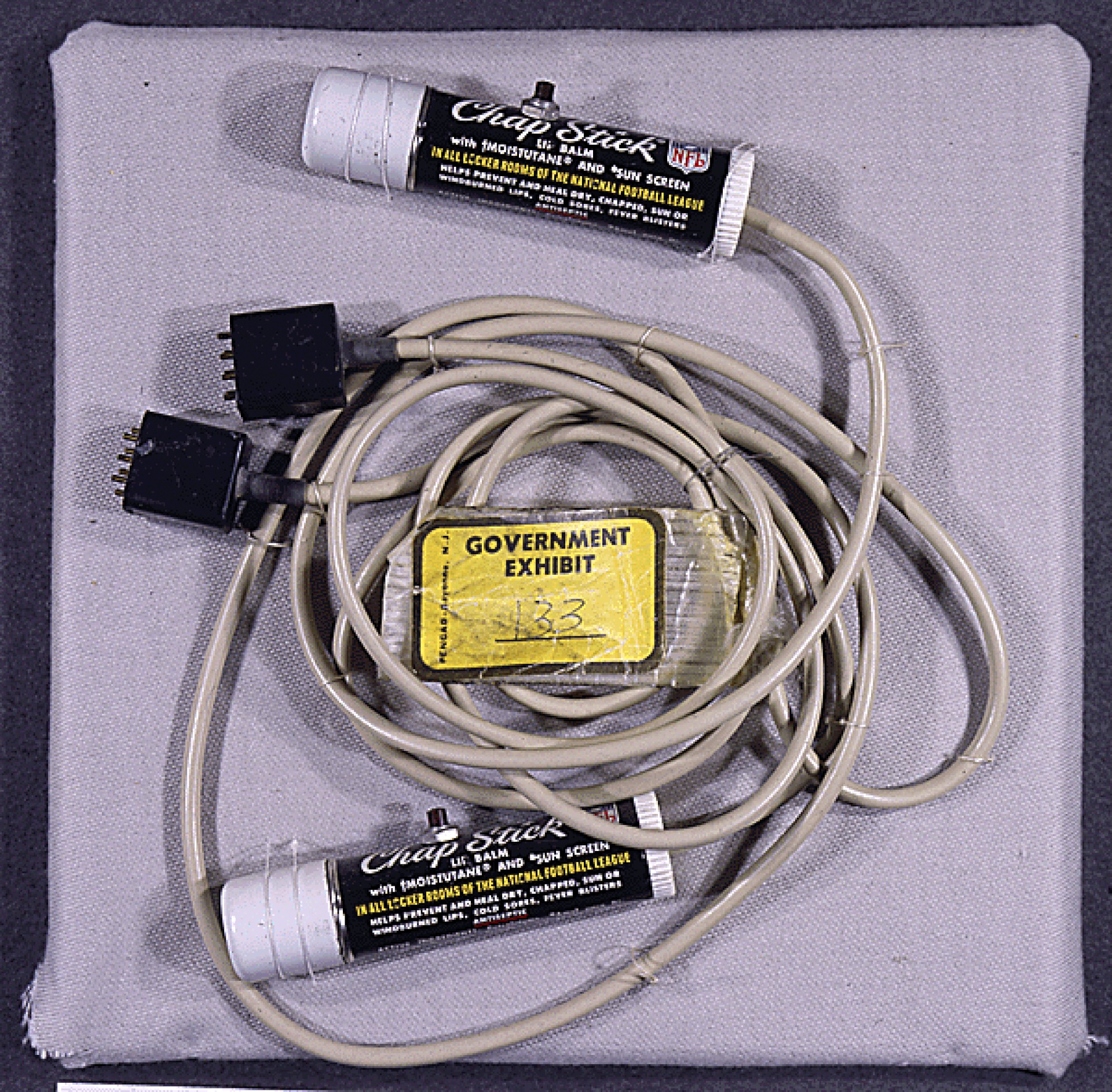
Two of the items recovered from the burglars: corded microphones disguised as Chap Stick tubes, and the Uher reel-to-reel recorder used to monitor the wiretaps.
The Detail That Changed Everything
Buried in the arraignment paperwork was one fact that kept this from staying an ordinary burglary story for long. One of the men arrested, James McCord, identified himself as a former CIA employee. Reporters quickly learned he was also the salaried security coordinator for President Nixon's reelection committee. It was a strange thing for a small-time burglar to be carrying on his resume, and it was enough to make a city editor assign more than just the police beat to the story.
By the morning of June 18 itself, the machinery of the cover-up had already started turning, invisible to anyone reading the Sunday paper. G. Gordon Liddy, one of the operation's organizers, went to the campaign's reelection committee offices and began destroying files connected to the operation, reporting the arrests to his superiors there. Nixon was informed not long after.
The Reporting Begins
The intensive reporting that would eventually expose the connections between the burglars, Nixon's reelection campaign, and the White House was only beginning, but it began almost immediately. Within hours of the break-in, the Post had already assigned eleven editors and reporters to chase the story down. The very next day, Woodward and Bernstein filed their first joint byline, identifying McCord's role on the campaign and his CIA background in detail. Few people outside the Post's newsroom yet understood what they were looking at.
It would take more than two years, a Senate investigation, a Supreme Court ruling, and the discovery of a secret White House taping system before the country understood that the story breaking that Sunday morning was the first thread of something that would end a presidency. Nixon would go on to win reelection that November in one of the largest landslides in American history, even as the Post kept digging underneath the surface of his administration's denials.
Two Years Later
By the summer of 1974, what had begun as a single Sunday crime item had metastasized into a full constitutional confrontation. The release of the so-called Smoking Gun tape in early August proved Nixon had moved to obstruct the FBI's investigation from nearly its first days. Within days, the president's remaining political support in Congress collapsed.
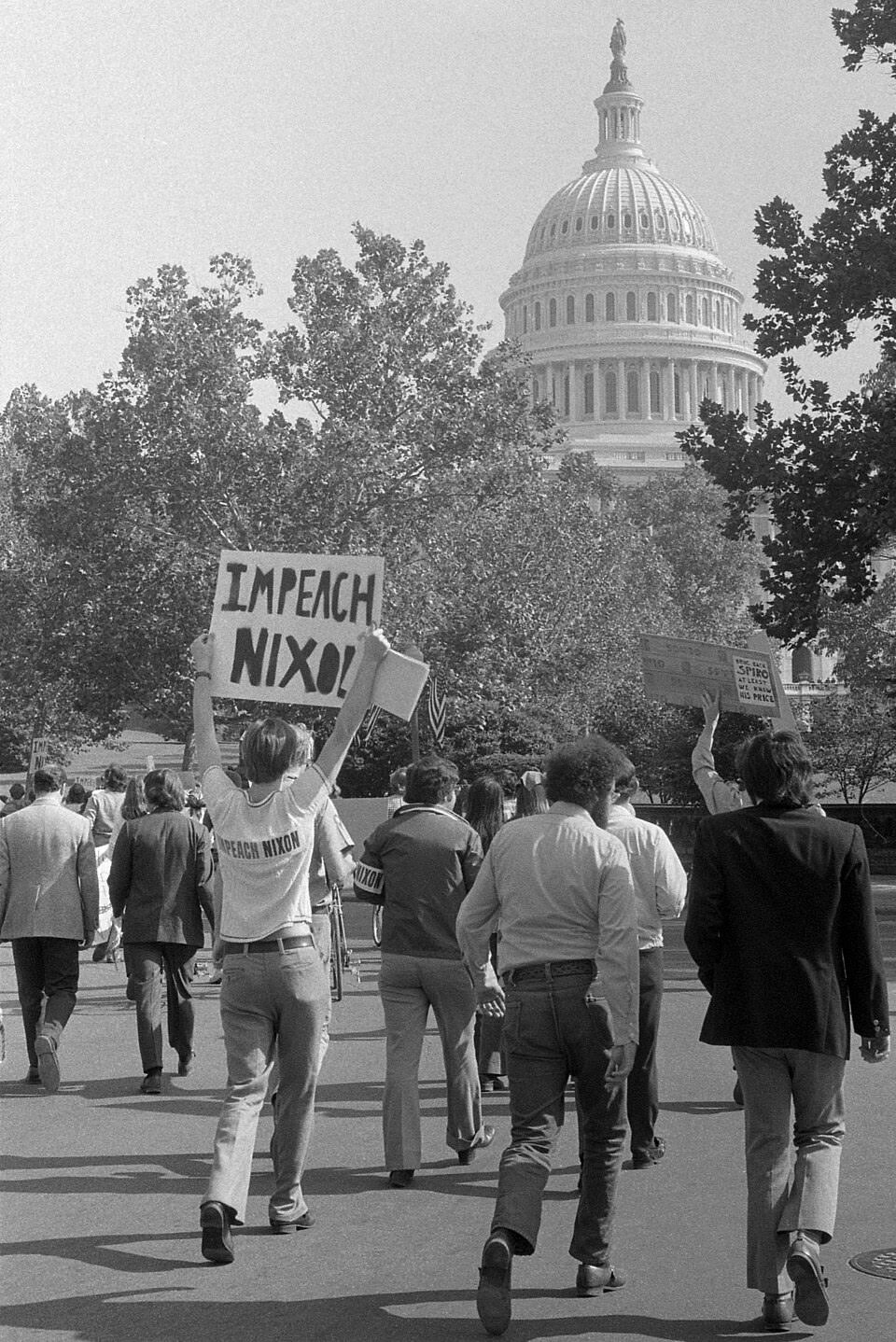
Protesters near the U.S. Capitol calling for Nixon's impeachment, 1974, roughly two years after the Sunday morning story that started it all.
On August 9, 1974, Nixon left the White House for the last time as president, boarding a helicopter on the South Lawn and offering the same exaggerated wave that had defined so much of his public image.
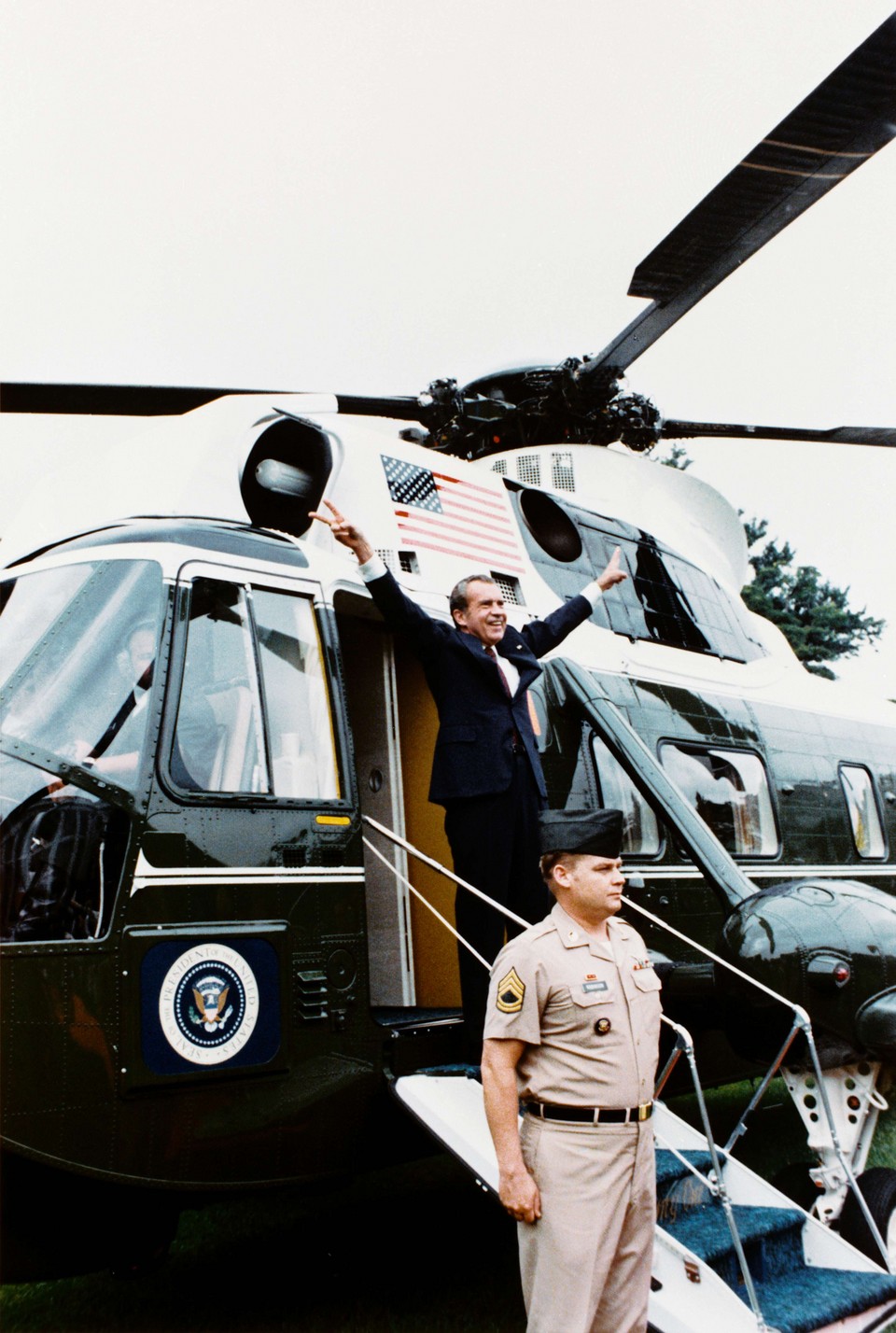
Nixon departing the White House grounds by helicopter on the morning of his resignation, two years and two months after Frank Wills's call to police.
The Man the Story Forgot
Frank Wills's name rarely makes it into the popular telling of Watergate. He testified at trial, even played himself briefly in the 1976 film adaptation of "All the President's Men," but the recognition didn't translate into anything lasting. He struggled to find steady work in the years that followed and lived much of the rest of his life without financial stability. He died in 2000, largely forgotten by the country whose history he'd quietly altered with a phone call at 1:47 in the morning.
The newspaper that Sunday gave the story four paragraphs and no name worth remembering. History would eventually give it both.