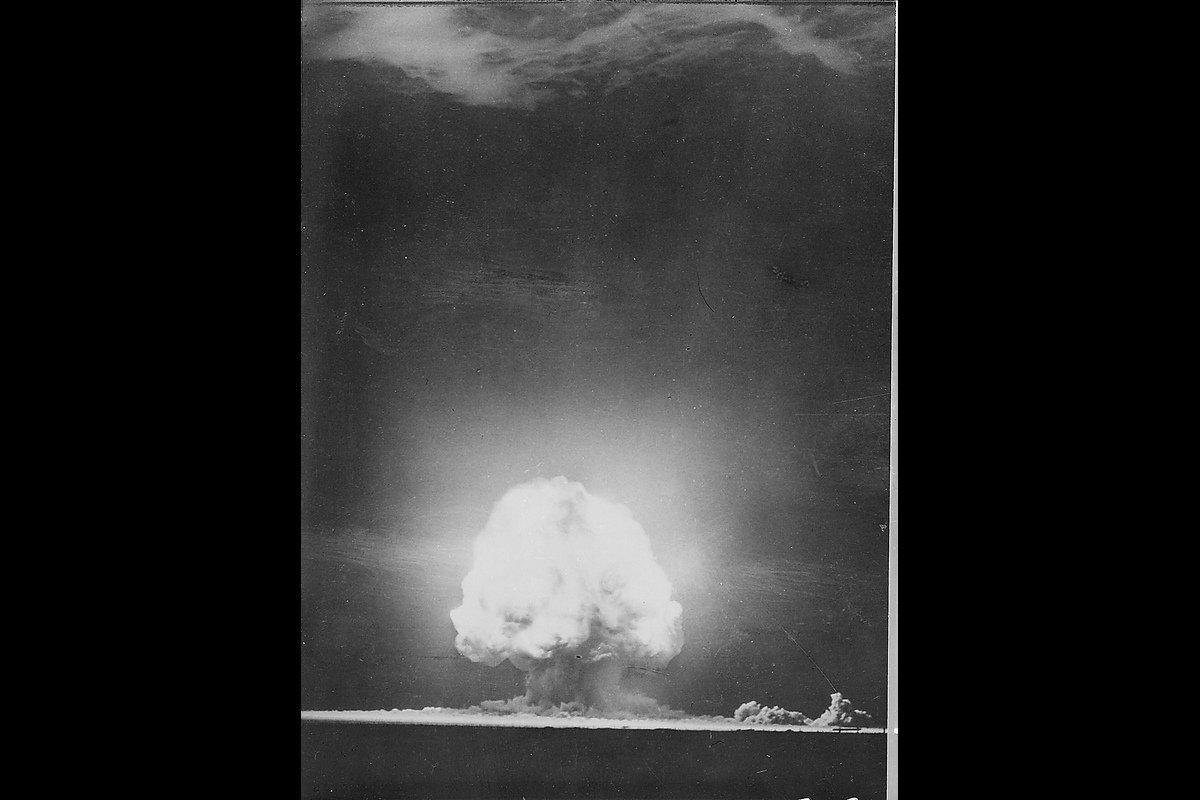
On July 16, 1945, the United States detonated the world's first atomic bomb in a stretch of New Mexico desert called the Jornada del Muerto, the journey of the dead man. For eighty years, the story has been told a certain way. A brilliant, secretive test, carried out in empty land, far from anyone who could be hurt by it.
That part about empty land was never the whole truth, and the government's own paperwork proves it.
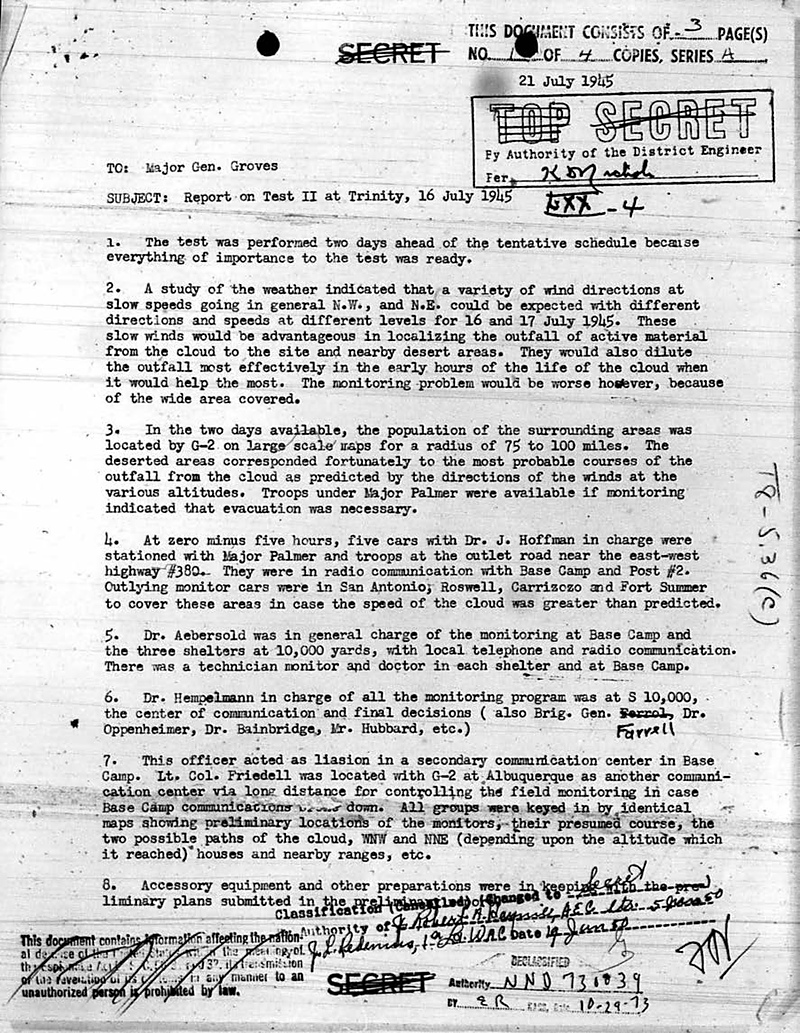
Five days after the blast, the Manhattan Project's chief medical officer, Colonel Stafford Warren, sat down and wrote a report to his commanding officer, General Leslie Groves. Warren had spent the days after the test tracking where the radioactive dust from the explosion had actually gone. What he found concerned him enough to put it in writing. The fallout, he told Groves, was a serious hazard over a band of land almost thirty miles wide and stretching nearly ninety miles northeast of the site. Houses stood inside that band. Families lived in it.
Troops were on standby to evacuate families if monitors found dangerous radiation levels in populated areas. By Warren's own account, none of the houses his teams checked showed radiation levels that required evacuation, so none was carried out. Some families were contacted anyway, just not warned. Historical records describe one ranch northeast of the site where Los Alamos staff came out afterward and collected samples of the drinking water. The family was never told why, or that there might be any concern.
A test, and a cover story
The bomb itself, nicknamed the Gadget, hung from a hundred foot steel tower when it went off at 5:29 that morning. The tower vaporized instantly. The desert sand beneath it melted into a greenish glass that scientists later named trinitite. People felt the shock wave over a hundred miles away, and the light was bright enough to be seen from Amarillo, Texas, nearly three hundred miles off.
Within hours, the Army had a cover story ready. A press release, drafted weeks in advance in case something needed explaining, described the flash and the noise as an accident. A remotely located ammunition dump, it said, had exploded. No one was hurt. No mention of a bomb. No mention of radiation. Newspapers across the Southwest ran the story exactly as written, and most readers had no reason to doubt it.
The true cause of the blast wasn't made public until after the United States dropped a second bomb on Hiroshima, three weeks later.
What actually fell on people
While the cover story ran in the papers, radioactive ash was still settling over the region, by some accounts for days afterward. In Ruidoso, fifty miles from the blast, survivors later recalled a group of children at a summer camp watching white flakes fall that afternoon and thinking it was snow, in the middle of July. They played in it.
On ranches closer to the test site, cattle grazing in the open came away with patches of bleached, discolored hair where the fallout had settled on their backs. The Army eventually purchased dozens of the animals from local ranchers and shipped them off for study, a quiet acknowledgment that the environment had been affected.
Many families kept using their usual water supplies and eating food grown on their land, never told what risks the fallout might carry. Warren's report on the fallout risk remained classified for decades. The people it described never saw it.
An eighty year wait
In 1990, Congress passed a law to compensate Americans who had gotten sick from living near government nuclear tests. It covered people downwind of the test site in Nevada. It did not cover New Mexico, where the very first bomb had gone off, and where the government's own files already showed the fallout had traveled over a stretch of land nearly a hundred miles long.
For decades, that was where things stood. Families in the Tularosa Basin lost relatives to cancer and wondered whether Trinity had played a role. In 2005, a cancer survivor named Tina Cordova, whose parents and grandparents had suffered from cancers she believes were connected to the test, started an organization to push Congress for recognition. It took two decades of testimony, lobbying, and near misses in Washington before anything changed.
It finally did. Congress extended the compensation law to include New Mexico's downwinders, and the bill was signed on July 4, 2025, twelve days before the eightieth anniversary of the test itself. Families who qualify can now file for a one time payment, a formal, belated acknowledgment of the exposure concerns government scientists had documented in 1945 but that stayed classified and unacknowledged for decades.
The empty desert story is the version most people still know. The paper trail tells a different one, and it was sitting in a government file cabinet the entire time.