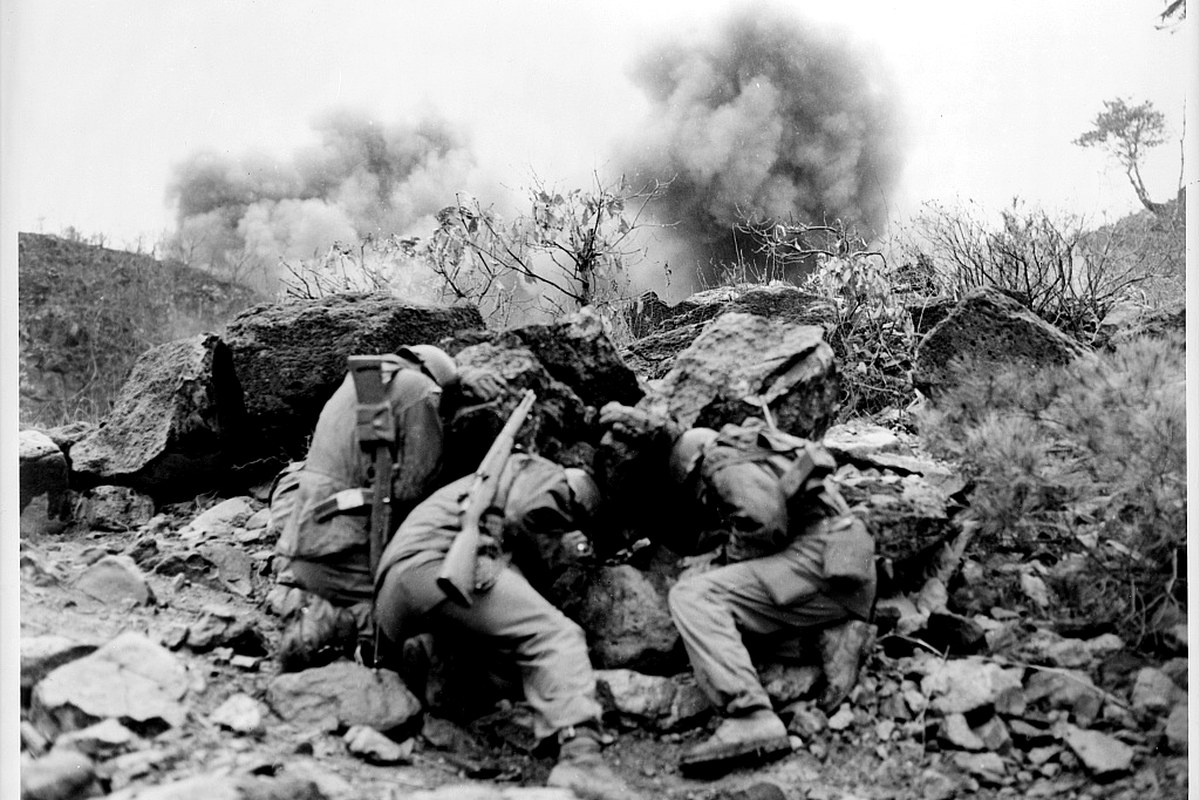
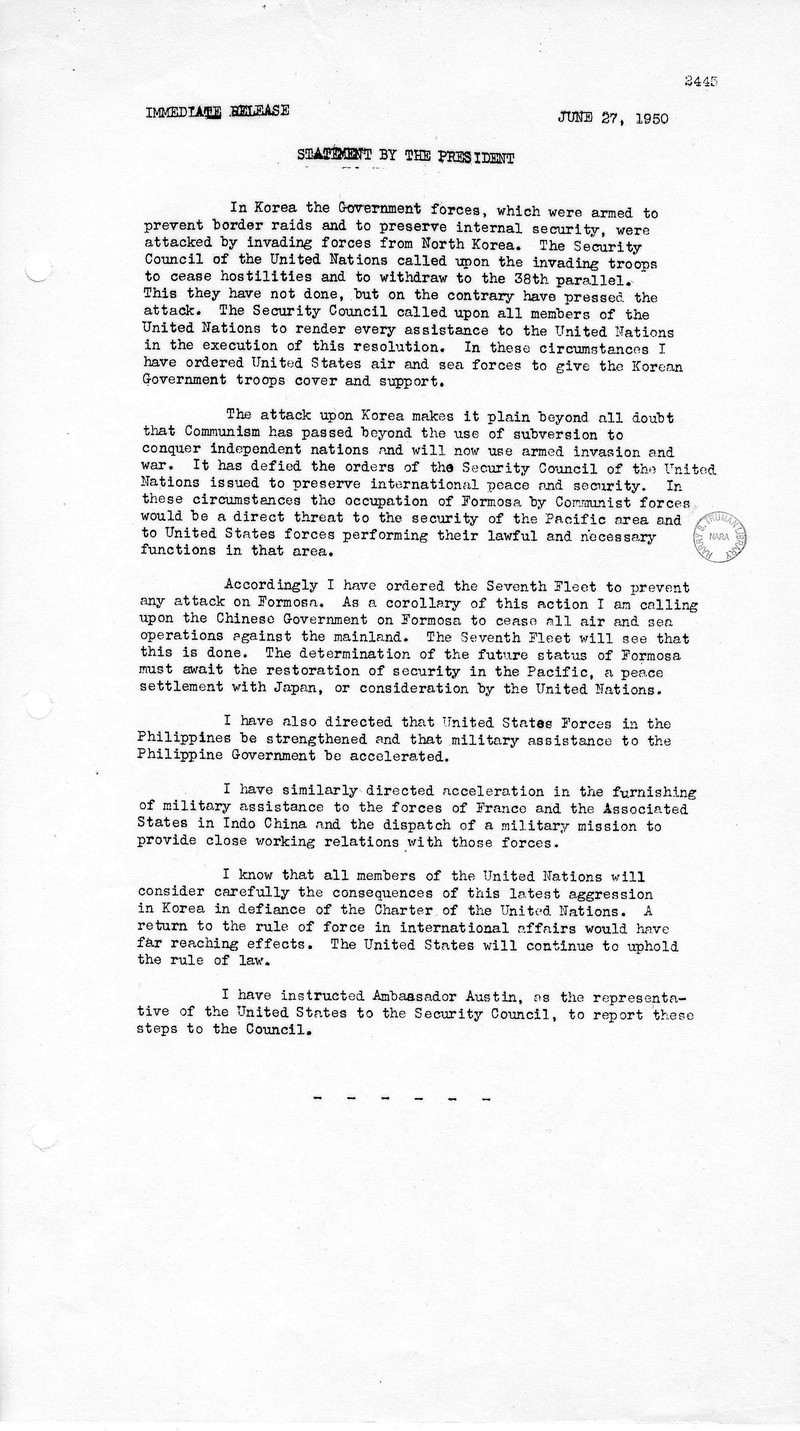
On the morning of June 27, 1950, President Harry S. Truman released a single typed page to the White House press corps. It carried no dramatic title. No address to a joint session of Congress. No soaring declaration. Just a quiet statement that American air and sea forces had been ordered to give South Korean troops "cover and support."
The United States was going to war. Congress had not voted. Congress had not been asked.
Over the next three years, more than 1.8 million Americans would serve in Korea. More than 36,000 would not come home.
Truman never called it a war.
The Document on the Table
The press release you see above is stamped "IMMEDIATE RELEASE, JUNE 27, 1950." It runs six paragraphs. The NARA seal is visible in the right margin. This is the original, held today in the National Archives.
Read it carefully and you will notice what is not there. The word "Congress" does not appear once. There is no request for authorization. There is no acknowledgment that the Constitution grants the war power to the legislative branch. Truman does not mention that Article I, Section 8 of the Constitution gives Congress alone the power to declare war.
Instead, the document invokes the United Nations three times. Every military action Truman announces, ordering air and sea forces to Korea, deploying the Seventh Fleet to Formosa, accelerating military assistance to French forces in Indochina, is framed as enforcement of a UN Security Council resolution.
That framing was not accidental. It was the legal architecture Truman's administration had chosen to avoid Capitol Hill.
Two Days That Reshaped a Country
North Korean forces had crossed the 38th parallel on June 25, 1950, catching South Korea and much of the U.S. government largely off guard. That same day, the UN Security Council voted 9-0 to condemn the invasion. The Soviet Union was absent: they had been boycotting Security Council sessions since January in protest over China's UN seat being held by the Nationalist government on Taiwan rather than Mao's People's Republic. The Soviet absence meant no veto. The resolution passed.
By June 27 it was clear North Korea had not complied. The Security Council reconvened and passed Resolution 83, this time recommending that member nations furnish military assistance to South Korea. The vote was 7 to 1, with Yugoslavia opposed and Egypt and India abstaining.
It was that resolution Truman pointed to when he released his statement.
What he did not mention publicly was the sequence of events. Dean Acheson, his Secretary of State, later acknowledged that the UN meeting on June 27 had actually been scheduled for that afternoon, after Truman's statement had already gone out to the press that morning. Truman had already committed himself before the Security Council formally adopted Resolution 83. Critics would argue he used the UN more as political and legal cover than as the actual source of his authority.
That afternoon, Truman met with fourteen congressional leaders to inform them of what he had done. According to Acheson's account, they responded with what he called a "general chorus of approval" and said nothing about the constitutional question of who had the authority to take the country to war.
"I Just Had to Act as Commander-in-Chief"
Two days later, at a press conference on June 29, a reporter asked Truman directly whether the United States was at war. Truman said no. The reporter followed up: would it be accurate to call this a "police action" under the United Nations?
"Yes," Truman said. "That is exactly what it amounts to."
On June 28, Senator Robert Taft of Ohio had already taken to the Senate floor to challenge the decision. Taft argued there was "no legal authority" for what Truman had done, that the president had bypassed Congress entirely and committed American forces to what was, in every practical sense, a war.
The Truman administration's response was a State Department memorandum that reframed the entire intervention as an "international police action" to enforce Security Council resolutions, not a war requiring congressional authorization. To support the argument, the memorandum cited 85 historical instances in which presidents had deployed forces overseas without congressional approval. Critics noted that none of those 85 incidents had approached anything close to the scale of what was unfolding in Korea.
When Truman met with congressional leaders again a few days later, moments after committing US ground troops to the fight, he summed up his position simply: "I just had to act as Commander-in-Chief, and I did."
Congress never formally challenged him. It extended the draft. It appropriated the money. It went along.
The Precedent Hidden in Plain Sight
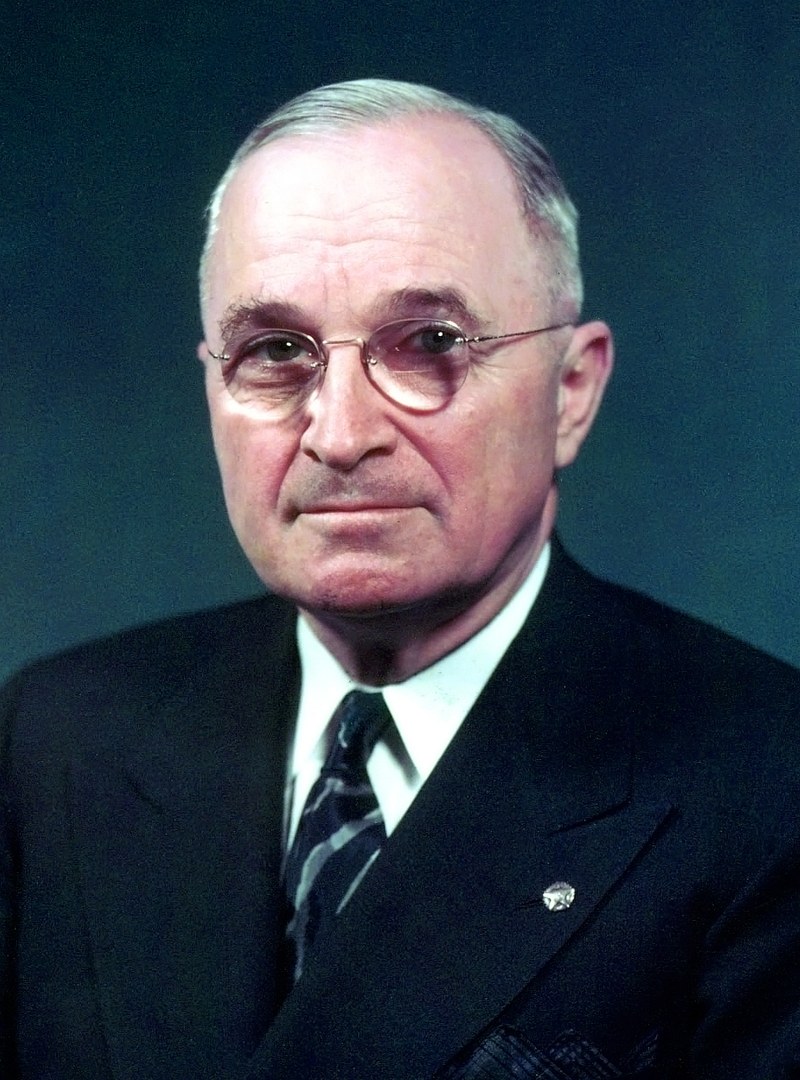 President Harry S. Truman, circa 1950. Truman Presidential Library, public domain.
The Korean War is often called the Forgotten War, overshadowed by World War II before it and Vietnam after it. But what happened on June 27, 1950 is anything but forgotten if you know where to look. Korea established a precedent that later presidents would repeatedly cite when committing American forces abroad without a formal declaration of war.
Vietnam. The Gulf War. Iraq. Afghanistan. None carried a formal declaration of war from Congress. The Gulf War, Iraq, and Afghanistan were authorized through specific congressional Authorizations for Use of Military Force (AUMFs) rather than declarations of war, a distinction that matters constitutionally but preserves the essential pattern: presidents have increasingly relied on executive authority, congressional authorizations short of declarations of war, or international mandates rather than formal declarations of war ever since June 27, 1950. The legal architecture Truman built in six paragraphs of a White House press release became the template.
The document also reveals something about the Cold War psychology driving the decision. Truman wrote that the attack on Korea made it "plain beyond all doubt that communism has passed beyond the use of subversion to conquer independent nations and will now use armed invasion and war." He believed, and told his advisors, that the invasion was "very obviously inspired by the Soviet Union." By blaming communism broadly rather than the Soviet Union specifically, Acheson later explained, they were deliberately giving Moscow a "graceful exit": a way to back down without open confrontation between the superpowers.
The statement's final line is a bureaucratic footnote: Truman had instructed Ambassador Austin to report these steps to the UN Security Council. He was informing the UN. He had not informed Congress.
The war lasted three years. The armistice was signed on July 27, 1953, near the same parallel where it had started. Technically, the Korean War has never ended. The armistice remains in effect today.
It was never a declared war. It was a police action.
Over 36,000 Americans died in it.