With Samuel Adams, John Hancock, and the senior Patriot leadership gathered in Philadelphia for the Continental Congress, Joseph Warren was the most powerful revolutionary figure left on the ground in Massachusetts. On the morning of June 17, 1775, he arrived at Breed's Hill just as a British assault force was forming across the water. Two generals offered him command of the redoubt. He turned them both down, took a musket, and found a place in the line as a private soldier.
Three days earlier, the Massachusetts Provincial Congress had commissioned him a major general. His appointment had not yet taken effect. Warren knew that. He also knew the British were about to assault the hill, that his men were running short on ammunition, and that he had no obligation to be there at all.
He stayed anyway. Before the afternoon was over, he was dead.
The Man They Sent to Fight
Joseph Warren was born on June 11, 1741, in Roxbury, Massachusetts, the oldest of four boys. His father, a farmer known for his apple orchards, died in October 1755 when he fell from a ladder while gathering fruit. Warren was fourteen years old and had already been admitted to Harvard that summer. He graduated in 1759, studied medicine, and built one of the most respected practices in Boston, treating patients from every walk of life, including John Adams and the sons of the royal lieutenant governor.
He married Elizabeth Hooten in 1764. She died in 1773, leaving him with four children and a city coming apart at the seams.
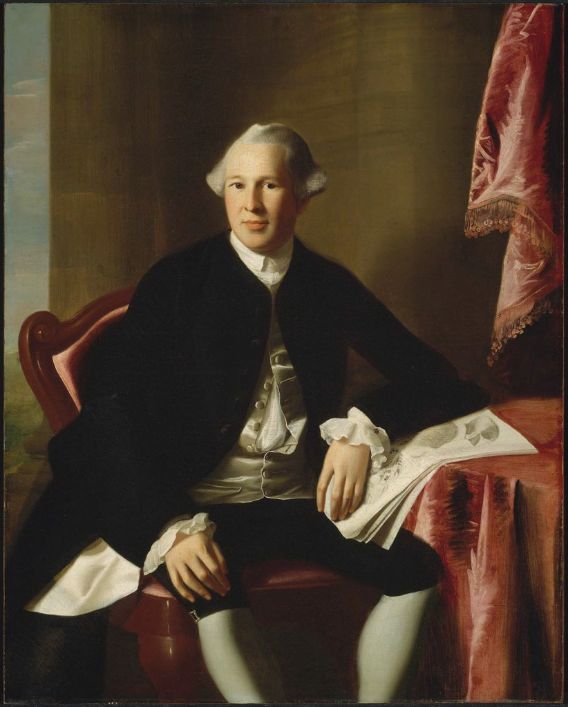 Joseph Warren, c. 1765, by John Singleton Copley. Museum of Fine Arts, Boston. Public domain via Wikimedia Commons.
The imperial crisis drew Warren into politics. By the late 1760s he had become deeply involved in resistance to British policy, falling in with Samuel Adams and John Hancock, delivering orations at the annual Boston Massacre commemorations, and drafting the Suffolk Resolves that the Continental Congress endorsed as a framework for resisting the Coercive Acts. By 1775 he had risen to President of the Massachusetts Provincial Congress, the highest position in the revolutionary government.
He was also running a spy network, recruiting militia, and procuring gunpowder. On the night of April 18, 1775, with word spreading through Boston that British troops were mobilizing for a march toward Concord, Warren sent William Dawes and Paul Revere on their rides to warn Hancock and Adams that the regulars were moving. He then slipped out of the city himself the following morning and rode to the fighting at Lexington and Concord, where a musket ball struck his wig and nearly ended his life before any of what followed.
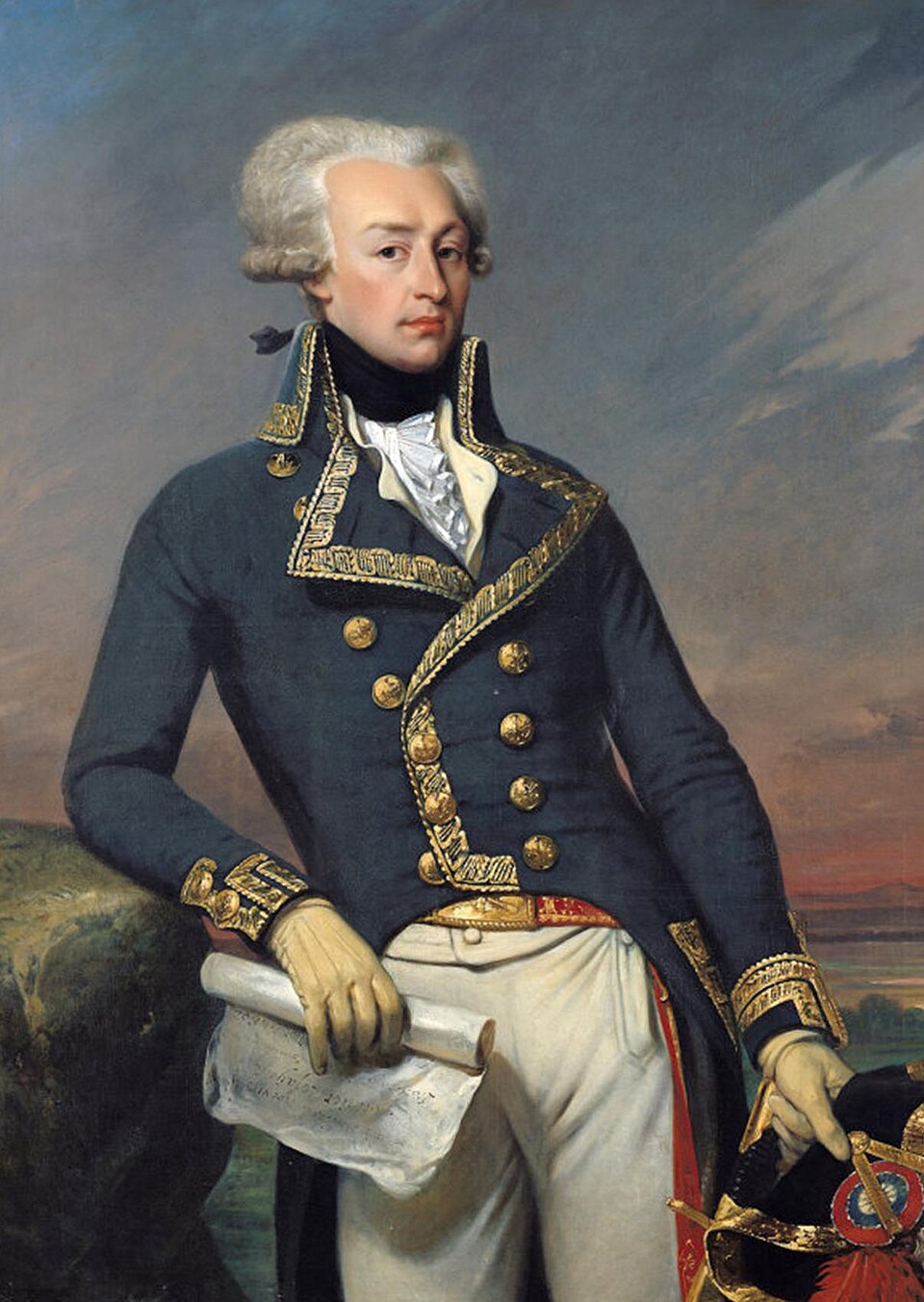 The Marquis de Lafayette in the uniform of a Major General of the Continental Army. Lafayette arrived in America in 1777, two years after Warren's death at Breed's Hill. In 1825, he returned to lay the cornerstone of the Bunker Hill Monument on the battle's fiftieth anniversary. Attributed to Joseph-Désiré Court, public domain via Wikimedia Commons.
When his mother saw him after the battle and heard how close it had been, she pleaded with him not to risk himself so recklessly. "Wherever danger is, dear mother," he reportedly told her, "there will your son be. Now is no time for one of America's children to shrink from the most hazardous duty; I will either set my country free, or shed my last drop of blood to make her so."
Six weeks later, at Breed's Hill, he fulfilled that promise.
The Night Before the Hill
On June 13, 1775, Patriot intelligence learned that the British planned to move out of Boston and fortify the hills overlooking the harbor. The Massachusetts Committee of Safety responded immediately. On the night of June 16, Colonel William Prescott led roughly 1,200 men onto the Charlestown Peninsula and began digging a fortified redoubt on Breed's Hill, the lower of the two hills and the one closer to Boston. They worked through the night.
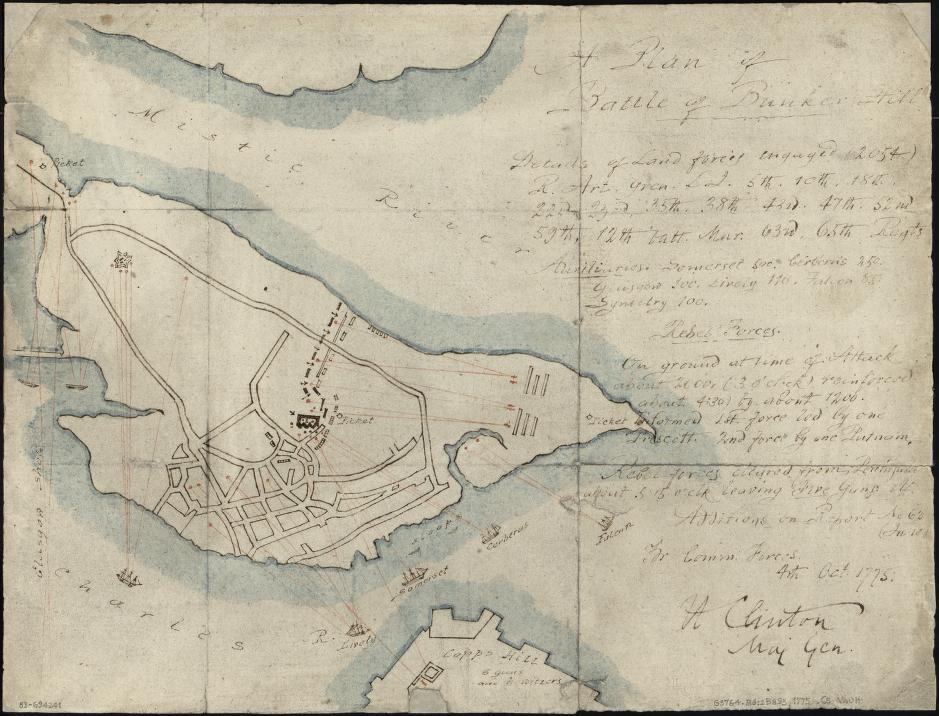
By dawn, the British could see what had been built. HMS Lively opened fire. General Thomas Gage ordered his harbor guns and the batteries at Copp's Hill in Boston to follow. The bombardment did little damage to the earthworks but killed one American soldier and destroyed the column's water supply.
Generals William Howe, John Burgoyne, and Henry Clinton met to plan the assault. Clinton argued for a flanking move that would cut off the Charlestown Neck and trap the colonists on the peninsula. He was outvoted. Howe, the senior officer, believed the hill was "open and easy of ascent" and would be "easily carried." Burgoyne shared Howe's confidence that the militia would break under a determined assault.
It took the British six hours to organize their attack force. By 2 p.m., roughly 2,200 troops had been ferried to the eastern corner of the peninsula.
Warren arrived at the redoubt just before they did.
The Choice
Upon reaching the peninsula, Warren sought out General Israel Putnam and asked where the fighting would be heaviest. Putnam pointed to Breed's Hill. Warren made his way to the redoubt, where both Putnam and Prescott offered him command. He declined, telling them they had far more military experience and that he was there to serve in the ranks. He took a musket and joined the line.
He reportedly told the men around him: "These fellows say we won't fight. By Heaven, I hope I shall die up to my knees in blood."
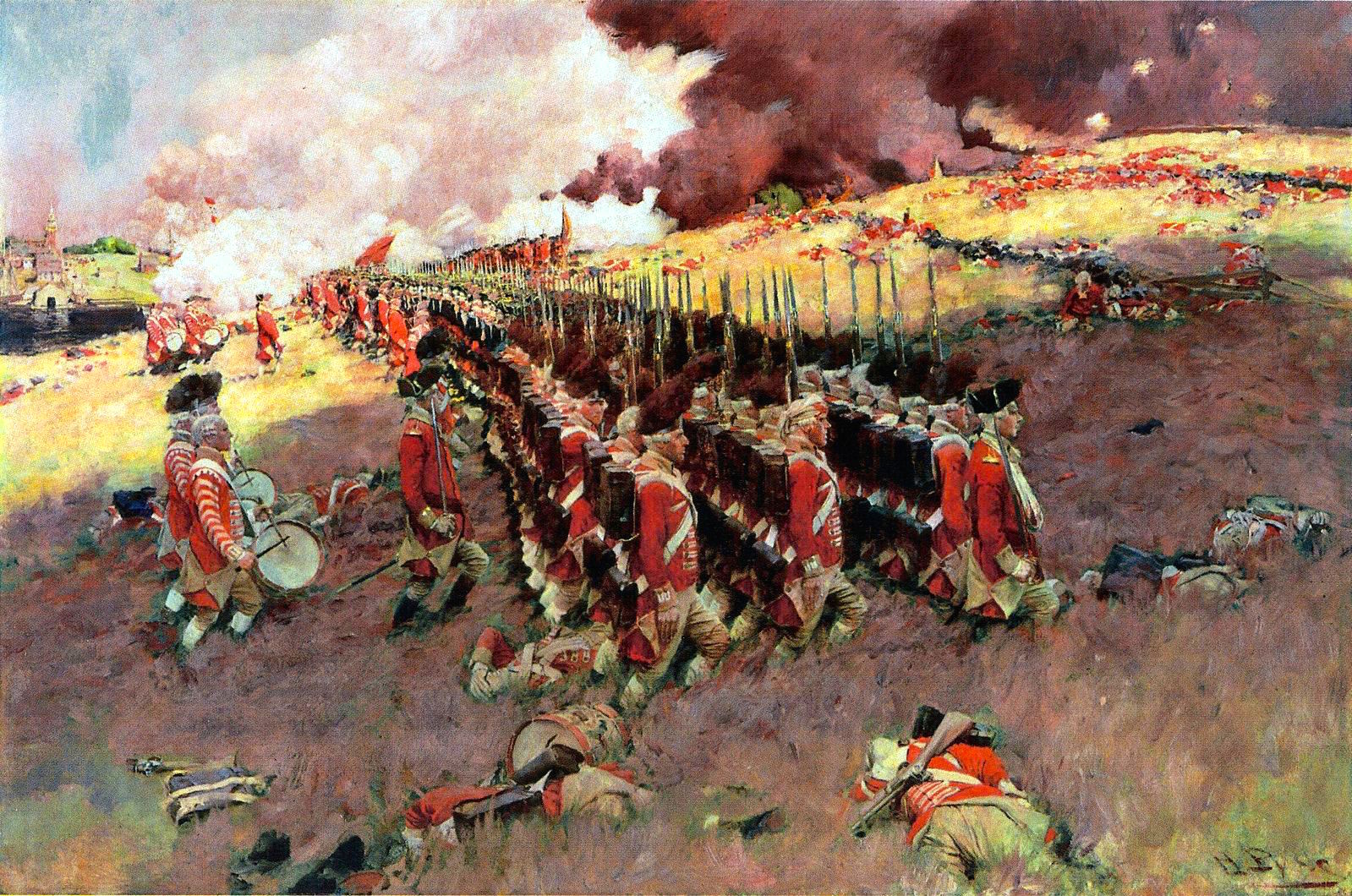
The first British assault came in the afternoon. The colonists held their fire until the regulars were within fifty paces, then opened up with a volley that shattered the advance. Howe's flanking column along the Mystic River suffered devastating losses from troops under Colonel John Stark firing from behind a stone wall. The grenadier commander, James Abercrombie, was fatally wounded. Brigadier Pigot's attack on the redoubt collapsed. The British retreated across a field already littered with their dead.
They came again. The result was the same. One British officer wrote afterward that most of their grenadiers and light infantry "the moment of presenting themselves lost three-fourths, and many nine-tenths, of their men."
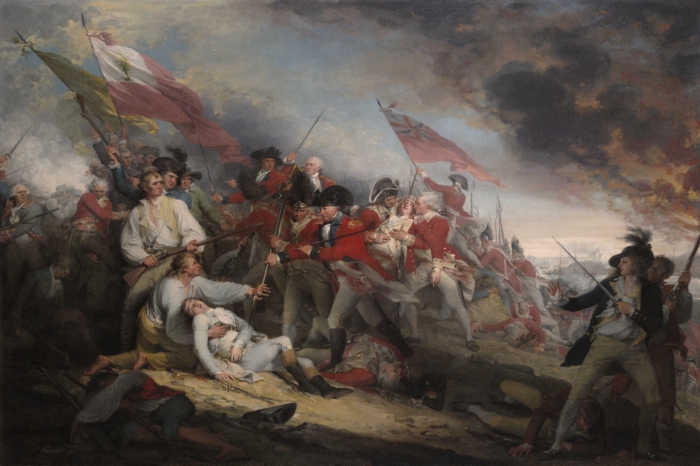
 John Trumbull, The Death of General Warren at the Battle of Bunker's Hill, June 17, 1775, Yale University Art Gallery. Public domain via Wikimedia Commons.
The Third Assault
Between the second and third attacks, the colonial position was quietly falling apart. Deserters were slipping off the hill. Ammunition was nearly gone. By the time Howe reorganized for a third assault, only 700 to 800 men remained on Breed's Hill, with perhaps 150 still inside the redoubt.
Howe changed his approach entirely. He ordered his men to shed their heavy packs and all unnecessary gear. He arranged his force in tight columns rather than spread lines, reducing the number of men exposed to fire at any moment. The third assault would go straight at the redoubt, with only a feint against the colonial flank. It would be taken at the point of the bayonet.
The colonists fired their last rounds and then had nothing left. The British came over the walls. In the hand-to-hand fighting that followed, the British advantage was decisive: their muskets carried bayonets; most of the colonial weapons did not. Colonel Prescott, one of the last to leave the redoubt, reportedly parried bayonet thrusts with his ceremonial sword as his men fell back.
During the retreat from the redoubt, Joseph Warren was struck in the head by a musket ball and killed instantly. He was thirty-four years old.
What They Did to His Body
After the battle, British soldiers stripped Warren's body of his clothing, bayoneted it repeatedly, and buried it in a shallow ditch alongside another dead colonial. Captain Walter Laurie, who had fought against the colonists at Lexington and Concord, reportedly wrote that he "stuffed the scoundrel with another rebel into one hole, and there he and his seditious principles may remain."
American soldier Benjamin Hichborn also wrote to John Adams in December 1775, repeating a story circulating among the colonists: that Royal Navy Lieutenant James Drew had Warren's body exhumed a day or two after the battle, desecrated it, and decapitated it. Hichborn noted that British officers around Drew "despised him for his conduct." The allegation originates entirely with Hichborn's letter and has never been independently confirmed, but it spread widely through Patriot circles and deepened the anger surrounding Warren's death.
Ten months after the battle, Warren's brothers and Paul Revere returned to Breed's Hill and exhumed the body. Revere identified the remains by an artificial tooth he had installed in Warren's jaw before the war. Warren was given a Masonic funeral and interred at the Granary Burying Ground in Boston. In 1825, his remains were moved to St. Paul's Church. In 1855, he was reinterred for the final time in his family's vault at Forest Hills Cemetery, where he rests today.
The Costly Victory
The British took the peninsula, but at a staggering price. Of roughly 2,200 men engaged, they suffered 226 killed and 828 wounded, a casualty rate of nearly 40 percent. Nineteen officers were killed. The losses fell disproportionately on the elite light infantry and grenadiers, the men the British most needed for future campaigns. It was the highest casualty count the British would suffer in any single engagement during the entire war.
General Henry Clinton, who watched the first two assaults from Boston before crossing over to join the third, wrote in his diary that "a few more such victories would have shortly put an end to British dominion in America." The battle made British commanders far more cautious about attacking fortified American positions head-on.
According to later accounts, General Gage reportedly remarked that Warren's death was worth the loss of five hundred men.
When news reached George Washington in New York City, he was already on his way to take command of the Continental Army outside Boston. The losses troubled him, but a letter from a British officer offered something unexpected. "We have learned one melancholy truth," the officer wrote, "which is, that the Americans, if they were equally well commanded, are full as good soldiers as ours."
Nine months later, Washington installed artillery on Dorchester Heights and forced the British to evacuate Boston entirely. They never came back.
John Trumbull's painting of Warren's death was completed in 1786, eleven years after the battle. Trumbull had been nineteen years old on June 17, 1775, serving in the colonial camp at Roxbury, and watched the smoke and general movement of the fighting through field glasses from roughly four miles away. The close-quarters struggle inside the redoubt was reconstructed later through interviews with survivors. In the painting, British Major John Small stands at the center of the canvas, stepping forward to stop a fellow soldier from bayoneting the dying Warren. Trumbull had met Small in London after the war. He described him as "equally distinguished by acts of humanity and kindness to his enemies, as by bravery and fidelity to the cause he served." The choice to place Small at the moral center of a painting about an American hero was entirely deliberate.