On July 4, 1776, the Continental Congress adopted the Declaration of Independence in Philadelphia. That is the date every American learns.
Fewer people learn what happened five days later, in a field north of the city where Washington was organizing the defense of New York, or what happened that same night, a few blocks from his own headquarters, at a small park called Bowling Green.
The Document on the Table
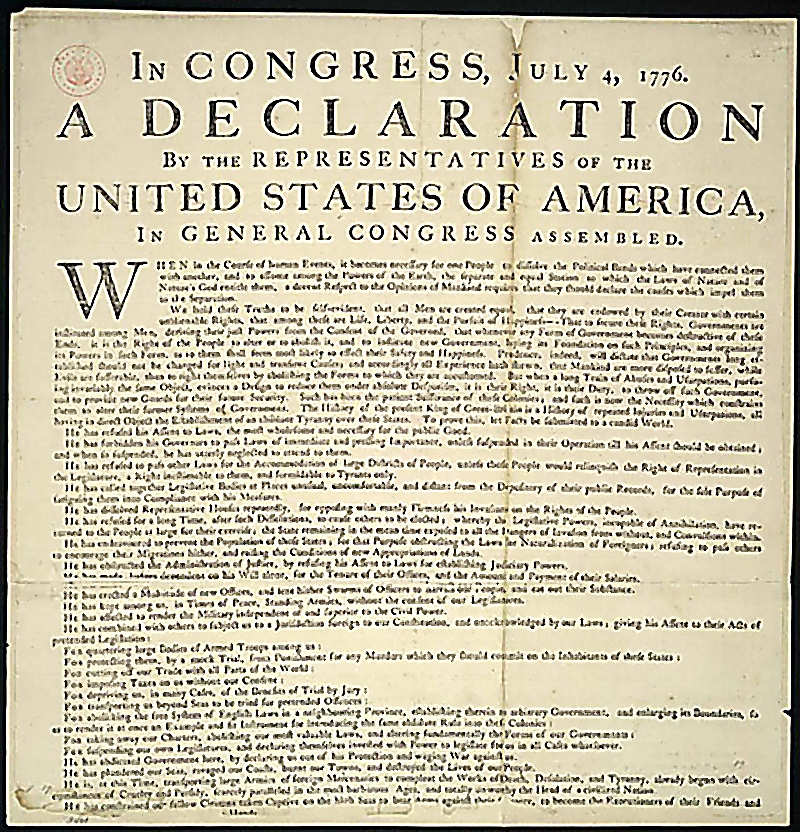
The image above is Washington's surviving copy of the Dunlap Broadside, the first printed version of the Declaration of Independence. It survives today as a fragment, the text breaking off mid-sentence, as part of the George Washington Papers at the Library of Congress. Hancock sent this broadside to Washington on July 6, from the same printing his officers would have read from three days later.
Congress had voted for independence on July 2. It adopted the final text on July 4. But Washington did not learn any of this until July 6, when Hancock's letter and this broadside reached him in New York. Hancock asked him to have it "proclaimed at the Head of the Army in the Way, you shall think most proper."
Washington took three more days.
Five Days Late
This was not indecision. Washington was watching a British invasion fleet assemble in New York Harbor, eventually more than 400 ships carrying 32,000 regulars and Hessian mercenaries, the largest overseas expeditionary force Britain had assembled to that point. He had roughly 19,000 men, many of them short-term militia with little combat experience. He also had a live conspiracy to deal with: days earlier, his own bodyguard, Thomas Hickey, had been implicated in a plot against his life and hanged.
When Washington finally issued the order on July 9, he scheduled the reading for six o'clock that evening, on the parade grounds of each brigade. His General Orders read: "The several brigades are to be drawn up this evening on their respective Parades, at six OClock, when the declaration of Congress, shewing the grounds & reasons of this measure, is to be read with an audible voice."
No single voice could carry across an army spread through Manhattan. Brigade officers each read the document to their own men, most likely from broadsides just like the one above. A young Massachusetts ensign named Caleb Clapp recorded the moment in his diary: the Declaration was read, the soldiers sang a psalm, their chaplain prayed, and the ranks gave three cheers.
That Night at Bowling Green
The cheering did not stay contained to the parade grounds.
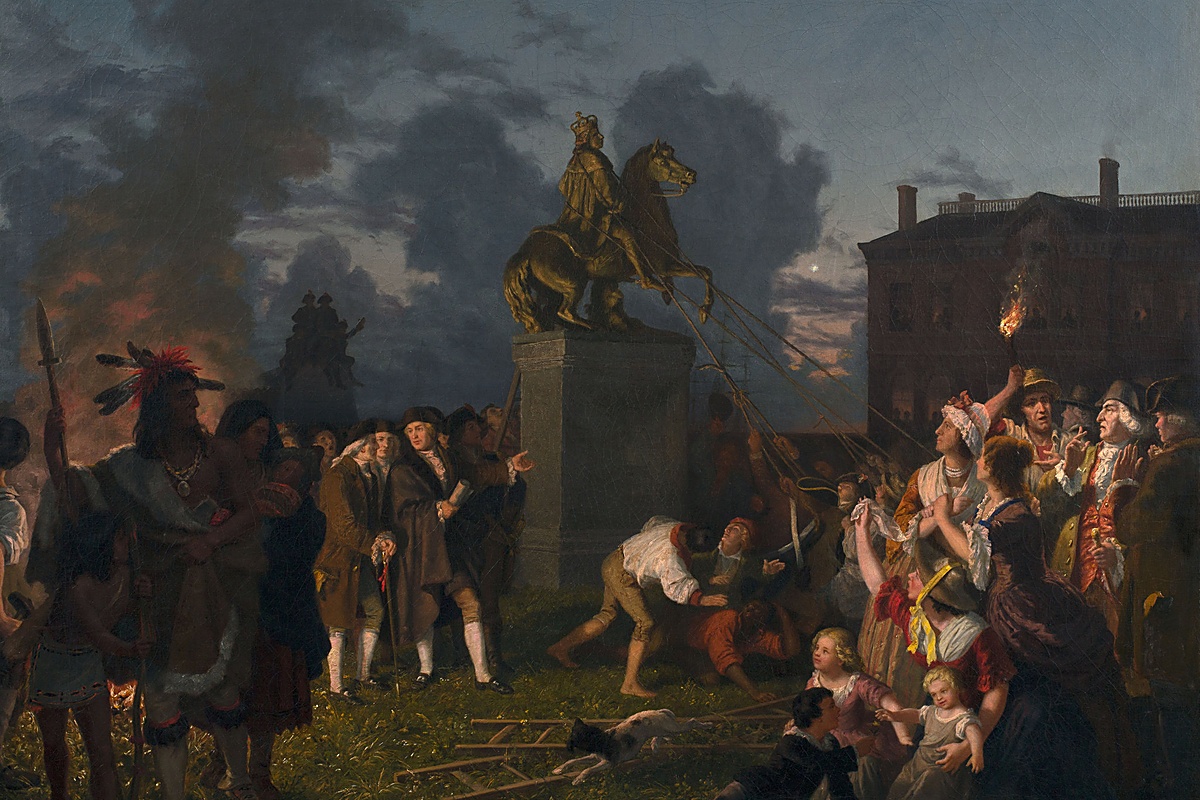
At the southern tip of Broadway stood a two-ton gilded lead statue of King George III on horseback, erected in 1770 by New York's colonial legislature to commemorate the repeal of the Stamp Act and honor the king. By 1776 it had become exactly what a monument to a king becomes in a city preparing to fight him.
That night, roughly forty soldiers and sailors made their way to Bowling Green, tied ropes around the statue, and pulled it to the ground. They stripped away the gilding, severed the head, and mutilated the statue. A New York postmaster wrote to a Continental general that the king's "statue here has been pulled down to make musket ball of, so that his troops will probably have melted Majesty fired at them."
That is exactly what happened. Most of the statue's remains were shipped to Connecticut and hauled by oxcart to Litchfield, where militia general Oliver Wolcott owned a foundry. In an orchard behind his house, Wolcott's family and neighbors spent weeks melting the lead and casting it into musket balls. According to Wolcott family records, the effort produced 42,088 cartridges, with lead from the statue turned into musket balls fired back at the army of the king they had pulled down.
Washington's Complaint
Here is the detail most retellings leave out.
Washington did not celebrate the statue's destruction. The next morning, in General Orders for July 10, he addressed it directly. He wrote that he did not doubt the men who tore it down were "actuated by Zeal in the public cause," but that the act had too much the appearance of "riot and want of order" in his army, and he directed that this kind of action be left to "proper authority" going forward.
The man who would spend the rest of the war building a citizen army out of raw militia was, on the very night his soldiers heard they were no longer subjects of a king, more worried about discipline than symbolism. He needed an army that followed orders, not one that celebrated independence by taking matters into its own hands. That tension, between revolutionary fervor and military order, would define the next seven years.
What July 9 Actually Started
The Declaration is remembered as a document adopted in a room in Philadelphia. But it became real to the people who would have to fight for it five days later, on a parade ground in Manhattan, read aloud by officers to men who had never seen the text before that evening.
The war Washington was preparing to fight would continue for more than seven years. New York fell to the British within two months. Washington would not return to the city as its commander until Evacuation Day, November 25, 1783.
The king's statue never returned. Fragments of it have continued to turn up in Connecticut over the years.