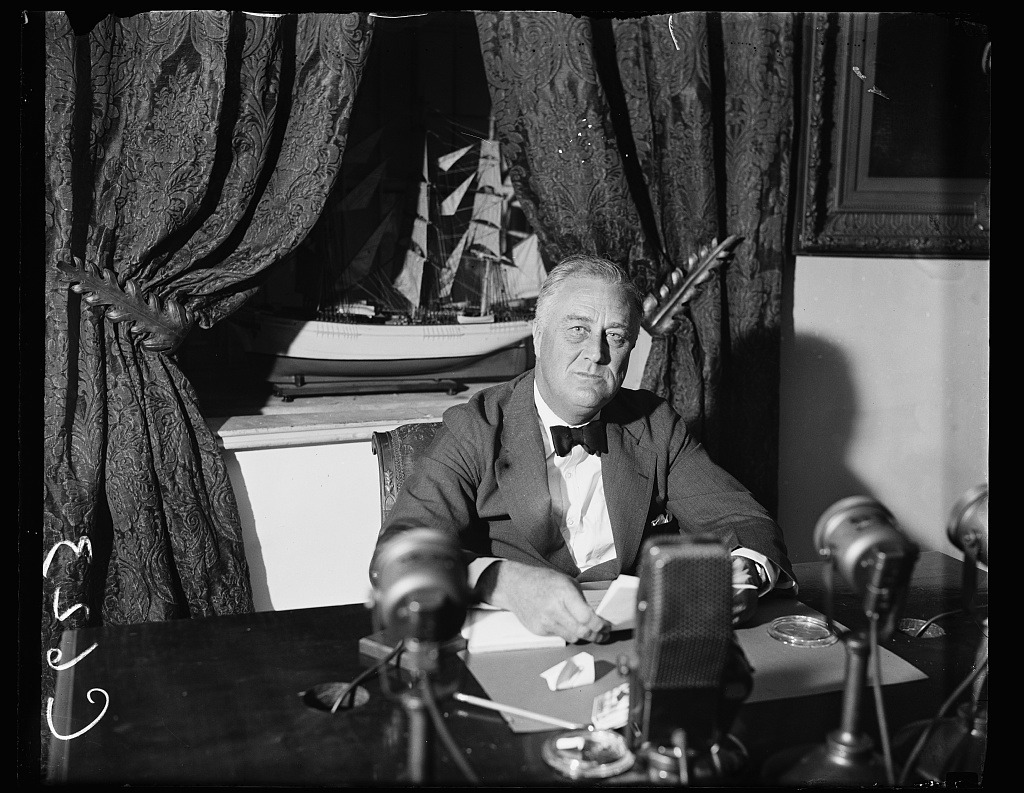

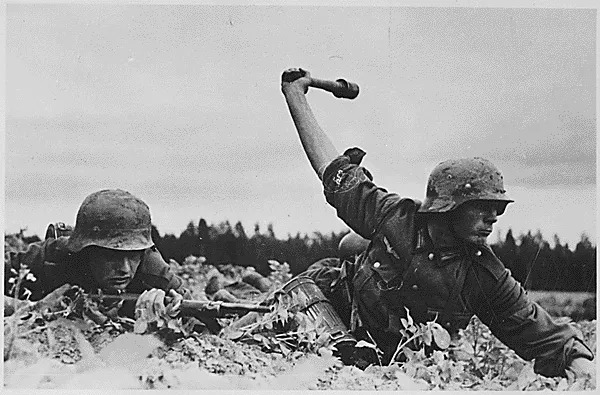
Germany invaded the Soviet Union on June 22, 1941. The largest military operation in the history of the world. Three million soldiers crossing an eighteen-hundred-mile frontier.
Washington had reason to believe it was coming, and had warned the Soviets.
In March 1941, Under Secretary of State Sumner Welles had quietly warned Soviet Ambassador Constantine Oumansky that American intelligence knew a German attack was being planned. The Soviets did not believe him.
They believed him now.
The question facing the Roosevelt administration the morning after the invasion was one of the most uncomfortable in American political history: what do you do when your enemy attacks your other enemy?
The Man Who Had to Answer It
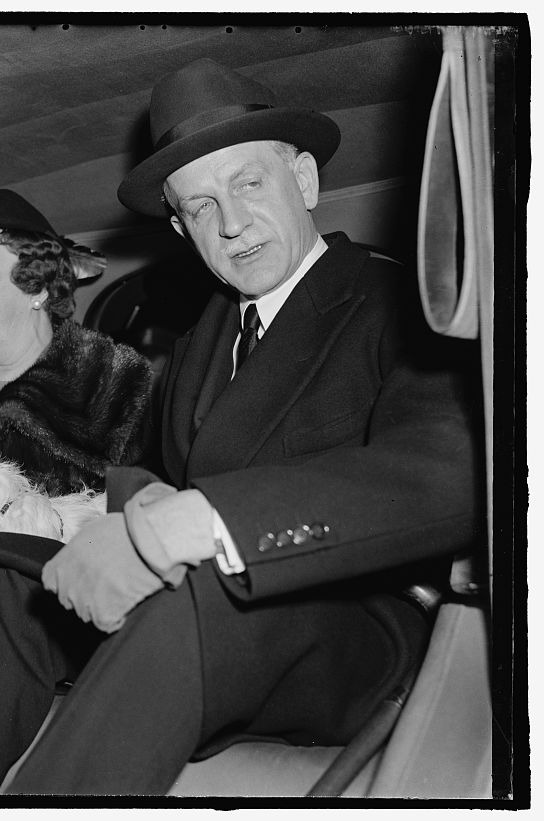
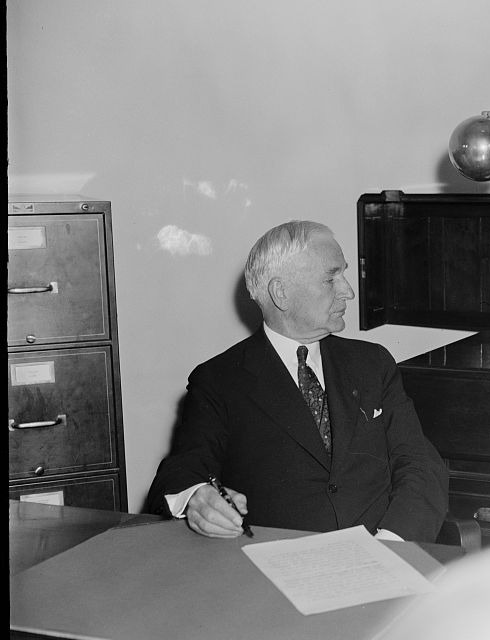
Secretary of State Cordell Hull was ill, recuperating from a recent illness, and leaving that day for a rest at White Sulphur Springs, West Virginia. The statement that would define American policy toward the new war fell to his deputy.
Sumner Welles was everything Hull was not. Where Hull was a Tennessee-born politician who had spent decades in Congress, Welles was a New York blueblood who had served as a page at Franklin Roosevelt's wedding at age twelve and roomed with Eleanor Roosevelt's brother at Groton. Roosevelt trusted Welles far more than Hull, and it showed. On the morning of June 23, the President called Welles by telephone twice, then summoned him to his private study in the White House for a direct conversation before allowing the statement to go out.
What Welles issued that afternoon was one of the most carefully constructed pieces of diplomatic language in American history.
What He Said, and What He Didn't
Welles opened by calling the German invasion of the Soviet Union proof, "beyond peradventure of doubt," of Hitler's plans for world domination. He called it a "treacherous attack." He said that to the present German government, "the very meaning of the word 'honor' is unknown."
Then he did something unexpected.
He condemned the Soviet Union in the same breath.
Freedom of worship, Welles said, had been denied to the peoples of both Nazi Germany and the Soviet Union. Communist dictatorship was "as intolerable and as alien" to American beliefs as Nazi dictatorship. Neither system would ever find support in the United States.
Having condemned both sides, he then made clear which side America would help.
"Any defense against Hitlerism, any rallying of the forces opposing Hitlerism, from whatever source these forces may spring, will hasten the eventual downfall of the present German leaders, and will therefore redound to the benefit of our own defense and security."
The logic was blunt. He was not saying Stalin was good. He was saying Hitler was worse, and that anyone fighting Hitler, whoever they were, was useful to America.
The final line left nothing to interpretation: "Hitler's armies are today the chief dangers of the Americas."
What Was Left Unsaid
Welles stopped short of promising anything specific. He refused to say whether the Soviet Union would be made eligible for Lend-Lease, the program that was already arming Britain. He noted only that the law empowered the President to extend aid to any nation whose defense he deemed vital to American security.
The message was understood. As the New York Times reported the following morning, "there was no suppressing of the feeling in Washington that Russia would receive material aid from the United States if she asked it."
Ambassador Oumansky had not yet asked. That meeting with Welles would come the same evening, in a separate conversation documented in the State Department's own files. Welles told Oumansky directly that the United States "regretted" that Russia had been "the victim of a treacherous attack." He promised that any Soviet request for material assistance would receive "immediate attention."
By the end of October 1941, the first Lend-Lease shipments to the Soviet Union were moving.
The Senate Reacts
Congressional reaction that day was a window into how deeply divided the country remained.
Senator Harry Truman of Missouri, not yet the figure history would make him, offered perhaps the most coldly transactional assessment of any American official on record. Speaking off the cuff to reporters, he said: "If we see that Germany is winning we ought to help Russia, and if Russia is winning we ought to help Germany, and that way let them kill as many as possible."
The isolationists were less equivocal. Senator Bennett Clark of Missouri called it "a case of dog eat dog." Senator Robert La Follette of Wisconsin predicted that the Roosevelt administration would mount "the greatest whitewash act in all history" to justify helping a communist dictatorship.
They were not entirely wrong about the whitewash. Within months, the same Soviet government that had invaded Finland, occupied the Baltic states, and split Poland with Hitler would be receiving American tanks, aircraft, and food under the banner of the Arsenal of Democracy.
What It Cost Not to Say It Plainly
Welles' statement on June 23, 1941, is a masterpiece of diplomatic indirection. He condemned Stalin while committing to help him. He called communism intolerable while making it clear America would tolerate it when the alternative was a Nazi-dominated Europe. He refused to announce a policy while announcing exactly what the policy would be.
Roosevelt was said to have told associates around this time that to defeat Hitler he would "hold hands with the devil" if necessary. The precise phrasing varies across memoirs and accounts, but the sentiment was real, and it matched what Churchill expressed in almost identical terms the night before the invasion: "If Hitler invaded Hell, I would make at least a favorable reference to the Devil in the House of Commons."
On June 23, 1941, Sumner Welles said the same thing in eight paragraphs, without using any of those words.
The primary source document is above. Read the last line again.