Most people who know the Overland Campaign at all know it for the meat grinder battles: the Wilderness, Spotsylvania, Cold Harbor. Grant and Lee, dug in a few hundred yards apart, trading assaults that cost tens of thousands of men and settled almost nothing on the ground. The cavalry raids that ran alongside all of it tend to get treated as a subplot. Skirmishes. Screening actions. The undercard.
One of those undercard fights killed J.E.B. Stuart.
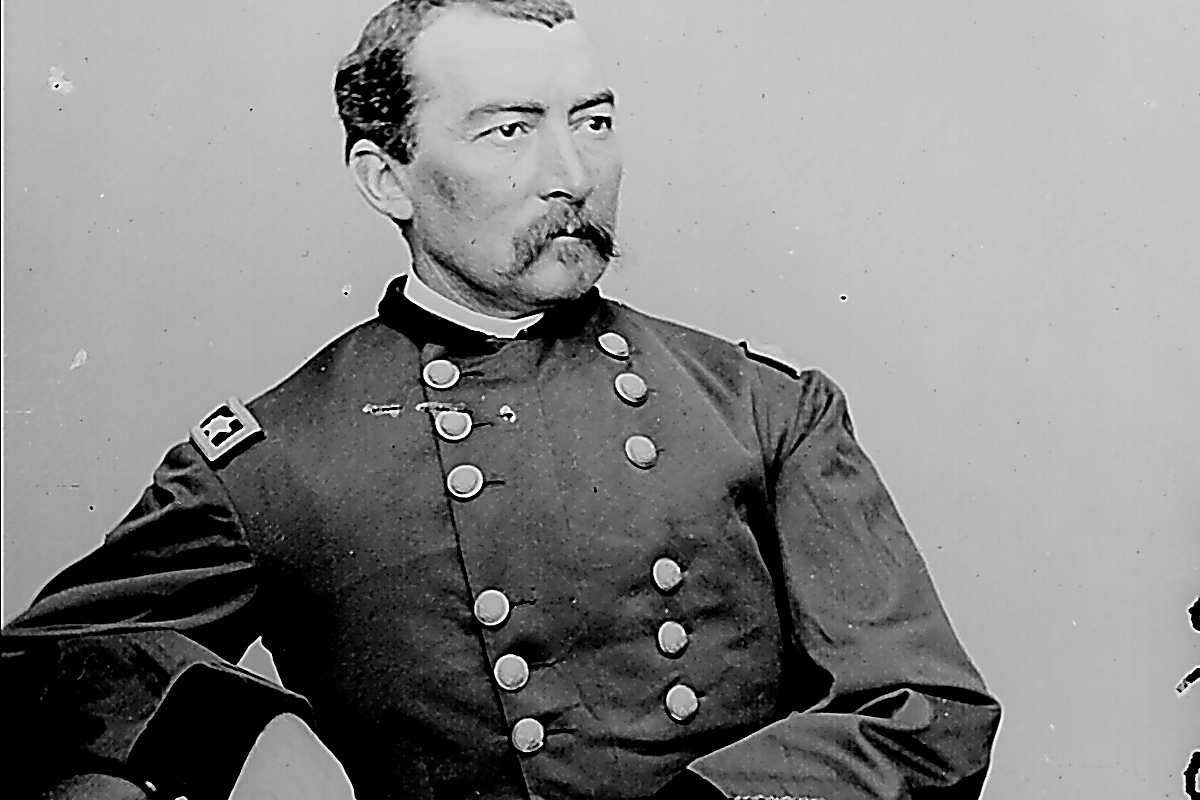
On May 11, 1864, while Grant and Lee were still locked into their standoff at Spotsylvania, Union cavalry under Maj. Gen. Philip Sheridan met Confederate cavalry under Maj. Gen. J.E.B. Stuart at an abandoned inn called Yellow Tavern, six miles north of Richmond. It wasn't a duel in any formal sense. Sheridan's raid had a broader mission: cut Confederate communications, destroy supplies, threaten the Confederate capital, and, if Stuart's cavalry got in the way, beat it. Stuart got in the way. By the end of the day he was mortally wounded, shot at close range by a dismounted Union trooper while trying to rally his own line. He died in Richmond the next afternoon, with Jefferson Davis among those who came to see him before the end. Lee never again had a cavalry commander who occupied Stuart's place in quite the same way.
An Argument That Became a Raid
The fight happened because Sheridan picked a fight with his own chain of command first.
Through the opening days of the campaign, Meade had kept Sheridan's cavalry doing what cavalry in the Army of the Potomac had always done: screening the army's movements, guarding wagon trains, feeling out the enemy's position. Sheridan wanted to use it differently, concentrated and aggressive rather than parceled out for escort duty, and said as much when Meade criticized the cavalry's performance around the Wilderness and Todd's Tavern. Sheridan's response, as Meade reported it to Grant, amounted to a boast: turn him loose and he'd beat Stuart outright.
Grant's answer was short. Sheridan generally knew what he was talking about, Grant told Meade, so let him go do it. On May 9, Sheridan's three cavalry divisions, upward of ten thousand troopers with roughly thirty guns, rode south and east, aiming to get behind Lee's army and draw Stuart into a fight on Sheridan's terms.
The Ride South
Sheridan's column was enormous by the standards of Eastern Theater cavalry, stretching more than thirteen miles on the march at points. On the evening of May 9 it hit the Confederate supply depot at Beaver Dam Station and tore it apart: railroad cars burned, telegraph wire cut, locomotives destroyed, and close to four hundred Union prisoners recaptured on their way south.
Stuart had a decision to make. He could try to run down Sheridan's column from behind, or get ahead of it and put himself between the Union cavalry and Richmond. He chose the second option, pushing his 4,500 to 5,000 troopers on an exhausting march to beat Sheridan to the crossroads at Yellow Tavern. He got there first, by roughly an hour, arriving around mid-morning on the 11th and setting up a blocking position before Sheridan's advance came into view.
The march took a toll. His men and horses arrived worn down from the march, facing a Union force that outnumbered them by more than two to one. Sheridan also held a real firepower edge: a large share of his troopers, Custer's Michigan brigade especially, carried Spencer repeating carbines, while most of Stuart's men were still armed with single-shot weapons.
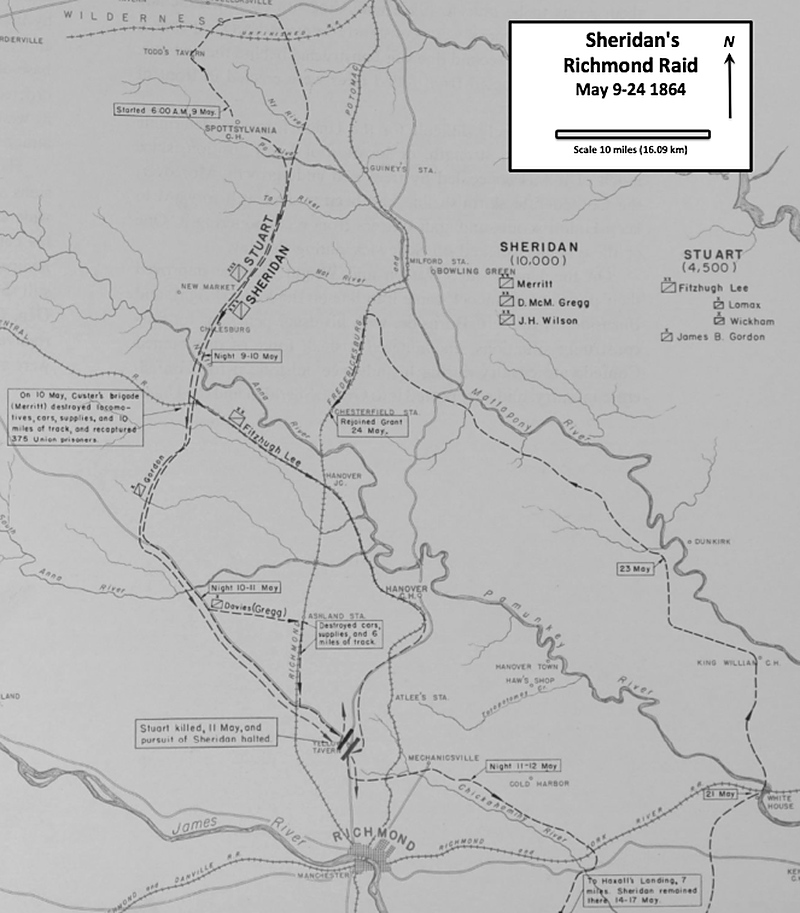 Sheridan's Richmond Raid, May 9–24, 1864. Stuart's 4,500 to 5,000 troopers raced to cut off Sheridan's column before it reached Yellow Tavern.
The Fight
In his May 13 report to Meade, written two days after the battle from a camp at Bottom's Bridge, Sheridan described what happened next in plain, procedural language, the kind an officer uses when he's writing for the record rather than for effect:
"About 7 a.m. on the 11th I resumed the march on Richmond. All the information that could be obtained led me to believe that the rebel General Stuart was concentrating his cavalry at Yellow Tavern. On reaching that point I found such to be the case. I immediately attacked him, and after an obstinate contest I gained possession of the Brook turnpike, captured two pieces of artillery, driving his force back toward Ashland and across the north fork of the Chickahominy..."
The fight was messier than that summary lets on. Stuart initially deployed in two wings under Lomax and Wickham, was pushed back, and reformed his line; at one point a Confederate brigade under Gordon struck at Sheridan's rear while the main fight was still going on up front. The Confederate position held for hours along a low ridge above the turnpike before it finally broke. In the last push, Stuart stayed mounted in the open, trying to rally his men against the Union advance, when a dismounted trooper, traditionally identified as Private John A. Huff of the 5th Michigan Cavalry, shot him at close range. The fighting continued for some time after Stuart went down. He was carried into Richmond, where he died the following afternoon.
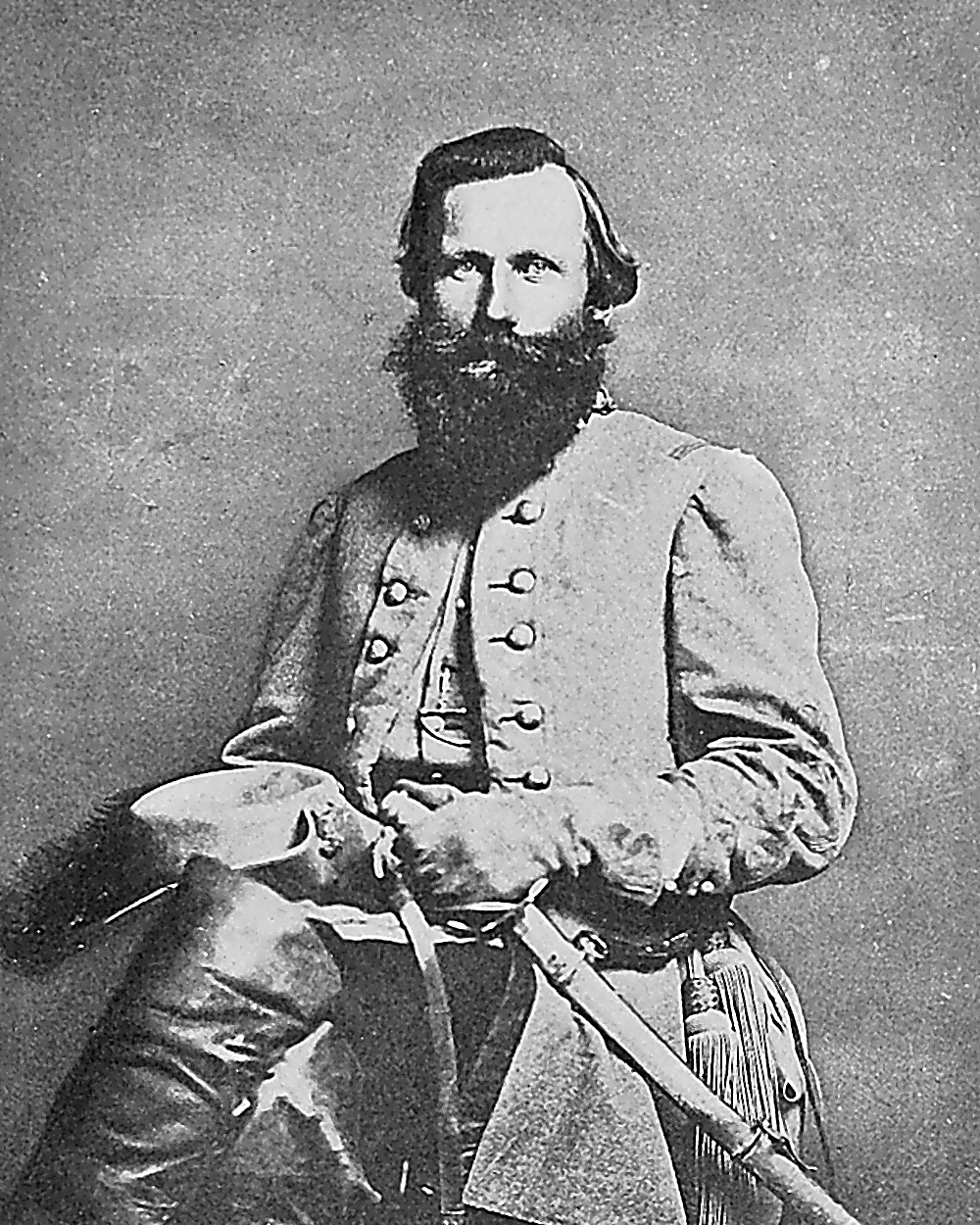 Maj. Gen. J.E.B. Stuart. He was mortally wounded at Yellow Tavern on May 11, 1864, and died in Richmond the next day.
What It Actually Bought
Here is where the story gets less tidy than "Union cavalry kills J.E.B. Stuart" suggests.
Sheridan came away from the raid convinced it had been an unqualified triumph, writing afterward of "constant success and the almost total annihilation of the rebel cavalry." The tactical result at Yellow Tavern itself was a clear Union win. Whether the raid as a whole was a good trade is a separate question, and historians don't fully agree on the answer. Gordon Rhea, whose study of the campaign gives unusually close attention to its cavalry operations, argues that pulling ten thousand troopers away from Grant's main army deprived him of crucial reconnaissance right when he needed it most, through the end of Spotsylvania and the movement toward the North Anna.
Nor did the Confederate cavalry collapse without Stuart. After his death, Lee didn't immediately hand the whole corps to a successor; command was split among independent divisions for a stretch before Wade Hampton was formally named commander of the Army of Northern Virginia's cavalry that August. Hampton went on to win the largest cavalry battle of the war at Trevilian Station the following month. He was a genuinely formidable replacement. But Hampton could inherit Stuart's command; he could not inherit two years of Stuart's accumulated experience reading Union movements, and Lee's army spent the rest of the war without it.
The war's most famous cavalier died on the losing end of a fight that started as one general's argument with his boss about how cavalry should be used. It's a strange, almost administrative origin for a fight whose consequences reached far beyond the battlefield.
Source: Maj. Gen. Philip H. Sheridan's field report to Maj. Gen. George G. Meade, dated May 13, 1864, describing the operations of the Cavalry Corps' Richmond raid, including the fighting at Yellow Tavern. Official Records of the Union and Confederate Armies, Series I, Volume XXXVI, Part I, pp. 776–778.