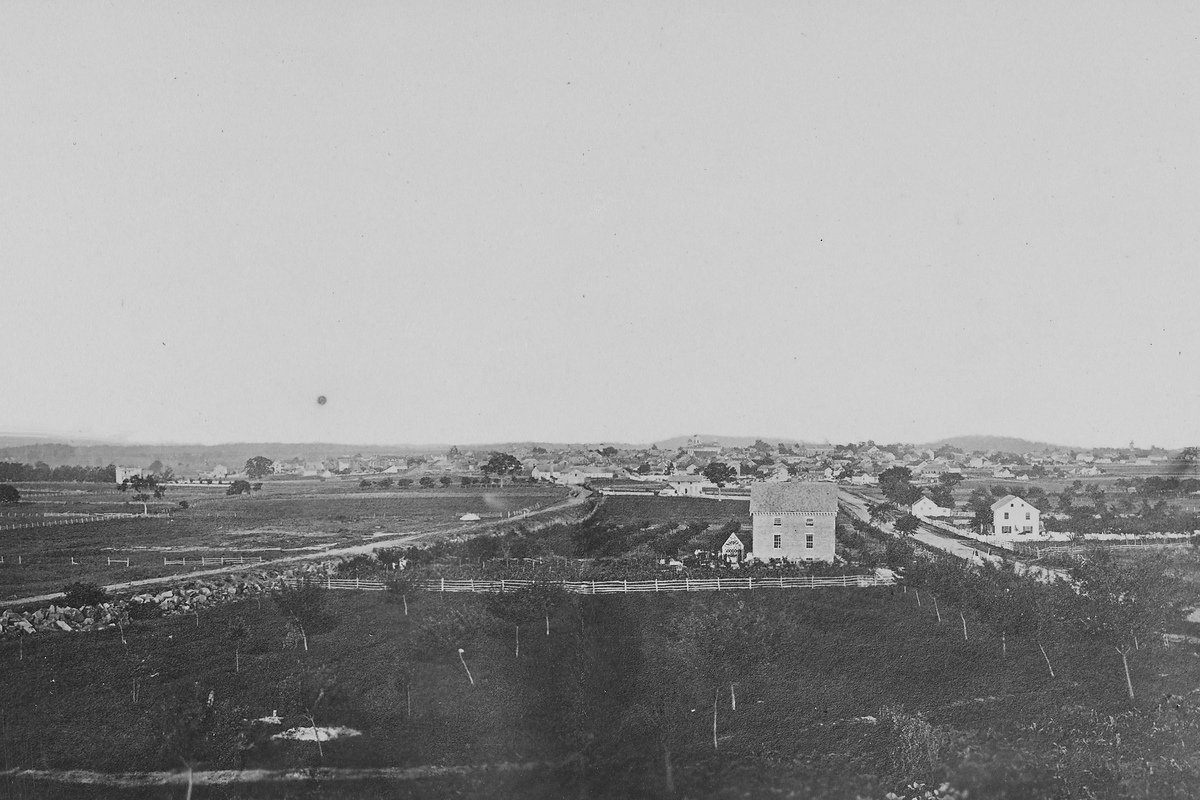
On June 3, 1863, the Army of Northern Virginia began pulling out of its lines opposite Fredericksburg, Virginia. Most of the men marching that day did not know where the army was headed. Neither did the Union commanders watching them leave know exactly what Robert E. Lee intended to do next.
Four weeks later, two of the largest armies in North America would collide at a Pennsylvania crossroads town neither side had chosen or expected. Getting there took a series of decisions, some deliberate and some improvised, made by commanders working from an incomplete and constantly aging picture of where the other army was. That gap in intelligence, more than any single tactical choice, set up everything that followed.
Why Lee Moved North
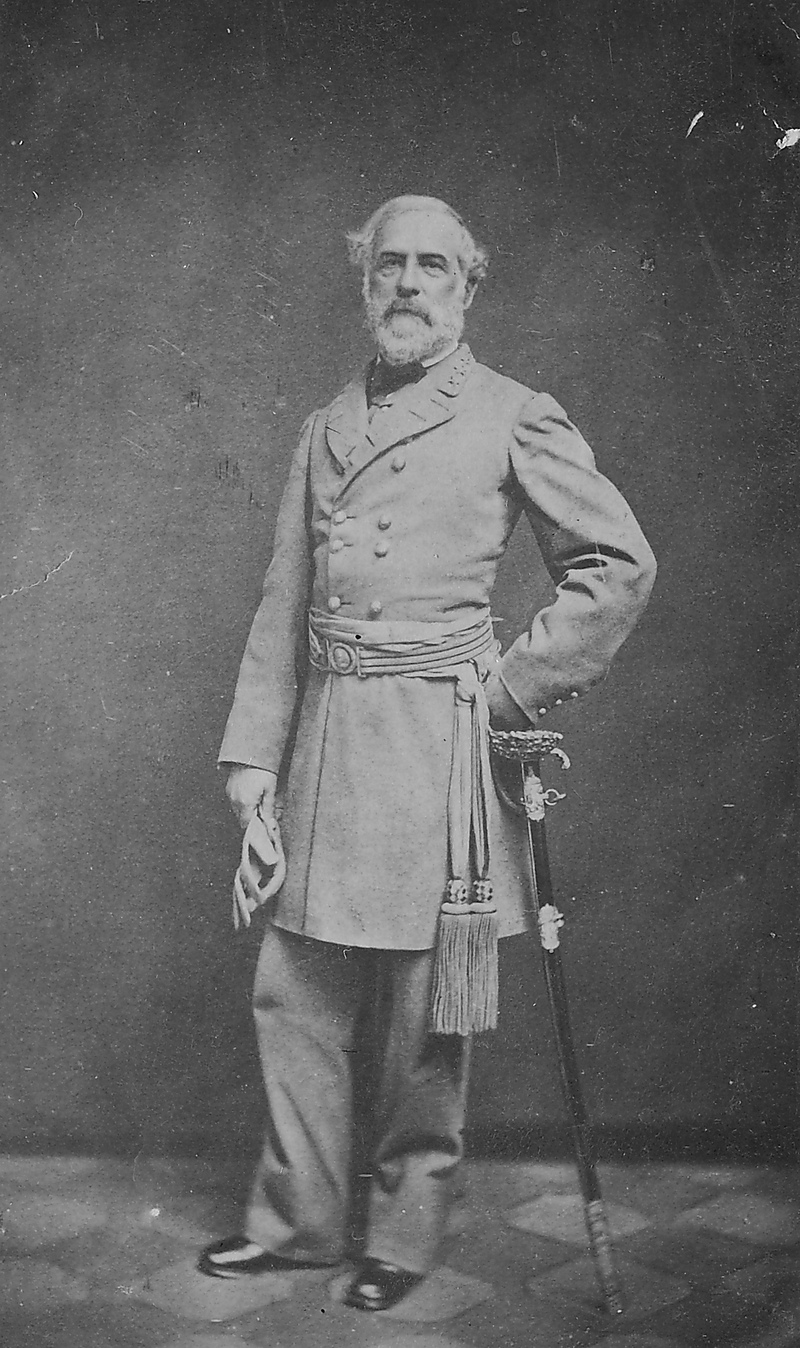 Robert E. Lee, commander of the Army of Northern Virginia. Library of Congress.
Lee did not march north to fight at Gettysburg specifically. He marched north to solve a problem in Virginia.
By the spring of 1863, the war had severely strained the Confederacy's ability to sustain the Army of Northern Virginia from Virginia's resources alone. The Army of the Potomac, still recovering from its defeat at Chancellorsville that May, sat entrenched across the Rappahannock from Lee's men at Fredericksburg in a position Lee described in his own report as one he "could not be attacked to advantage."
Lee's solution was to pull the Federal army out of that position by moving north. In his official report, written a month after the battle, he laid out the reasoning directly: the move would relieve the Shenandoah Valley of Union occupation, and it might draw General Joseph Hooker's army into a fight on ground of Lee's choosing, far from its base. At minimum, Lee wrote, the Union "would be compelled to leave Virginia" and its summer campaign plans would be disrupted before they began.
There was a second, larger calculation underneath the tactical one. A Confederate army operating in Pennsylvania threatened Northern farms, commerce, and confidence in the war at a moment when peace sentiment was already rising. It was a campaign meant to do more than win a battle. It was meant to change what the North was willing to keep fighting for.
The march itself went well at first. Ewell's corps swept through the Shenandoah Valley in mid-June, driving Union General Robert Milroy's garrison out of Winchester and capturing, by Lee's own count, more than 4,000 prisoners and 29 pieces of artillery. By June 27, the Confederate army had crossed into Pennsylvania and was encamped near Chambersburg, with Ewell's advance elements as far east as York and as far north as Carlisle. Preparations were underway to move on Harrisburg, the state capital.
Then Lee lost reliable contact with the Union army.
The Order That Left Lee Blind
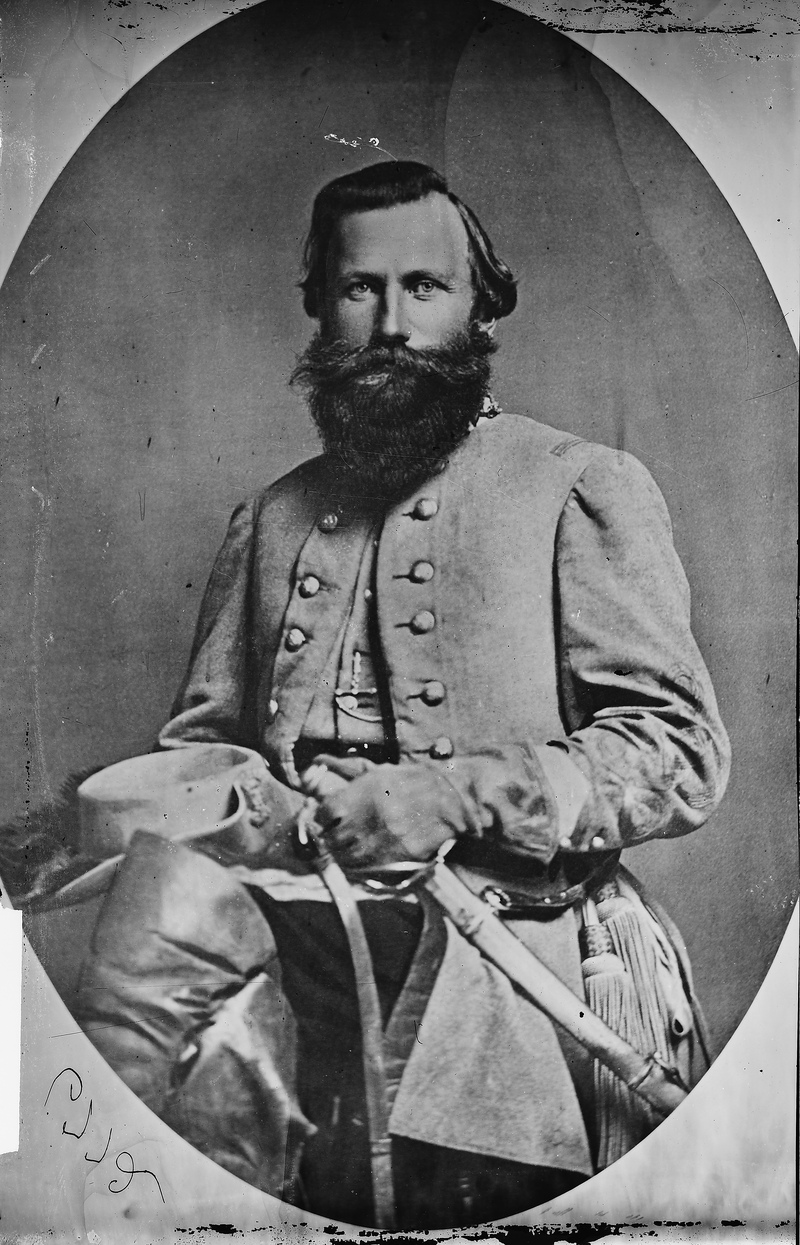 J.E.B. Stuart, commander of Lee's cavalry. Library of Congress.
The reason traces to a single set of instructions, written on June 22 and 23, 1863, to Major General J.E.B. Stuart, commander of Lee's cavalry.
Stuart's job, in the plainest terms, was to be Lee's eyes: screen the army's movements, watch the Union forces, and report back. But the June 23 order gave him something else as well. After laying out several specific routing options, Lee added a clause that handed the decision to Stuart himself:
"You will, however, be able to judge whether you can pass around their army without hinderance, doing them all the damage you can, and cross the river east of the mountains."
Stuart chose the most ambitious of the options Lee had laid out. Rather than screening Lee's advance directly, he took three brigades on a wide ride around the rear of the Federal army, intending to cross the Potomac east of the Federal column and rejoin Lee's right flank with intelligence in hand. It did not go as planned. The Union army moved faster and in greater strength than Stuart anticipated, forcing him into a long detour through Rockville, Westminster, and Hanover, Pennsylvania, fighting a running series of skirmishes along the way. Two smaller cavalry brigades, under Beverly Robertson and William Jones, remained behind to guard the mountain passes. They could not replace Stuart's command as the army's forward screen.
Lee, writing about it afterward, was measured but direct about the consequence: "The movements of the army preceding the battle of Gettysburg had been much embarrassed by the absence of the cavalry." Stuart himself did not reach Lee until the afternoon of July 2, the second day of the battle. For the opening day of the campaign's most consequential engagement, Lee lacked the reliable, continuous cavalry intelligence he normally depended on to tell him where the Union army was and how much of it was approaching.
Two Armies, No Map
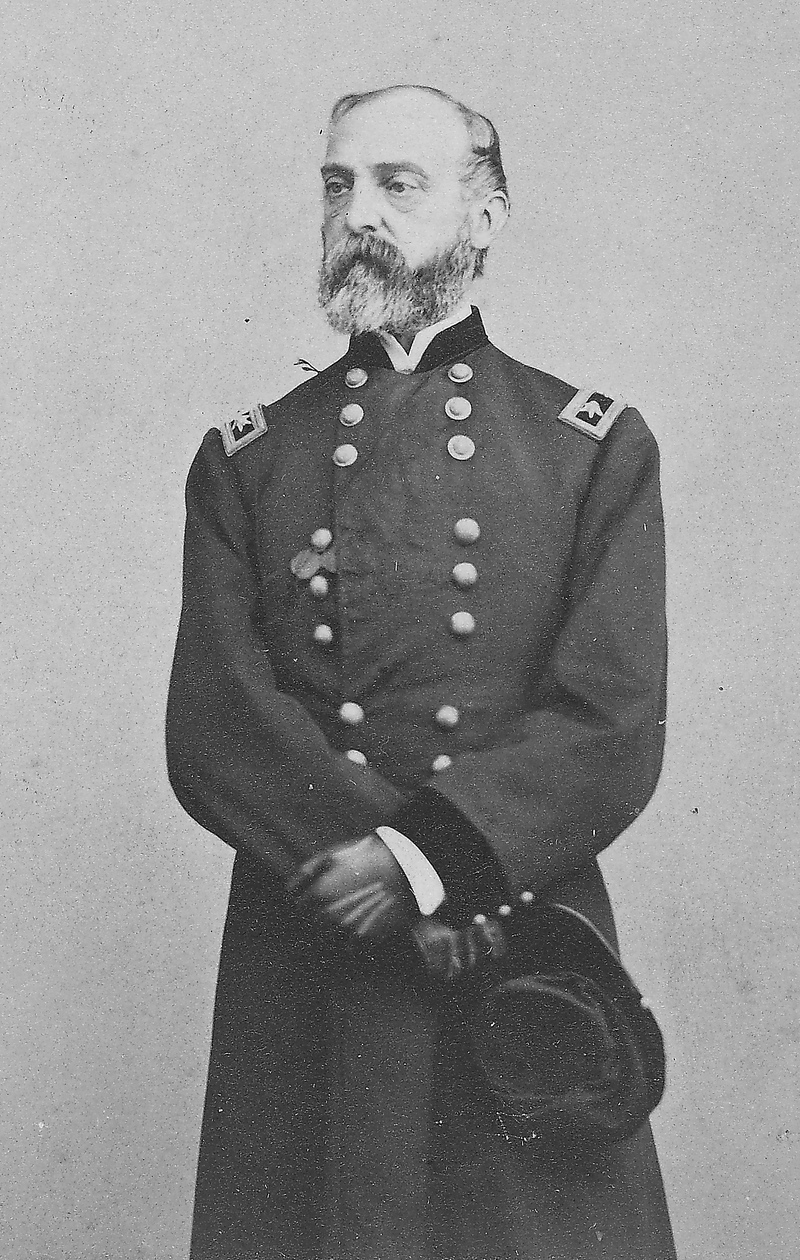 George Gordon Meade, who took command of the Army of the Potomac on June 28, 1863, three days before the battle. Library of Congress.
Lee was not the only commander adjusting to incomplete information that week. On June 28, three days before the battle began, the Union Army of the Potomac changed commanders entirely.
George Gordon Meade, then commanding the army's V Corps, was woken before dawn and informed he was replacing Joseph Hooker, effective immediately. Meade's order assuming command, issued that same day, opens with a line that makes clear how little warning he'd had: "As a soldier, in obeying this order, an order totally unexpected and unsolicited, I have no promises or pledges to make."
Meade inherited an army already in motion, one working with functioning, if imperfect, cavalry reconnaissance. Lee, meanwhile, was advancing without Stuart's main cavalry command in front of his army. On the night of June 28, Longstreet's scout Henry Thomas Harrison brought word that the Federal army was around Frederick and moving north; Longstreet sent him on to Lee, and the report gave Lee critical confirmation that the Federal army had crossed the Potomac and was moving north. It was information Stuart's cavalry had not been able to provide. With his communications back to Virginia now at risk, Lee abandoned the advance on Harrisburg and ordered his scattered corps to concentrate east of the mountains, at Cashtown and Gettysburg.
Neither commander had a complete picture of what the other army was about to do next. But the two problems were not the same size. Meade had cavalry screening the army's advance. Lee, without Stuart's command, was forced to rely far more heavily on scouts, civilians, and whatever information his advancing columns could gather.
Where the Two Armies Met
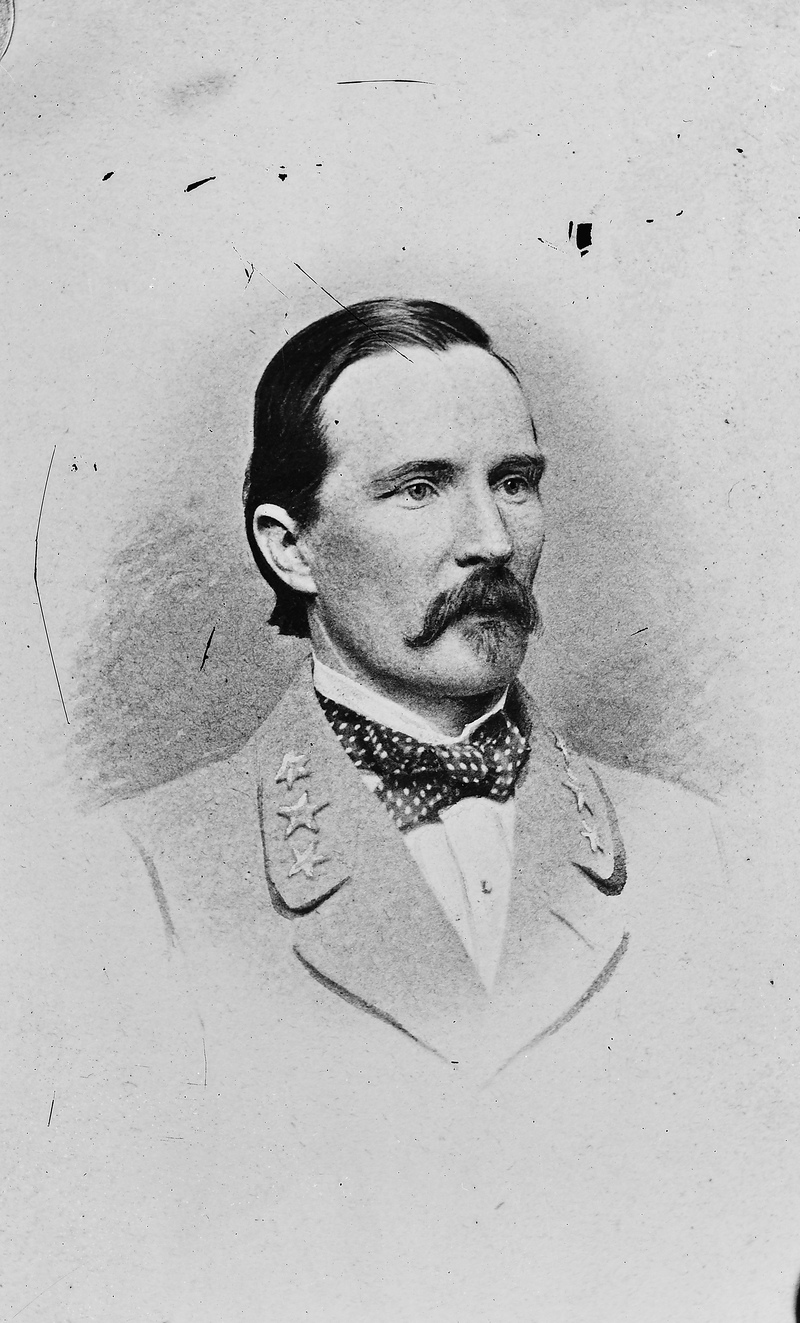 Henry Heth, whose division would open the Battle of Gettysburg on July 1. Library of Congress.
On June 29, Confederate General Henry Heth's division reached Cashtown, eight miles from Gettysburg. The next morning, Heth sent a brigade under General James Pettigrew into Gettysburg itself, not to fight, but to investigate reports of supplies for the army. Pettigrew found the town occupied by Union cavalry supported by infantry and, uncertain of the force facing him, pulled back without entering.
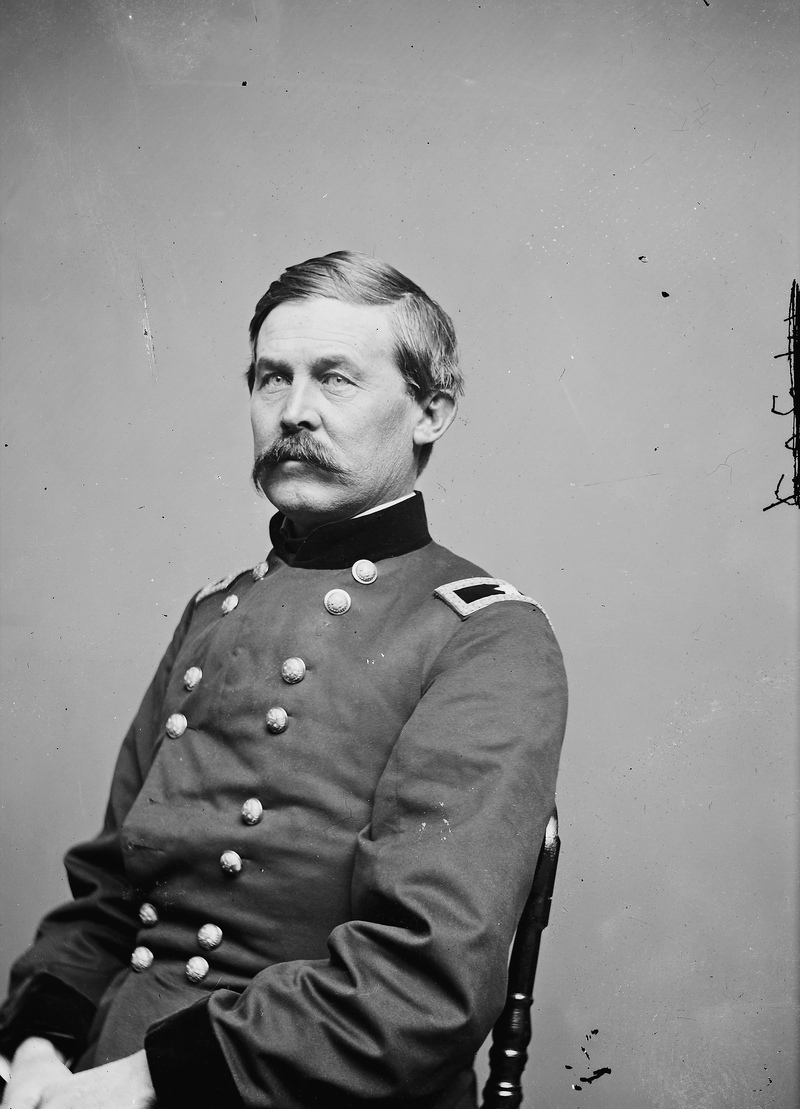 John Buford, whose cavalry division met Pettigrew's brigade outside Gettysburg on June 30. Library of Congress.
It was a small, almost routine decision; a brigade commander choosing caution over risk. But it meant Heth's division would be back the next morning to find out what was actually there. That return trip, on the morning of July 1, would open the Battle of Gettysburg before either army had concentrated its full strength.