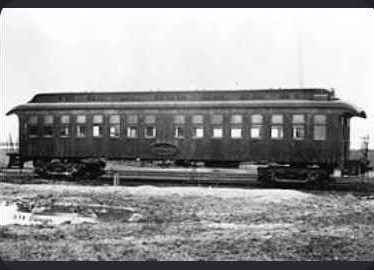
On June 7, 1892, a 30-year-old shoemaker named Homer Plessy bought a first-class train ticket in New Orleans. He walked to the platform, boarded the East Louisiana Railroad, and sat down in a whites-only car.
He was seven-eighths white. But under Louisiana law, one-eighth Black blood made him a Black man. He was arrested within minutes.
That arrest was not an accident. It was a plan.
The Setup
Plessy's arrest was a carefully orchestrated act of civil disobedience organized by a New Orleans citizens committee called the Comité des Citoyens. The group had formed specifically to challenge Louisiana's Separate Car Act of 1890, which required railroads to provide "equal but separate" accommodations for white and Black passengers.
The committee chose Plessy deliberately. His nearly white appearance was meant to expose the absurdity of Louisiana's racial classification system. They even notified the railroad in advance — the East Louisiana Railroad privately opposed the law because maintaining separate cars was expensive — and arranged for a private detective to make the arrest so it would be handled properly for the legal challenge ahead.
Plessy was charged with violating the Separate Car Act. He argued that the law violated the Thirteenth and Fourteenth Amendments to the Constitution. The case wound its way through Louisiana courts and eventually reached the United States Supreme Court.
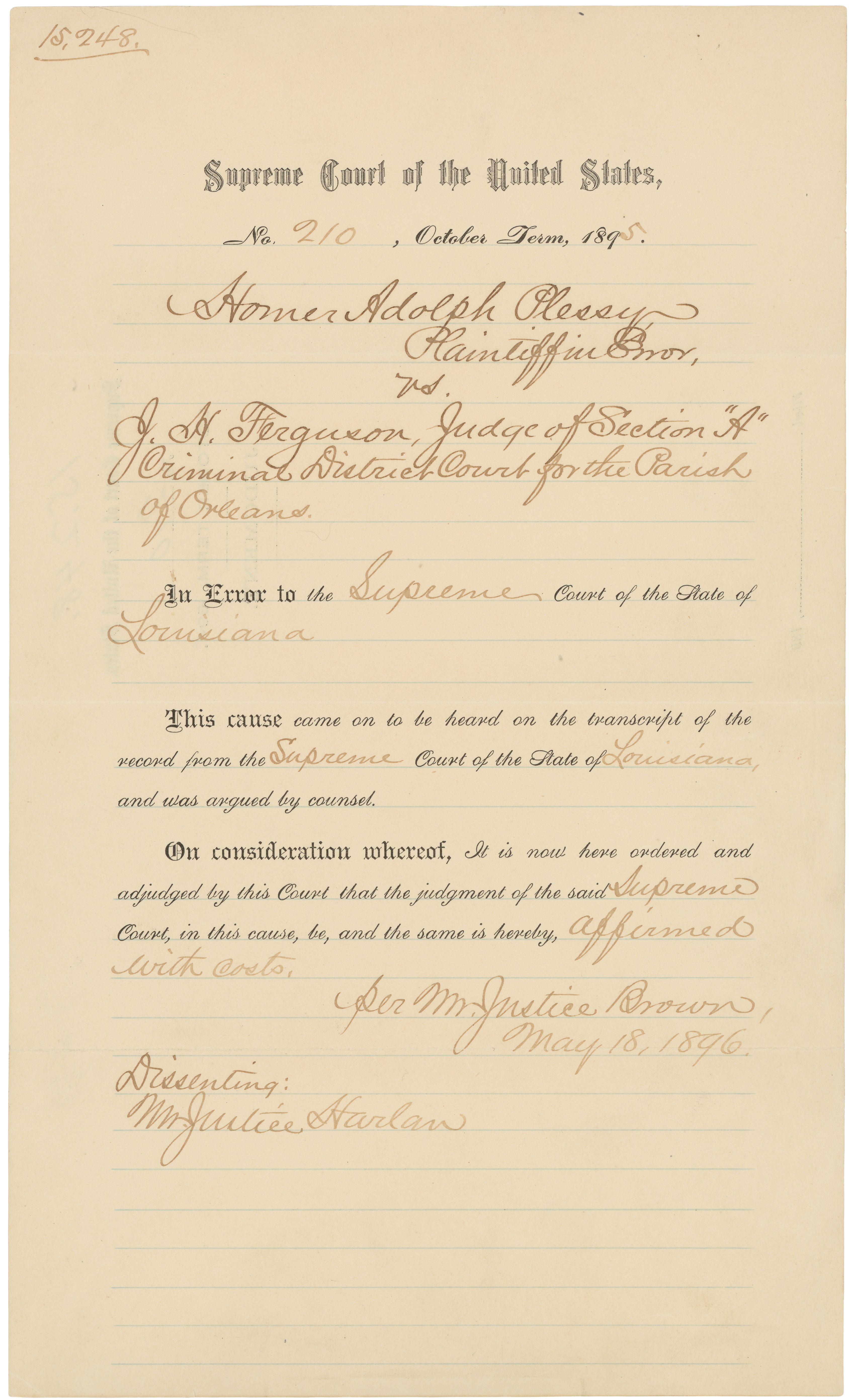
It took four years. On May 18, 1896, the Court issued its ruling.
The Decision
The vote was seven to one. Justice Henry Billings Brown wrote the majority opinion. His reasoning was blunt: the Fourteenth Amendment, he argued, was never intended to abolish social distinctions or enforce social equality. Separate facilities did not stamp Black citizens with a badge of inferiority — if they felt that way, he wrote, it was because they chose to put that construction upon it.
The ruling established the doctrine of separate but equal as constitutional law. It gave legal cover to an entire architecture of segregation that would spread across the South and beyond — separate schools, separate hospitals, separate water fountains, separate entrances, separate everything.
There was one dissent.
The Lone Voice
Justice John Marshall Harlan was a former slaveholder from Kentucky. He had opposed the Thirteenth Amendment abolishing slavery. Yet on May 18, 1896, he wrote one of the most prophetic dissents in Supreme Court history.
The Constitution, Harlan wrote, is color-blind and neither knows nor tolerates classes among citizens. He predicted that the majority's decision would prove to be as pernicious as the Dred Scott decision. He argued that the thin disguise of equal accommodations would not mislead anyone, nor atone for the wrong done that day.
He was right about everything.
What Separate But Equal Actually Meant
The equal in separate but equal was a fiction from the beginning. Black schools received a fraction of the funding of white schools. Black hospital wards were understaffed and undersupplied. Black railroad cars were older, dirtier, and more crowded. The law said equal. The reality was anything but.
For 58 years Plessy v. Ferguson stood as the law of the land. It was the legal foundation upon which Jim Crow was built — the vast system of racial apartheid that defined life in the American South for generations. Lynchings, disenfranchisement, economic exclusion: all of it flourished under the constitutional umbrella Plessy provided.
Homer Plessy himself paid a $25 fine and returned to his life in New Orleans. He died in 1925, 29 years before the Court finally overturned the decision that bore his name.
The Overturning
On May 17, 1954 — 58 years and one day after Plessy — the Supreme Court issued its unanimous ruling in Brown v. Board of Education. Chief Justice Earl Warren's opinion directly repudiated the reasoning of Plessy. Separate educational facilities, he wrote, are inherently unequal.
Justice Harlan's lone dissent had finally become the law of the land.
In 2022, the Louisiana court that had originally convicted Homer Plessy granted him a posthumous pardon. The pardon was accepted by his great-great-grandnephew, Keith Plessy, who has spent years working alongside Phoebe Ferguson — the great-great-granddaughter of the judge who ruled against Plessy in 1892 — to promote civil rights education in New Orleans.
Then and Now
The debate Plessy ignited never fully ended. Questions about school segregation, separate and unequal funding, and the gap between the law on paper and the reality on the ground remain live issues in American courts and legislatures today. Studies consistently show that American schools are more racially segregated now than they were in the 1980s — not by law, but by geography, housing policy, and district boundaries that reproduce the separations Brown sought to eliminate.
The Constitution may be color-blind. America is still working on it.
The Document
The original Supreme Court opinion in Plessy v. Ferguson is available through the National Archives. Justice Harlan's dissent — the document that history ultimately vindicated — is worth reading in full. It is one of the great acts of moral courage in the history of American law.