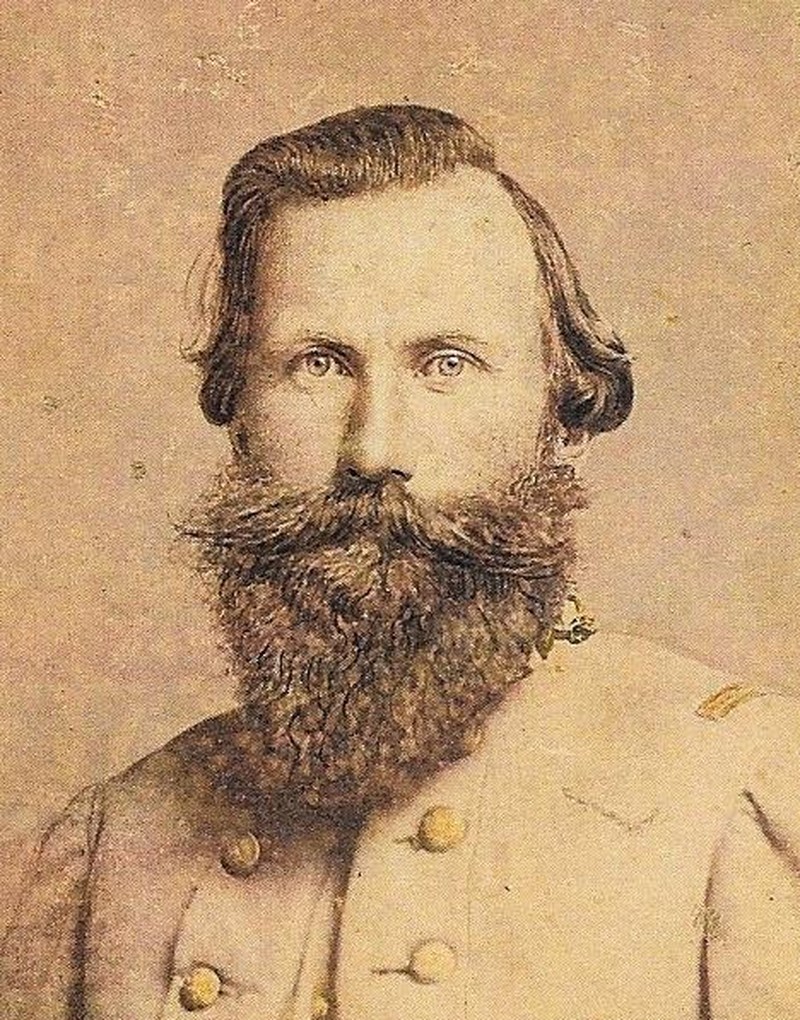
By the summer of 1862, George McClellan had moved the largest army ever assembled on American soil to the doorstep of Richmond. More than one hundred thousand Union soldiers sat within earshot of the city's church bells. The Confederate capital seemed on the verge of falling. The war, many believed, was nearly over.
Then J.E.B. Stuart rode around all of them.
The Setup: Lee Needs to Know
When Robert E. Lee took command of the Army of Northern Virginia in early June 1862, he inherited a desperate situation. McClellan's massive Army of the Potomac had pushed up the Virginia Peninsula and now sat just a few miles east of Richmond, straddling the Chickahominy River. Lee knew he could not survive a prolonged siege. He needed to go on the offensive, and to do that he needed intelligence on whether McClellan's right flank, north of the Chickahominy, was exposed and vulnerable to attack.
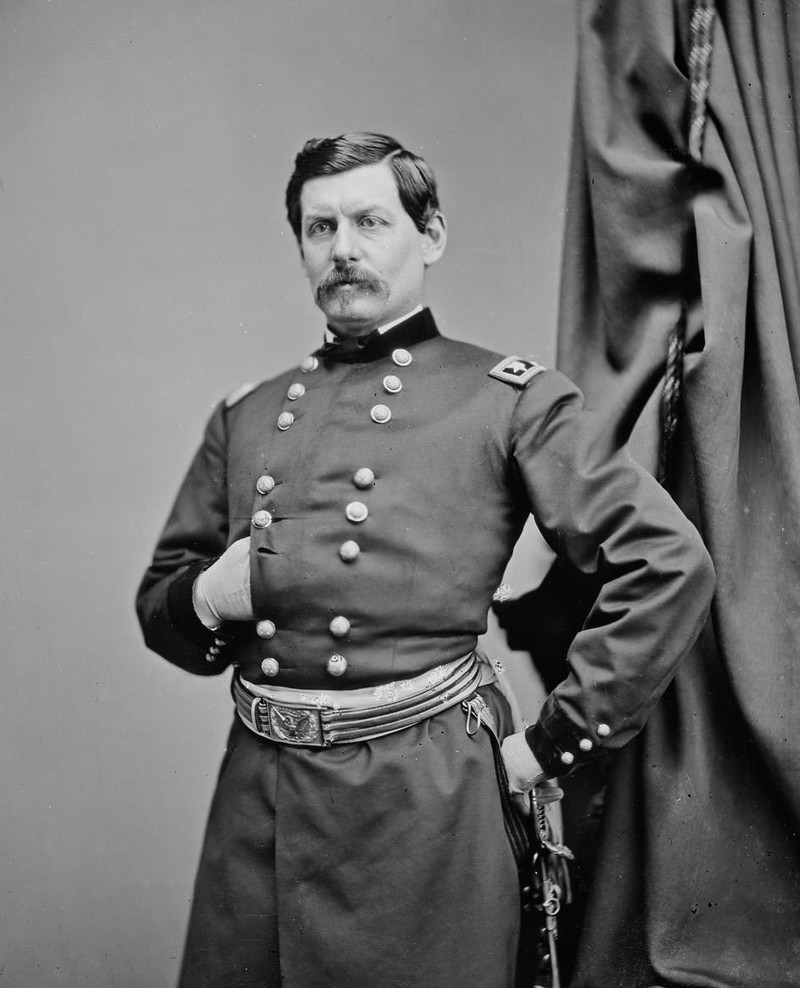 General George B. McClellan, commander of the Army of the Potomac, 1862. Library of Congress.
On June 11, 1862, Lee wrote to his young cavalry commander with specific orders. Stuart was to make a secret movement to the rear of the enemy, gather intelligence on Union positions and supply lines, destroy wagon trains, and return as soon as the mission was accomplished. Lee was explicit about one thing: Stuart should not hazard his command unnecessarily. Get in, get the information, get out.
Stuart decided to keep going.
The Ride Begins
Before dawn on June 12, Stuart departed Richmond at the head of roughly twelve hundred Confederate cavalrymen. He rode north, then swung east, passing through Hanover Court House and probing the Union right flank exactly as Lee had ordered. What he found confirmed Lee's suspicion: the Union right was exposed, poorly screened, and resting on open ground with no natural barriers to protect it.
At that point, Stuart faced a decision. He had already obtained much of what Lee wanted. He could turn around and ride back to Confederate lines.
Instead, he kept going.
Rather than retrace his route, Stuart decided to continue east and then south, cutting entirely behind the Union Army and completing a full loop around McClellan's force. It was a gamble with no guarantee of success. If the Union cavalry caught up with him, or if the Chickahominy River ran too high to cross on the return, his entire command would be trapped behind enemy lines with no escape route.
Stuart pressed on anyway.
The Father-in-Law Problem
The Union officer responsible for chasing Stuart down was Brig. Gen. Philip St. George Cooke, commander of the Army of the Potomac's Cavalry Reserve. Cooke was a Virginia-born career officer, a thirty-year veteran of the Regular Army, and one of the most experienced cavalrymen in the Union service. He was also J.E.B. Stuart's father-in-law.
When Stuart had married Flora Cooke in 1855, the two men were colleagues in the same army. When Virginia seceded in 1861, their paths diverged completely. Stuart resigned his commission and joined the Confederacy. Philip Cooke stayed with the Union, writing, "I owe Virginia little; my country much." The decision cost him his relationship with his son, who also joined the Confederate army, and created a permanent rift with Stuart, who reportedly said of his father-in-law, "He will regret it but once, and that will be continually."
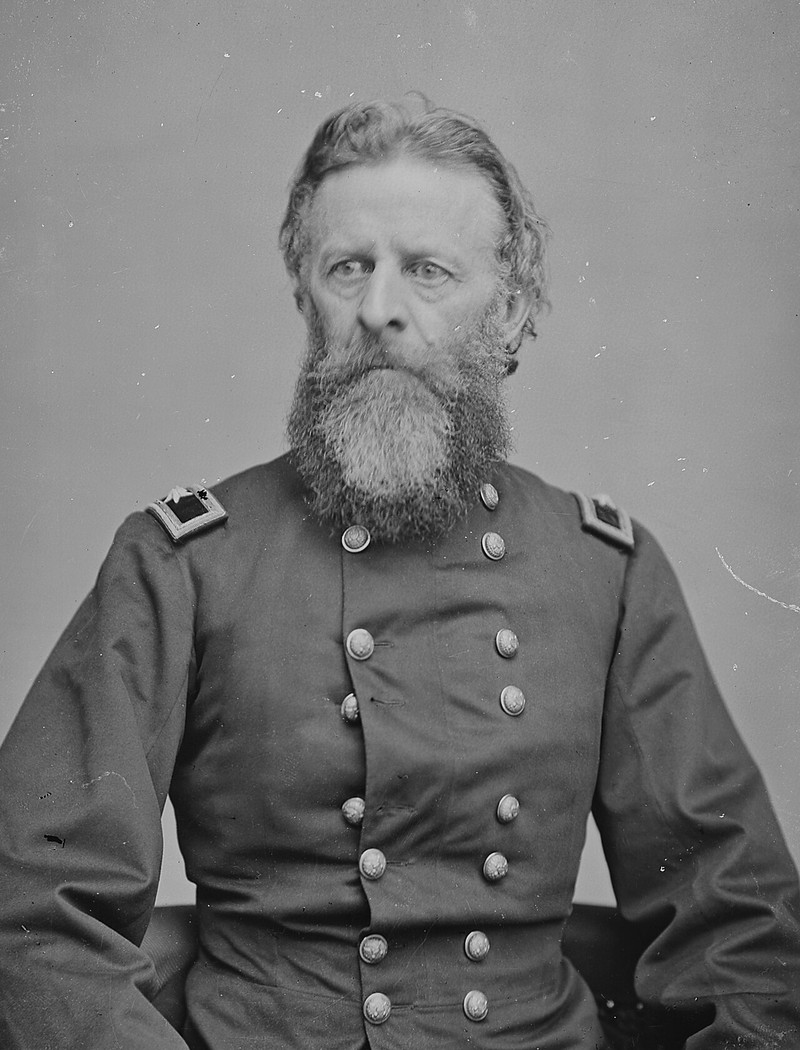 Brig. Gen. Philip St. George Cooke, U.S. Army. Stuart's father-in-law and the officer ordered to pursue him. Library of Congress.
Now, on June 13, 1862, Cooke received word that Stuart's cavalry had attacked Union outposts near Old Church and was moving deeper into Union-held territory. He ordered his troopers to horse and set out in pursuit.
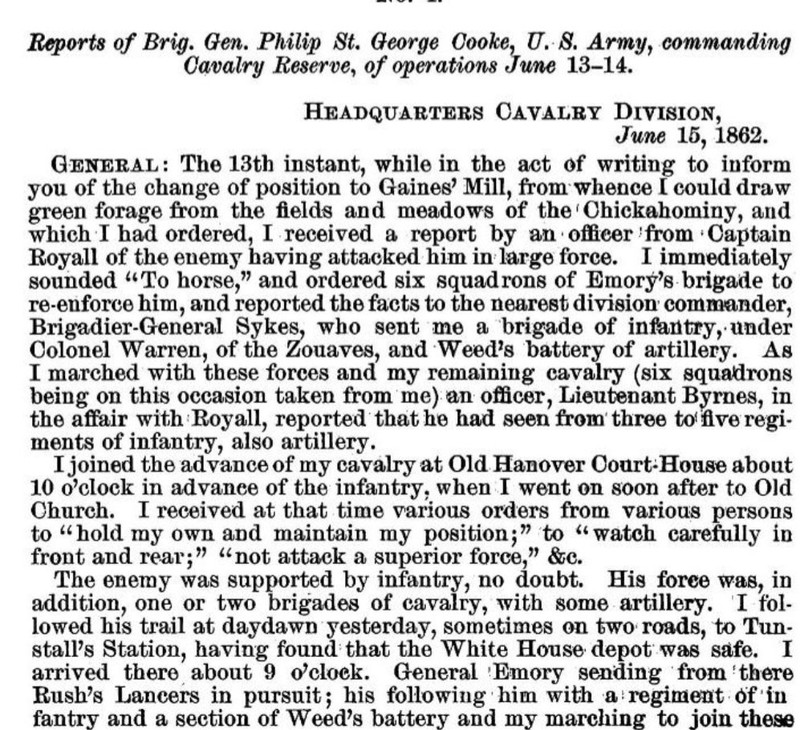
What followed, documented in Cooke's own after-action report to the Army of the Potomac's chief of staff, was a pursuit complicated by conflicting orders, incomplete information, and the reality that Stuart already possessed a substantial lead.
"Hold My Own and Maintain My Position"
Cooke's report, filed June 15, 1862, the day Stuart completed his ride, is a remarkable document. Written in the formal cadence of military bureaucracy, it describes a pursuit that never quite managed to pursue.
As Cooke marched his cavalry toward the sound of the fighting, he received a cascade of conflicting orders from different commanders. One told him to notify troops nearby. Another invited him to a meeting at headquarters if he could leave his command. A third, which he noted was marked "Received 11.10," directed him to bring all available information on the enemy. Another, marked "Received 11.20," told him to hold his own and maintain his position, not to attack a superior force.
By the time Cooke reached Tunstall's Station, on the York River Railroad that Stuart had already raided, the trail had gone cold. Stuart's men had cut the telegraph wires, burned supplies, and vanished south. Cooke sent cavalry ahead and followed with infantry, but the column moved slowly in the summer heat. Near Garlick's Landing he learned that the enemy had already crossed the Chickahominy, miles ahead of him.
He bivouacked. He returned to his lines the following morning.
In his supplemental statement, Cooke was blunt about the arithmetic. He had fewer than five hundred cavalry. Stuart had an estimated fifteen hundred, with artillery. Even if Cooke had moved faster, he wrote, cavalry alone could not overtake retreating cavalry with the head start Stuart had. He had gone on at daylight to meet him with his whole force, he wrote, but with the least hope in the world of overtaking retreating cavalry with the start he knew Stuart had.
The last line of Cooke's second report carries a different weight entirely. An investigation had been ordered, he wrote, and he had the right to demand a thorough one, along with a publication of the judgment or his complete exoneration by the commanding general.
Cooke was removed from command of the cavalry reserve within weeks. He spent the rest of the war in administrative roles and never again commanded troops in the field.
The Crossing That Almost Ended Everything
Stuart's most dangerous moment came not from Union cavalry but from geography.
On the morning of June 14, his column reached the Chickahominy River, the last obstacle between his men and Confederate lines. The river was running high. The nearest bridge had been destroyed. Stuart's men were thirty-five miles from Richmond, fifteen miles behind the main Union lines, and the water was rising.
One of Stuart's officers looked at the swollen river and said plainly: I think we are caught.
Stuart sent men downstream and found the remnants of Forge Bridge. Working through the night, his troopers dismantled a nearby barn and rebuilt the bridge using the lumber. Three hours later, the last Confederate horseman crossed to the south bank. They burned the bridge behind them. When Union pursuers finally reached the crossing, they were five or six hours too late.
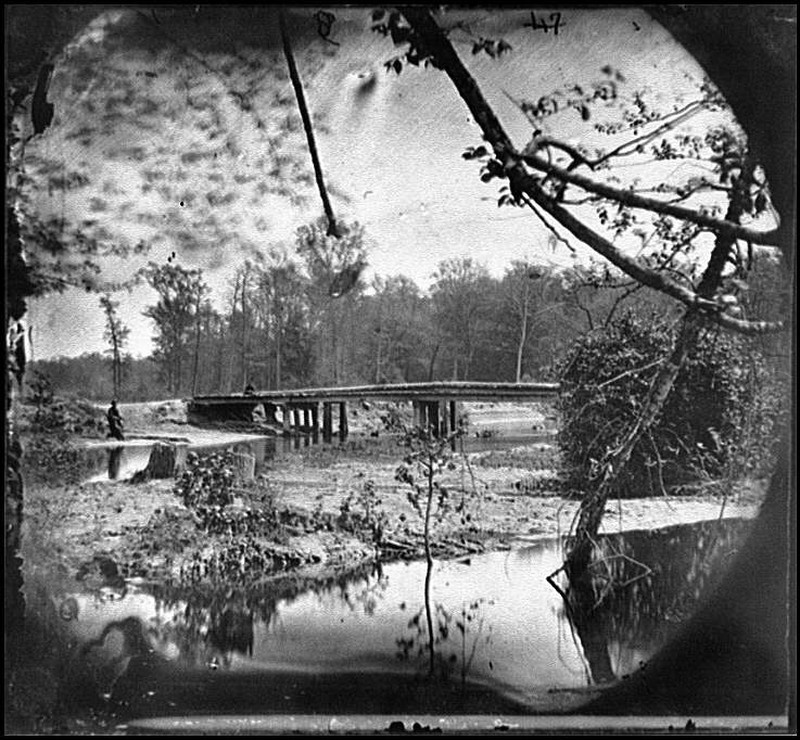 The Chickahominy River bridge on the Mechanicsville road, Virginia, 1862. Library of Congress, Prints and Photographs Division.
Stuart rode ahead of his column and arrived at Lee's headquarters just after dawn on June 15, three days and roughly one hundred fifty miles after he had left. His cavalry rode into Richmond that evening to the cheers of the city's residents.
What the Ride Actually Accomplished
Some historians have characterized the ride primarily as a morale-boosting exploit, colorful but otherwise limited in military value. The intelligence dimension tells a different story.
The intelligence Stuart brought back was specific and actionable. He confirmed that McClellan's right flank north of the Chickahominy was exposed, resting on open ground near Mechanicsville, with no natural barriers protecting it from a Confederate flanking attack. He identified the York River Railroad as McClellan's primary supply line, running straight through terrain that Confederate infantry could reach.
Stuart's report reinforced Lee's belief that the Union right flank was vulnerable and provided critical information as Lee planned the offensive that became the Seven Days Battles. Two weeks after Stuart returned, Lee sent his army against the exact flank Stuart had identified. The campaign drove McClellan away from Richmond entirely. The Union army that had been within hearing distance of the Confederate capital in June was retreating toward the James River by July. The war in the East, which had seemed nearly over, was reset.
Stuart was promoted to major general. He was celebrated across the South as the embodiment of Confederate cavalry. The ride also embedded in Stuart a taste for bold independent action that, a year later at Gettysburg, would leave Lee blind and arguably cost the Confederacy its last real chance at a decisive victory. But that consequence was still thirteen months away.
In June 1862, Stuart had simply ridden around one hundred thousand men. The general ordered to stop him had been his own father-in-law. And the Union Army of the Potomac, the largest and best-equipped force in American history to that point, had watched it happen.
Philip St. George Cooke lived until 1895, outlasting Stuart by thirty-one years. Stuart was killed at the Battle of Yellow Tavern in May 1864, at the age of thirty-one. The two men never reconciled. Cooke's daughter, Flora, wore black mourning clothes for the rest of her life after her husband's death, and is buried beside him at Hollywood Cemetery in Richmond.