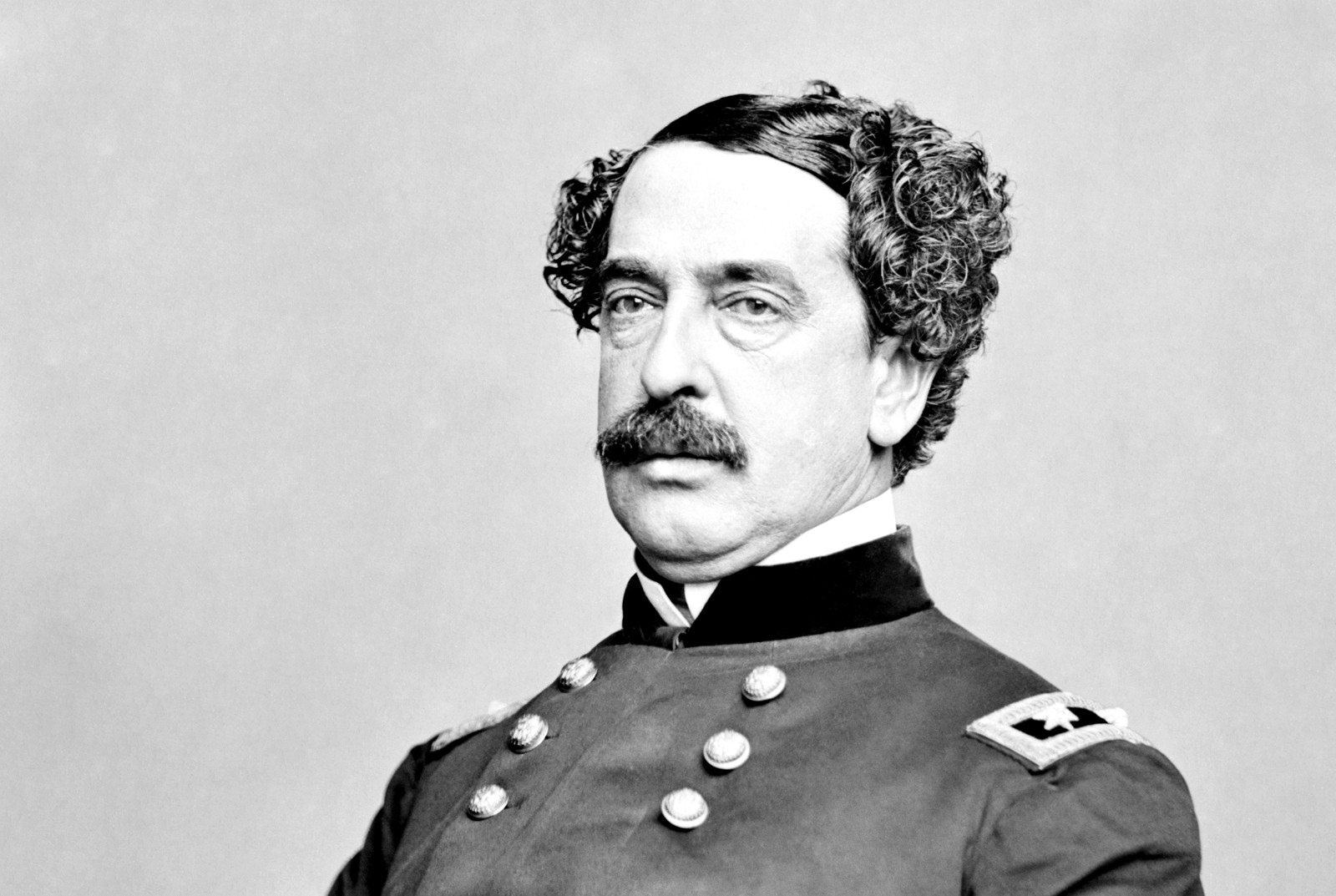
The Iron Brigade's charge across Willoughby Run had broken Archer's brigade and filled the morning with prisoners, but it had not ended the fighting. North of the Chambersburg Pike, Davis's Mississippians and North Carolinians were still driving into Cutler's line. The ground Wadsworth's division held would be contested again before noon, then assaulted from several directions that afternoon.
The Railroad Cut
Around 11 a.m., before Howard had reached the field, Doubleday committed the 6th Wisconsin, serving that morning as the division's general reserve, under Lieutenant Colonel Rufus Dawes, north toward Davis's disorganized brigade. Dawes's men halted at a fence along the pike and opened fire, which stopped the Confederate advance and sent many of Davis's men into the cover of an unfinished railroad cut running through the ridge. Dawes joined with the 95th New York and 84th New York (the 14th Brooklyn), and the three regiments charged the cut together. Dawes's own report describes what happened when the fighting reached its edge: he demanded to know who commanded the Confederates in front of him, and Major John Blair of the 2nd Mississippi stood and asked who he was. "I command this regiment," Dawes answered. "Surrender or I will fire." Blair surrendered his sword and his regiment.
Joseph Davis, writing for the Confederate side, describes the same minutes very differently: his men held the cut until "a heavy force was observed moving rapidly toward our right and rear," and he gave the order to retire, "which was done in good order, leaving some officers and men in the railroad cut, who were captured, although every effort was made to withdraw all the commands." Davis described an organized withdrawal; Dawes described a surrender. Dawes's own accounting puts seven officers and about 225 enlisted men under guard after the charge, and a captured flag; his regiment's own losses that morning ran to roughly 160 killed or wounded. The numbers leave little doubt that a substantial part of Davis's force was trapped. They don't, by themselves, settle how orderly the rest of the withdrawal was.
Who Was in Command
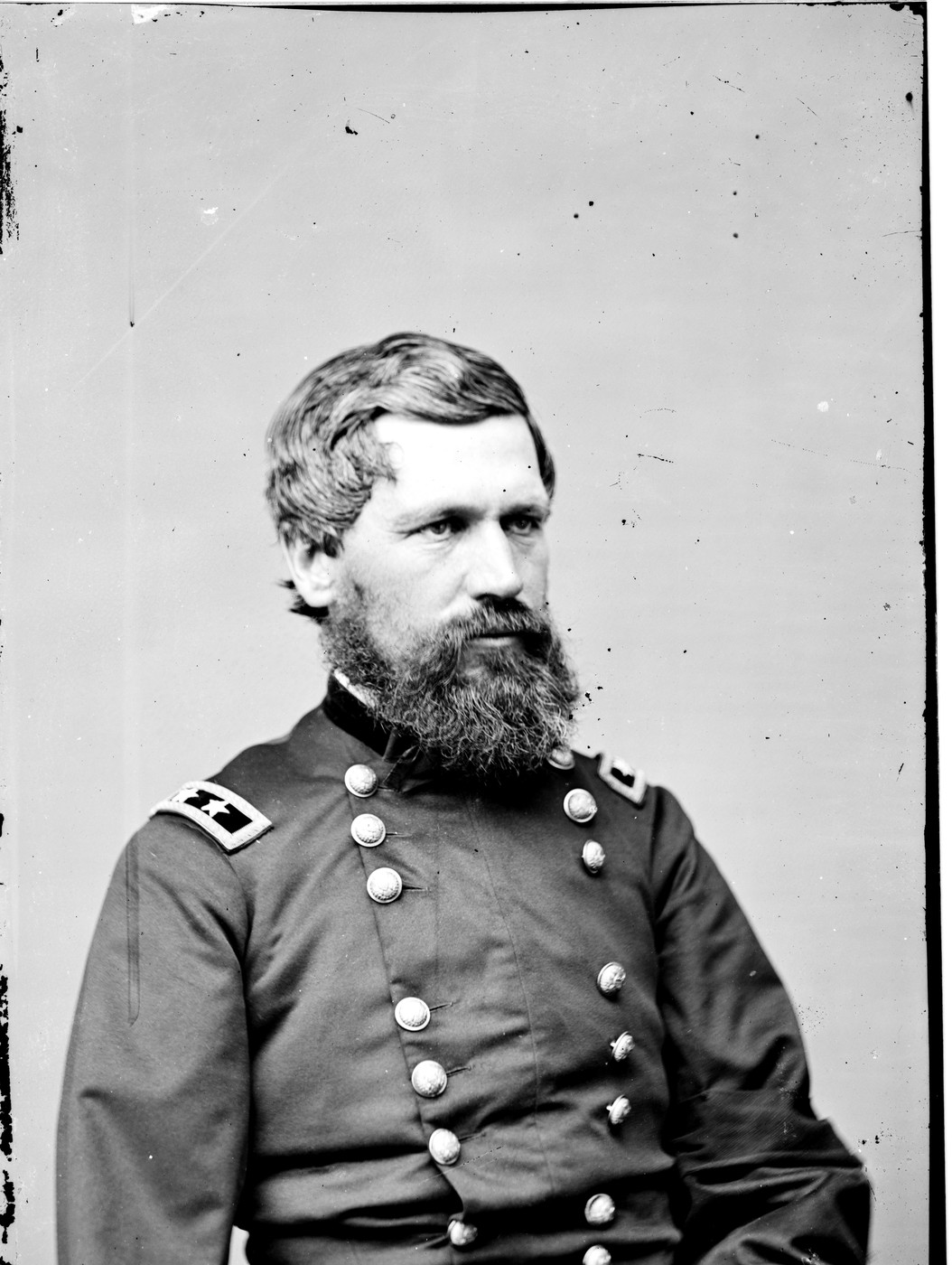
By late morning, Doubleday was directing an increasingly reinforced First Corps as more of it reached the field, and the Eleventh Corps was arriving from the south. Howard, who had reached Gettysburg ahead of most of his corps, surveyed the fighting from the roof of a dry-goods store in town when word reached him that Reynolds had fallen. With Reynolds dead, Howard assumed command of the forces on the field. From there, and then from the rising ground above the cemetery, he made the decisions that would shape the rest of the day: he directed Doubleday to continue holding the line north and west of town, sent Steinwehr's division to secure the high ground itself as a rallying point, and pushed Schurz's and Barlow's divisions north to extend the position. Schurz assumed command of the Eleventh Corps in the field, though Howard remained in overall command.
Howard's own report acknowledged how difficult the situation had already become before most of his corps reached the field. "Had we received re-enforcements a little sooner," he wrote, "the first position assumed by General Reynolds, and held by General Doubleday till my corps came up, might have been maintained." Howard's own phrasing allows that the ground north of town was already under pressure before most of his corps had come up.
Oak Hill and the North
During the early afternoon, Robert Rodes's division of Ewell's corps appeared on Oak Hill, on the Union right. Rodes's own report is candid about what he found: "no troops facing me at all," and the enemy, he thought, "apparently surprised" by his arrival. He sent three brigades forward. Rodes later wrote that the three regiments O'Neal sent in advanced "in some disorder," in a direction different from the one he had ordered. He also wrote that O'Neal, rather than "personally superintending the movements of his brigade," had chosen to remain behind with his reserve regiment. Brigadier General Alfred Iverson sent his North Carolinians forward without scouts, into a stone wall lined with Henry Baxter's Pennsylvania and New York regiments. Rodes's report says Iverson's dead "lay in a distinctly marked line of battle." Both attacks faltered within the hour, and a mistaken message reached Rodes that one of Iverson's regiments had raised a white flag.
Daniel's and Ramseur's brigades, committed as the earlier attacks broke down, had more success. Daniel's North Carolinians pushed into the same railroad cut fought over that morning, this time against Colonel Roy Stone's Pennsylvania "Bucktails," and after a costly first attempt broke the Union line there. Ramseur's brigade, committed last, helped restore Confederate momentum on Rodes's front.
Barlow's Knoll
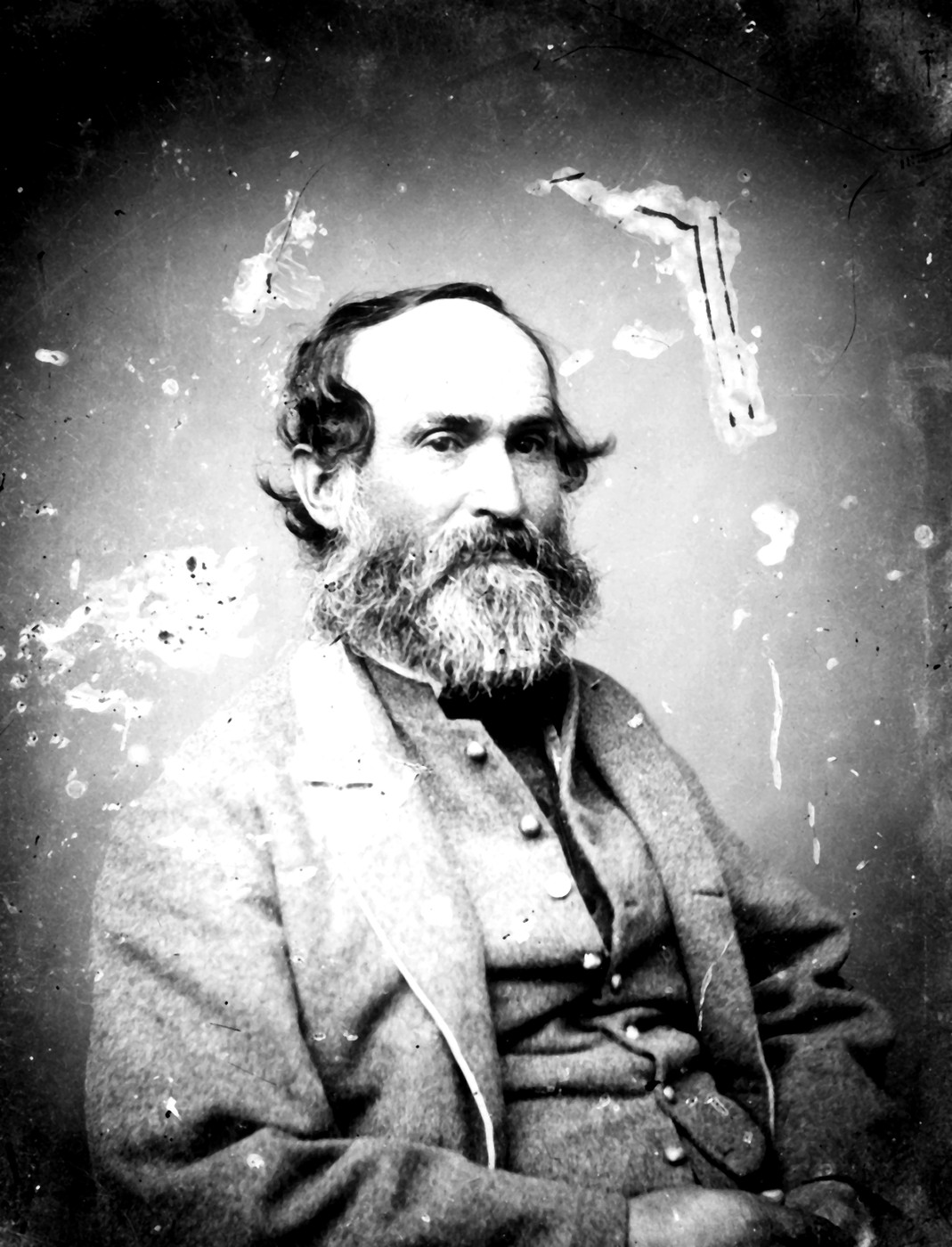
At the same hour, Jubal Early's division came down the Harrisburg road against the exposed right flank of the Eleventh Corps, where Brigadier General Francis Barlow had advanced his division onto a low rise that would take his name. Early's report describes the result plainly: Gordon's Georgia brigade "succeeded in routing the force opposed to him... capturing, among a number of prisoners, General Barlow himself, who was severely wounded."
Command of the division fell to Adelbert Ames, whose own report does not soften what he found. "The whole division was falling back with little or no regularity," Ames wrote, "regimental organizations having become destroyed." Carl Schurz, watching from the Mummasburg road, ordered Colonel Charles Coster's brigade forward to cover the retreat through a brickyard north of town. Coster's men held long enough, Schurz wrote, "to permit the First Division to enter the town without being seriously molested on its retreat." The cost was steep: Coster's brigade suffered 597 casualties, including 301 men captured or missing.
Seminary Ridge
To the west, Dorsey Pender's fresh Confederate division came forward as Heth's battered brigades renewed the fight. Colonel Abner Perrin's South Carolina brigade advanced into the increasingly thin First Corps line, and by his own account crossed the last few hundred yards under fire the men had been ordered not to return. "The brigade received the enemy's fire without faltering," Perrin wrote, and pushed on until, dividing his regiments left and right, he broke the Union position on both flanks at once.
On the receiving end, Colonel Henry Morrow of the 24th Michigan had already sent word that his line, in his judgment, could not be held. The answer that came back, he wrote, was that the position "was ordered to be held, and must be held at all hazards." The regimental flag changed hands nine times before the fighting ended, four of the men who carried it killed and three wounded. Watching from the corps artillery, Colonel Charles Wainwright held his batteries in position until the infantry was seen "rapidly retreating to the town," then withdrew his guns at a walk down the Chambersburg Pike, until Confederate skirmishers closed on the road, at which point, he wrote, the batteries "broke into a trot." It was in the middle of this collapse that Abner Doubleday wrote the sentence that would end up in his report almost as a verdict on the whole afternoon: "All my reserves had been thrown in, and the First Corps was now fighting in a single line."
Through the Town
What followed was not a single retreat but two corps converging on the same streets at once. Doubleday's report calls it orderly: "no hurry and no confusion." His own account of the Eleventh Corps' passage through the same town does not sit easily beside that description, and neither, later, would his own division commander. Brigadier General John Robinson, writing to Meade that November, complained that his division, which had "repulsed repeated attacks of the enemy, captured three flags and a very large number of prisoners, and were the last to leave the field," went unmentioned in Meade's own report of the battle. Whatever the final tally of the day, the men who fought it were already arguing over who would get credit for it.
How many were taken prisoner in the retreat is not a number the sources agree on. Lee's letter to Jefferson Davis on July 4 put the count at "more than 4,000." His report written the following winter raised it to "more than 5,000, exclusive of a large number of wounded." Neither figure can be reconciled precisely with Union casualty returns, which generally aggregate losses across all three days rather than isolating prisoners taken in the July 1 retreat.
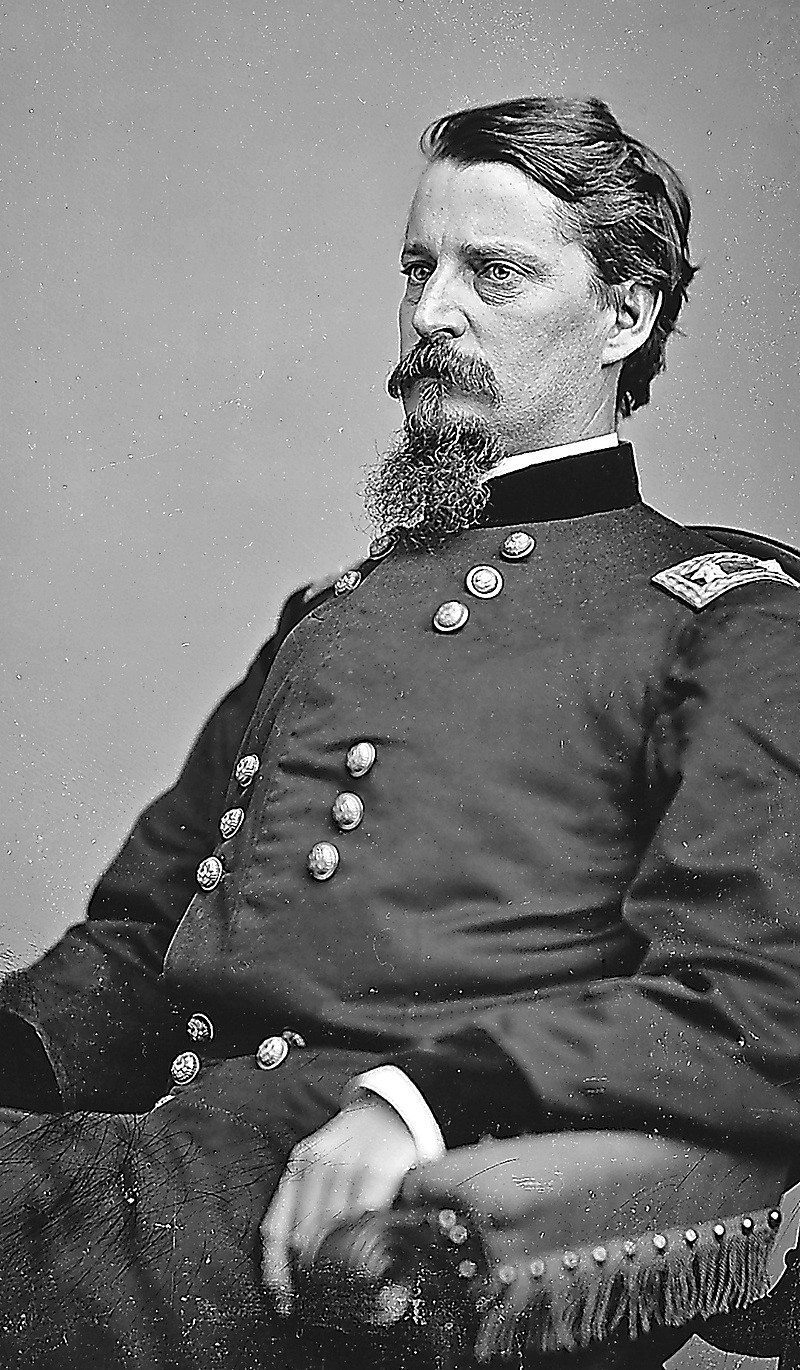
Winfield Scott Hancock reached the field that afternoon, sent ahead by Meade on hearing of Reynolds's death. His own report puts his arrival at 3 p.m., though other evidence places it later. Hancock came carrying Meade's authority to take command of the forces at Gettysburg, judge the ground, and direct the army's consolidation there. Howard, who technically outranked Hancock, continued to exercise command on the field. The two worked together to post the arriving troops on Cemetery Hill. That evening Howard wrote to Meade: "The above has mortified me and will disgrace me. Please inform me frankly if you disapprove of my conduct to-day."
By evening, Buford's cavalry and the First and Eleventh Corps had delayed and fought a much larger Confederate force for most of the day. Their forward line west and north of Gettysburg had broken, and the town was lost. But the retreat had carried the survivors onto Cemetery Hill and the ridge extending south from it, the ground from which the Army of the Potomac would fight the next two days.
The Close
Lee, arriving on the field that evening, instructed Ewell to take the hill the Union army now occupied "if he found it practicable." Ewell's own report gives the order a slightly different wording, "if I could do so to advantage," and his own reasons for not attempting it: his men, he wrote, were "jaded by twelve hours' marching and fighting," Johnson's division, the one fresh division in his corps, had not yet reached the field, and the hill itself, in his judgment, "was not assailable from the town." He decided to wait. By dark, the lines that would hold for two more days were already forming: Union troops on Cemetery Hill and the ridge running south from it, Confederate troops wrapped in a long arc through the town and the fields beyond.
The forward line had collapsed. The army's position had not. What came next would happen on ground neither side had chosen that morning, and neither had yet seen.